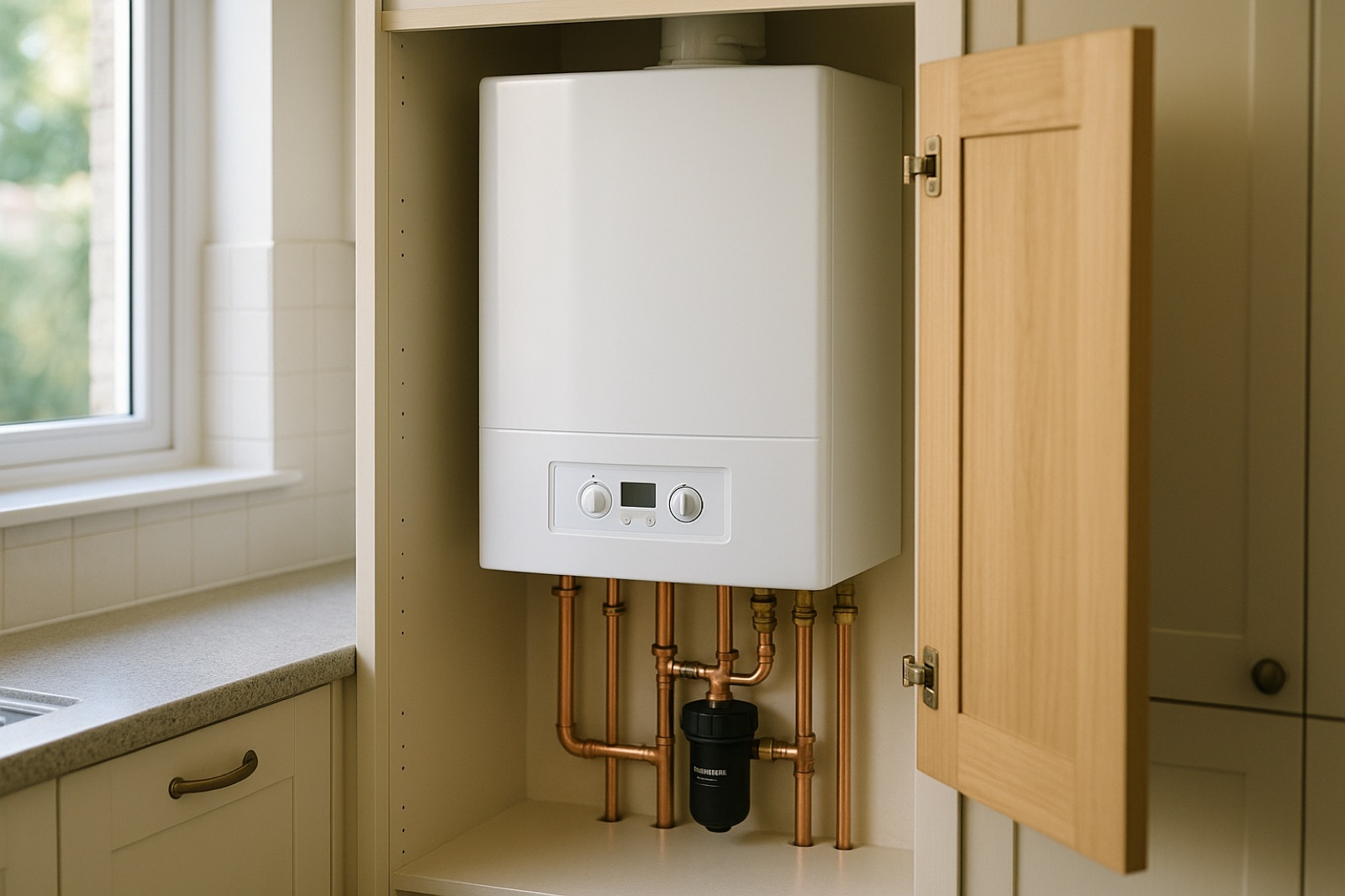
Home Boiler installation Guide
How much does a new boiler cost?
Most straight combi swaps land between about £1,800 and £3,500 fitted. If your quote is well above that, this guide shows you how to work out whether the extra is real work or padding.
A new boiler cost in the UK, for a typical gas home, usually comes to between £1,800 and £3,500 for a like-for-like gas combi swap, fitted. Price comparison firm Heatable put the median quote for a standard combi replacement at £2,300 in the first half of 2026, and Selectra reports the same median. Jobs that change the type of boiler, move it, or add a hot water cylinder push the new gas boiler cost up.
That spread is why so many people ask online whether a quote is a rip-off. The honest answer is that it depends on what’s on the quote. A high price can be fair if the job is big. A low price can be poor value if it leaves out things the law or the manufacturer’s warranty require.
At a glance
| Job | Typical fitted price | Typical time on site |
|---|---|---|
| Like-for-like combi swap | £1,800 to £3,500 | About 1 day |
| Premium-brand combi swap | £3,000 to £4,500 | About 1 day |
| System or regular boiler replacement | £1,800 to £3,500 | 1 to 2 days |
| Regular or system boiler to combi conversion | £3,000 to £5,700 | About 2 days |
| Back boiler to combi conversion | £3,500 to £6,000 | About 2 days |
| Oil boiler replacement | £4,500 to £5,500 | Varies |
Figures are from Heatable and Selectra 2026 price guides. Expect prices toward the top of each range in London and the South East.
New boiler cost by type of job
The boiler itself is only part of the bill. Selectra estimates the unit makes up 35% to 45% of the total, with labour and parts making up the rest. That’s why two quotes for the same boiler can be £1,000 apart.
Straight combi swap
This is the cheapest job: the old combi comes off the wall and a new one goes in the same place, using the same flue route and pipework. Selectra puts a budget combi at £1,800 to £2,500 fitted, a mid-range model from a brand such as Worcester Bosch or Vaillant at £2,300 to £3,200, and a premium model at £3,000 to £4,000. A fitter normally finishes in a day.
Changing boiler type
Swapping a regular boiler with tanks in the loft for a combi means removing the tanks and cylinder, re-piping and often moving the flue. Which? says this kind of conversion adds £400 to £800 for labour and re-piping on top of the boiler price. Heatable puts the full job at £3,000 to £5,700. Moving the boiler to a new room adds cost too: Selectra says £500 to £1,200 for a change of type or position.
Keeping or adding a cylinder
If you have a big household or more than one bathroom, a system boiler with a cylinder may suit you better than a combi. Which? puts the extra for going from a combi to a system with an unvented cylinder at £900 to £1,400, depending on cylinder size. The right type depends on your home, and our boilers hub explains the differences.
Changing boiler cost when you’re off gas
Oil boilers cost more to replace, about £4,500 to £5,500 according to Heatable, and Which? puts a new oil tank at around £1,300 to £2,400 if yours needs replacing too. See our off-grid heating guide for other options.
Quoted over £4,000: is it a rip-off?
Not automatically. For a plain combi swap with nothing moving, £4,000 or more is above the ranges most price guides give, and it is worth getting a second quote. Selectra says installers can differ by £1,000 to £1,500 for the same job.
A price over £4,000 can be fair when the quote includes real extra work, such as:
- converting from a regular or system boiler to a combi, or removing a back boiler
- moving the boiler to another room, with a new flue route
- a premium boiler with a long manufacturer warranty, fitted in an expensive area
- a new hot water cylinder
- a larger gas supply pipe to the meter, which Which? prices at £100 to £400
- a power flush on a sludged system, which Which? puts at £300 to £750
If none of those apply, ask the installer to explain the price. Which? notes that many engineers give one total, but they should be able to break it down when you ask.
A fair quote, line by line
A good quote tells you exactly what you’re paying for. When you have one in front of you, check for each of these.
- The boiler make, model and output in kW. A vague “new combi” is not enough. Bigger is not better: the size should match your home and hot water use.
- Removal and disposal of the old boiler. Heatable lists this among the items normally included.
- A system clean. At least a chemical flush. A full power flush is only needed if the system is badly sludged, and the installer should say why.
- A magnetic system filter. Usually fitted as standard on a new install and often a condition of the manufacturer’s warranty.
- A flue kit. The standard kit should be included. Extensions, vertical flues or scaffolding should be listed separately with a reason.
- Controls. In England, the Boiler Plus rules require a timer and room thermostat with every new gas boiler, and an extra energy-saving measure with a combi, such as smart controls with automation and optimisation, weather compensation or load compensation. Read more on our heating controls page.
- Condensate pipe work and any gas pipe upgrade.
- Building regulations notification. A Gas Safe registered business can self-certify the work and tell building control for you. You should receive a building regulations compliance certificate afterwards. Keep it, as you may need it when you sell.
- Warranty registration. Ask how long the warranty is and whether the installer registers it. Most depend on an annual service.
- Commissioning and handover. The installer should show you how to use the controls and leave you the paperwork.
Red flags on a boiler quote
- No Gas Safe number. Anyone fitting a gas boiler must be on the Gas Safe Register. Check the engineer’s ID card before work starts. The back of the card shows which appliances they can work on.
- A single price with no breakdown, and an installer who won’t explain it when asked.
- No home visit or photo survey. A fair quote needs the installer to see the flue, the gas pipe and the system.
- A power flush listed as standard with no evidence your system needs one.
- A much bigger boiler than the one you have, with no reason given.
- “You must replace your cylinder” when you’re fitting a system or regular boiler that can use the existing one. Ask why.
- Pressure to sign today or a discount that expires before you can compare.
- A door-knocker offering a free boiler. Grant schemes do exist, but check them on our grants page before you sign anything.
How to compare quotes
Which? advises getting several quotes from local installers and checking their reviews. Ask each one to quote for the same boiler, or at least the same output and warranty, so you can compare like with like. Then put the line items side by side. Often the cheapest quote is missing the filter or controls, and the dearest is adding a power flush or a bigger boiler.
If your boiler is old and you’re weighing up a replacement anyway, it may be worth pricing a heat pump. Our heat pumps hub covers costs and the grant available in England and Wales.
Questions people ask
How much is a new combi boiler, fitted?
For a like-for-like swap, about £1,800 to £3,500 in 2026, with a median of around £2,300. Premium brands and expensive areas push it higher.
What is the cost of installing a new boiler in a different place?
Moving the boiler or changing its type usually adds £500 to £1,200 to a straight swap, according to Selectra, because of the new flue, pipework and gas run.
Do I need a power flush with a new boiler?
Not always. The system needs cleaning before a new boiler goes on, but a chemical flush is often enough. A power flush, at about £300 to £750, is for systems with heavy sludge, cold spots or blocked radiators.
Can I fit a gas boiler myself?
No. By law, gas work must be done by a Gas Safe registered engineer. Unregistered gas work puts your household at risk of leaks and carbon monoxide.