Home Heating engineers
Heating engineers
Cold radiators, banging pipes, a boiler that keeps losing pressure or a whole new central heating system. Here is what a heating engineer does, what they charge and how to check you’ve got the right one.
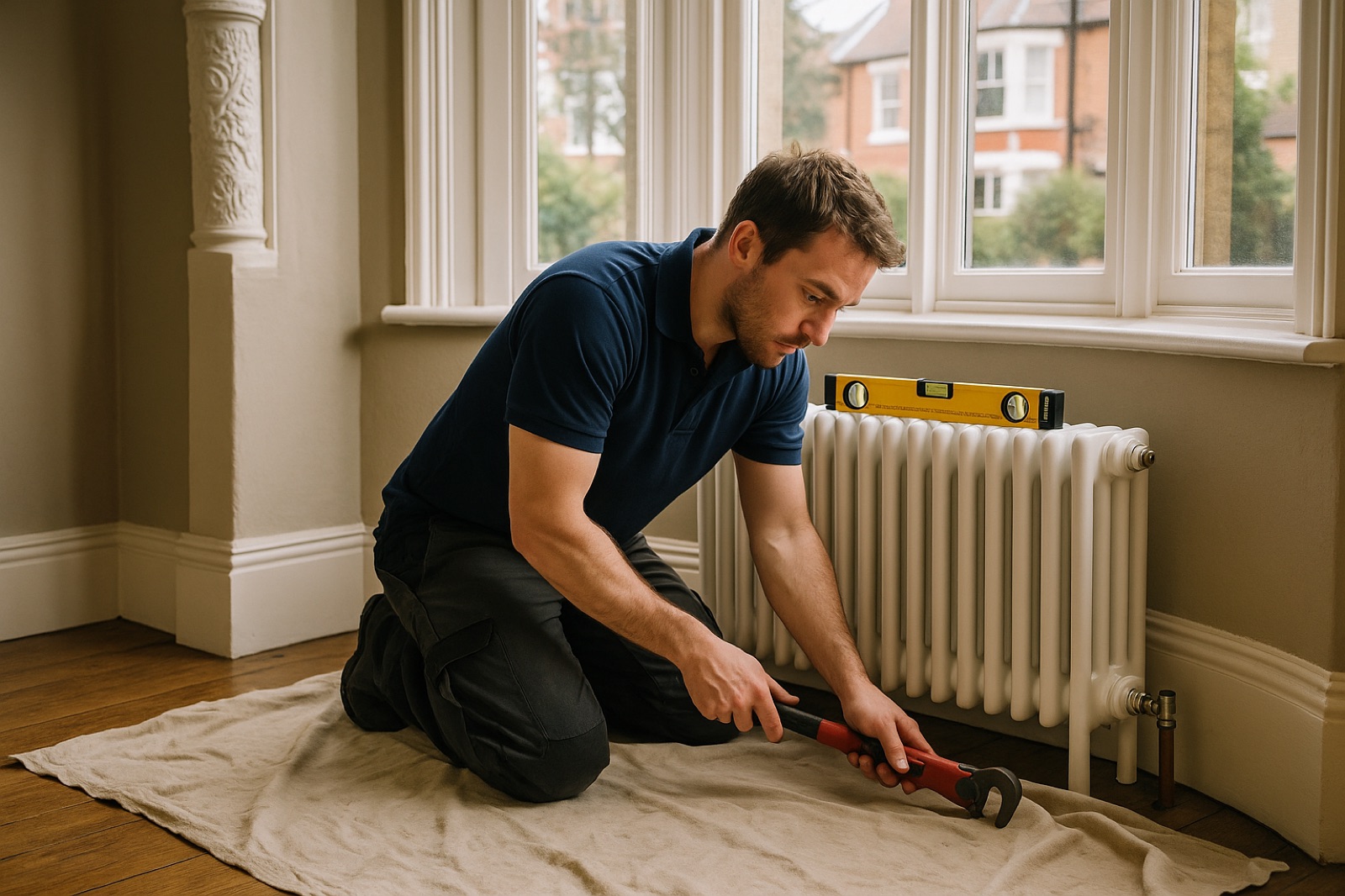
A heating engineer looks after the whole central heating system, not just the boiler. That means radiators, pipes, valves, pumps, cylinders and controls. If some rooms are cold, the pipes bang, the pressure keeps dropping or you want a new system put in, a heating engineer is the person to call.
Tell us the job and your postcode, and we’ll pass your request to qualified heating engineers who cover your area. For a boiler that has broken down, see boiler repair.
What a heating engineer does
- Radiator work. Replacing, adding, moving or upsizing radiators, and changing valves.
- System cleaning. Chemical flushes and power flushes to clear sludge, plus fitting a magnetic filter.
- Balancing. Adjusting lockshield valves so every radiator heats up evenly.
- Leaks and noise. Tracing leaks, fixing banging or gurgling pipes and replacing failed pumps or valves.
- Controls. Fitting room thermostats, smart thermostats and thermostatic or smart radiator valves.
- Hot water. Cylinder replacements and conversions between combi and cylinder systems.
- New central heating. Designing and fitting a full system in a home that has none, or replacing an old one.
Common problems and what they usually mean
Some faults you can sort yourself. Others need an engineer.
- Radiator cold at the top. Usually trapped air. You can fix this with a radiator key: see how to bleed a radiator.
- Radiator cold at the bottom. Usually sludge. Bleeding won’t help, so the system needs cleaning.
- Radiators far from the boiler stay cool. Often a balancing problem, or a pump that is weak or set too low.
- Pressure keeps dropping. Often a small leak or a faulty pressure relief valve. Our boiler pressure guide shows how to top up and when to call someone.
- Banging or kettling noises. Can point to sludge, scale or air in the system.
- Damp patches or drips under a radiator. Turn the valves off, catch the water and get it looked at before floors are damaged.
Power flush or chemical flush?
A power flush pumps water and cleaning chemicals through the system at high flow to shift sludge. Fantastic Services puts it at £400 to £700 for an average home with seven to ten radiators in 2026, and Which? gives an average of about £500. A chemical flush is a gentler clean through the existing pump. A power flush is worth it when radiators stay cold at the bottom or the water you bleed out is black. It isn’t worth it as a standard add-on with no evidence of sludge. Either way, ask for a magnetic filter so the problem doesn’t return.
Registration to check
The right registration depends on the fuel and the job:
- Gas: anyone who works on a gas boiler or gas pipework must be on the Gas Safe Register. Check their ID card before work starts. The back lists the appliances they are qualified for. You can also check the number online with Gas Safe Register.
- Oil: look for an OFTEC registered technician. See our oil boiler servicing page.
- Heat pumps: the installer must be MCS certified for you to get the grant. See heat pump installation.
- Water-side work only: changing a radiator or valve doesn’t legally need Gas Safe registration. If the engineer may need to touch the boiler, pick one who is registered.
Rules that apply
Building Regulations. Fitting a new boiler or heating system is notifiable building work. A Gas Safe registered business can self-certify it and notify building control for you. You should get a compliance certificate afterwards, which you may need when you sell.
Controls. In England, the Boiler Plus rules require a timer and room thermostat with every new gas boiler, and an extra energy-saving measure with a combi, such as smart controls with automation and optimisation, or weather or load compensation. Our smart thermostat page covers the options.
Landlords. If you let a property, you must have every gas appliance checked for safety each year by a Gas Safe registered engineer and give tenants a copy of the record. Servicing is covered on our boiler servicing page.
Repair or upgrade?
One cold radiator is a repair. A system with sludge in every radiator, an old pump and a boiler that keeps failing is a different decision. Ask the engineer what it would cost to fix the faults now, and what a replacement would cost. If you’re replacing the boiler anyway, it is a good time to clean the system, add a filter and upgrade controls. Our new boiler cost guide shows what a fair quote includes.
If you’re planning a heat pump later, tell the engineer now. Bigger radiators and keeping a hot water cylinder can make a future switch cheaper and easier.
How to compare quotes
- Ask for a written quote that lists each radiator, valve and part, not one total.
- Check whether the price is fixed or by the hour, and what happens if they find more work.
- Ask whether a flush is needed and why, and whether a filter is included.
- Ask about the guarantee on parts and labour.
- Check the Gas Safe number for any job that touches the boiler or gas supply.
- Be wary of pressure to decide on the spot or cash-only deals with no paperwork.
When to call
Call straight away for a leak you can’t stop, no heating in cold weather when someone at home is vulnerable, or water near electrics. Book a visit soon for pressure that keeps dropping or radiators that never get fully warm. Leave system upgrades such as new radiators or a flush for spring or summer if you can, when engineers are less busy and you can live without heat for a day.
If you smell gas, leave the boiler alone, turn off the gas at the meter if it is safe to do so, open windows and call the National Gas Emergency Service on 0800 111 999 (0800 002 001 in Northern Ireland).
Typical heating engineer prices
| Job | Typical UK price | Notes |
|---|---|---|
| Power flush, average home (7 to 10 radiators) | £400 to £700 | Fantastic Services 2026 guide; about £300 to £450 for up to six radiators, £600 to £1,000 for more than ten |
| Radiator replacement, like for like | £150 to £300 labour | About £250 to £1,000 all in with a mid-range radiator; £200 to £400 labour in London and the South East |
| Full gas central heating system, three bed semi | £4,000 to £5,500 | Boiler, radiators, pipework, controls and flush where usable pipework exists; four bed detached £5,500 to £8,000 |
| Annual gas boiler service | £70 to £150 | Independent engineers sit at the lower end |
| Landlord gas safety certificate | £100 to £150 | Labour; checks every gas appliance |
| Thermostatic radiator valve | About £15 each | Valve price; fitting is extra |
| Smart radiator valve | £35 to £80 each | Lets you heat rooms on their own schedule |
| Smart thermostat | £100 to £250 | Unit price as quoted with a boiler job |
| Larger gas supply pipe to the meter | £100 to £400 | Sometimes needed for a bigger boiler |
| Switching to a cylinder system from a combi | £900 to £1,400 extra | For an unvented cylinder, on top of the boiler price |
Sources: Fantastic Services 2026 power flush and radiator replacement guides; BestBuilders central heating cost guide (updated September 2026); Which? boiler prices guide (September 2025, the latest version) for valves, controls, gas pipe and cylinder figures; Which?, Selectra and Heatable 2026 guides for servicing and gas safety certificates. Prices are higher in London and the South East.
Heating engineers guides
Heating engineers by city
Show all 50 cities as a list
England
- Birmingham
- Bolton
- Bournemouth
- Bradford
- Brighton
- Bristol
- Cambridge
- Chelmsford
- Coventry
- Derby
- Doncaster
- Exeter
- Gloucester
- Huddersfield
- Hull
- Ipswich
- Leeds
- Leicester
- Liverpool
- London
- Luton
- Manchester
- Middlesbrough
- Milton Keynes
- Newcastle
- Northampton
- Norwich
- Nottingham
- Oxford
- Peterborough
- Plymouth
- Portsmouth
- Preston
- Reading
- Sheffield
- Southampton
- Stoke-on-Trent
- Sunderland
- Swindon
- Wakefield
- Warrington
- Wolverhampton
- York
Northern Ireland
Common questions
What is the difference between a heating engineer and a plumber?
A plumber mainly works on water supply, waste and bathrooms. A heating engineer works on central heating: boilers, radiators, controls and cylinders. Many do both. Anyone working on a gas appliance must be on the Gas Safe Register, whatever they call themselves.
Do I need a Gas Safe engineer to change a radiator?
The law requires Gas Safe registration for work on gas appliances and pipework. Changing a radiator or valve is work on the water side only, so it does not legally need Gas Safe. Most heating engineers who do this work are Gas Safe registered anyway, which you need if the boiler is touched.
How much does it cost to replace a radiator?
Fantastic Services puts labour for a like-for-like swap at £150 to £300 in most of the UK in 2026, or £200 to £400 in London and the South East. With a mid-range radiator the total usually lands between £250 and £1,000. Moving or upsizing a radiator costs more because it needs new pipework.
Why are my radiators cold at the bottom?
Usually sludge, a build-up of rust and debris that settles in the bottom of the radiator. An engineer can clean the system with a chemical or power flush and fit a magnetic filter to stop it coming back.
Why are my radiators cold at the top?
That is usually trapped air. You can bleed the radiator yourself with a radiator key, then check your boiler pressure, as bleeding lets some water out.
Is a power flush always needed?
No. It is for systems with heavy sludge, such as radiators that stay cold at the bottom or very dirty water when you bleed them. Ask the engineer what evidence they have before you agree to one.
Sources
- Which?: Boiler prices, how much does a new boiler cost?
- Which?: Getting the best boiler service
- Fantastic Services: power flush cost, 2026 UK price guide
- Fantastic Services: radiator replacement cost, 2026 UK price guide
- BestBuilders: central heating installation cost UK (updated September 2026)
- Selectra: Boiler service cost and checklist
- Heatable: How much does a boiler service cost in 2026?
- Gas Safe Register: Find or check an engineer
- Gas Safe Register: Domestic ID card categories
- HSE: Gas safety for tenants
- GOV.UK: Boiler Plus factsheet
- GOV.UK: Building work, replacements and repairs to your home