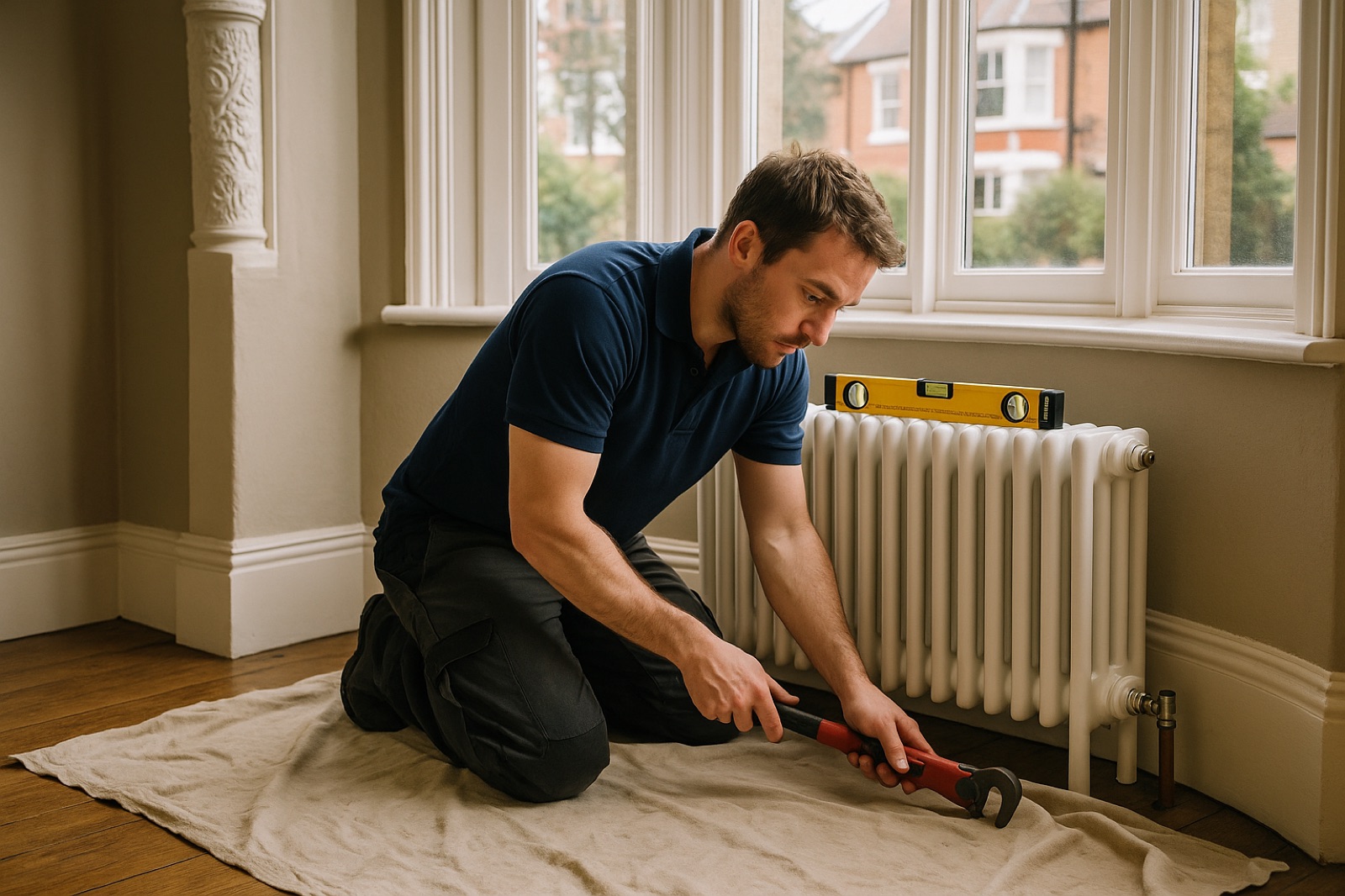
Home Heating engineers Brighton
Central heating engineers in Brighton and Hove
From one cold radiator to a whole new system, describe the job and we pass it to qualified heating engineers covering your part of the city.
Around 2,800 Brighton and Hove households had no central heating at all in 2021, and another 14,000 or so relied on electricity alone. Many of those homes are bedsits and flats in converted houses that were never plumbed for a wet system.
For everyone with a boiler, most heating calls are about radiators that won't warm up, noisy pipes and systems that have never been cleaned.
Brighton at a glance
- Homes in converted houses
- 19.6% of Brighton and Hove households (23,803) lived in part of a converted or shared house in 2021, and 27.6% in a purpose-built block. Together with other flats, about half of all homes are flats. Source
- How homes are heated
- 75.3% of households heat with mains gas only, 11.9% with electricity only and 1.6% from a heat network. 2.3% (2,844 homes) have no central heating, and oil-only heating covers about 200 homes. Source
- Water hardness
- Southern Water says most of the water it supplies is hard because it comes from underground chalk aquifers with high levels of calcium. Source
- Energy ratings
- About 51% of homes with an EPC in Brighton and Hove are rated band D or below (median score 68, band D), against 47% across England. Based on certificates lodged in the 10 years to March 2025. Source
Cold spots and sludge
A radiator that is cold at the bottom and warm at the top usually has sludge in it. One that is cold at the top has air, which our guide on how to bleed a radiator fixes in a few minutes.
If several radiators are cold at the bottom, ask for a power flush or a chemical clean, followed by a magnetic filter so it doesn't build up again. Chalk water from Southern Water adds scale to the mix in older systems.
Adding central heating to a flat
Going from storage heaters to a wet system in a converted flat means finding a route for a gas supply, a flue and pipework, often through floors you share with neighbours. Ask a heating engineer to survey before you assume it is possible.
In some flats, modern electric heaters or an air-to-air heat pump cost less to install and avoid the flue question altogether.
Balancing a tall house
Four-storey houses lose warmth up the stairwell, and the top rooms often run cooler. An engineer can balance the system by adjusting lockshield valves so water reaches every radiator, and fit thermostatic valves on each one.
Brighton homes and what they need
Flats in converted Regency and Victorian houses
Pipework from the original conversion is often surface-run or buried in screed. Ask for any leaks under floorboards to be traced before the engineer starts lifting a neighbour's ceiling.
Victorian terraces on the hills
Microbore pipes from a 1970s or 1980s install block easily. Replacing the worst runs can do more than a flush.
Interwar semis in the northern suburbs
Undersized radiators from an early install can leave bedrooms chilly. Upsizing them now also prepares the house for a heat pump.
Areas covered
Engineers who cover Brighton work across areas including Hove, Kemptown, Hanover, Preston Park, Patcham, Withdean, Hollingbury, Woodingdean, Rottingdean and Portslade.
Questions people in Brighton ask
Does a heating engineer need to be Gas Safe registered?
Only for work on gas appliances or gas pipework. Radiator and pipework jobs don't need it, but many heating engineers hold both.
Is a power flush worth it on an old system?
If several radiators have cold bottoms and the water from a bleed valve runs black, usually yes. If the system is mostly microbore pipe, ask whether a chemical clean through the system is safer, since a full flush can expose weak joints.
Sources
- ONS Census 2021, TS046 central heating (Nomis)
- ONS Census 2021, TS044 accommodation type (Nomis)
- Southern Water: Hard water checker
Also nearby: Heating engineers in Portsmouth, Heating engineers in London