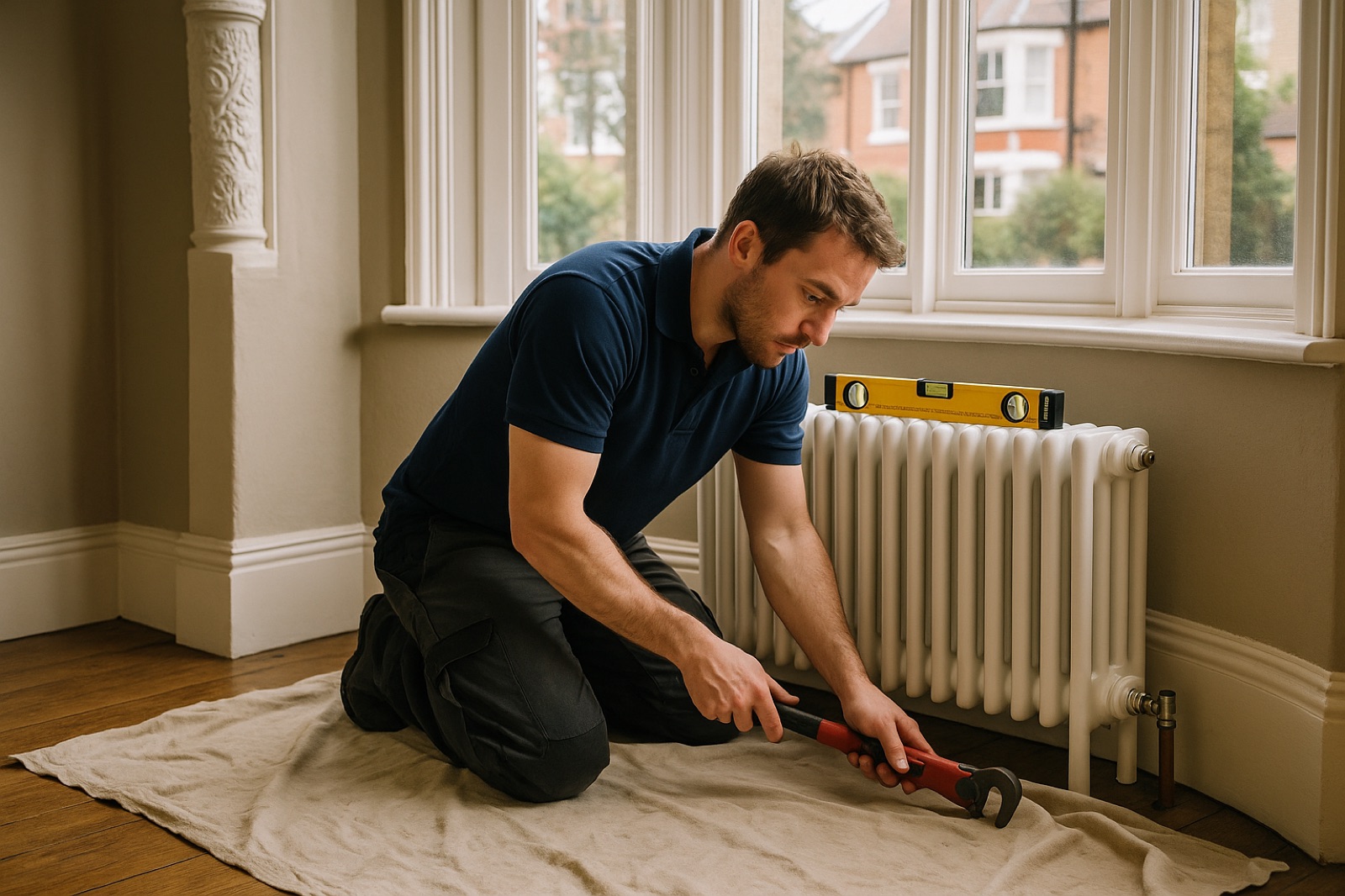
Home Heating engineers Leeds
Heating engineers in Leeds
Cold radiators, noisy pipes, a cellar conversion that needs heat, or a full new system. Describe the job and we pass it to heating engineers who cover your postcode.
A lot of central heating work in Leeds is in older houses with systems that have been extended piece by piece. A radiator added to the attic in the 1980s, another to the cellar in the 2000s, and a pump that was never upgraded to match. That's where cold spots and slow warm-ups come from.
Leeds at a glance
- Water hardness
- Varies across the district. Yorkshire Water rates most Leeds supply zones slightly hard (Headingley averaged 49.8 mg/l calcium in 2024, Horsforth 55.9), the zone serving Garforth, Rothwell and Kippax hard (107 mg/l), and Pudsey moderately soft (36.2 mg/l). Source
- How homes are heated
- 76.7% of Leeds households heat with mains gas only. 10.7% (36,550 homes) use electricity only, 0.5% a heat network, and 0.2% (660 homes) oil only. 2.2% have no central heating. Source
- Heat network
- Leeds PIPES carries heat from waste at the Cross Green recycling and energy recovery facility to almost 2,000 properties, including the council flats at Lincoln Green and civic buildings in the city centre. Source
- Energy ratings
- About 50% of homes with an EPC in Leeds are rated band D or below (median score 68, band D), against 47% across England. Based on certificates lodged in the 10 years to March 2025. Source
Cold radiators and sludge
A radiator that's cold at the bottom and warm at the top is usually full of black sludge, made by corrosion inside the system. Cold at the top means air, which you can bleed out yourself.
For sludge, an engineer will usually suggest a chemical clean or a power flush, then fit a magnetic filter on the return pipe so it doesn't come back. Leeds water is soft to slightly hard across most zones, so sludge is a bigger worry here than limescale.
Extending into lofts and cellars
Converting a cellar or attic is common in Leeds terraces. Adding radiators means checking the boiler has the output and the pump can push water up three floors. A good engineer will do a quick heat loss sum for the new room rather than guessing the radiator size.
Homes on a heat network
Leeds PIPES takes heat from the Cross Green energy recovery plant to almost 2,000 properties, including the council flats at Lincoln Green. If your home is connected, there's no boiler. Faults with the heat interface unit go to the network operator or your landlord, not a gas engineer.
Electric heating
More than one in ten Leeds homes heats with electricity alone, mostly flats with storage or panel heaters. A heating engineer who also works on electric systems can tell you whether new high-retention storage heaters or a small heat pump would cut costs.
Common jobs by house type
Victorian terraces and back-to-backs
Long pipe runs up to attic bedrooms and down to cellars mean the top radiators heat last. A correctly sized pump and balanced valves usually sort it.
1930s semis
Microbore pipework from a 1970s refit is common and blocks easily with sludge. Replacing the worst runs can be cheaper than repeated flushes.
Areas covered
Engineers who cover Leeds work across areas including Headingley, Roundhay, Horsforth, Chapel Allerton, Morley, Pudsey, Garforth, Rothwell, Otley and Wetherby.
Questions people in Leeds ask
Is a power flush worth it?
If several radiators are cold at the bottom and the water in them runs black when bled, yes. If it's one radiator, a single clean may do. Ask for a filter to be fitted either way.
Can a heating engineer work on my gas boiler?
Only if they are Gas Safe registered. Radiators, valves and pipework on the water side don't need registration.
Sources
- Leeds City Council: Leeds District Heating Network
- ONS Census 2021, TS046 central heating (Nomis)
- Yorkshire Water: Check your water hardness
Also nearby: Heating engineers in Bradford, Heating engineers in Wakefield, Heating engineers in Huddersfield, Heating engineers in York