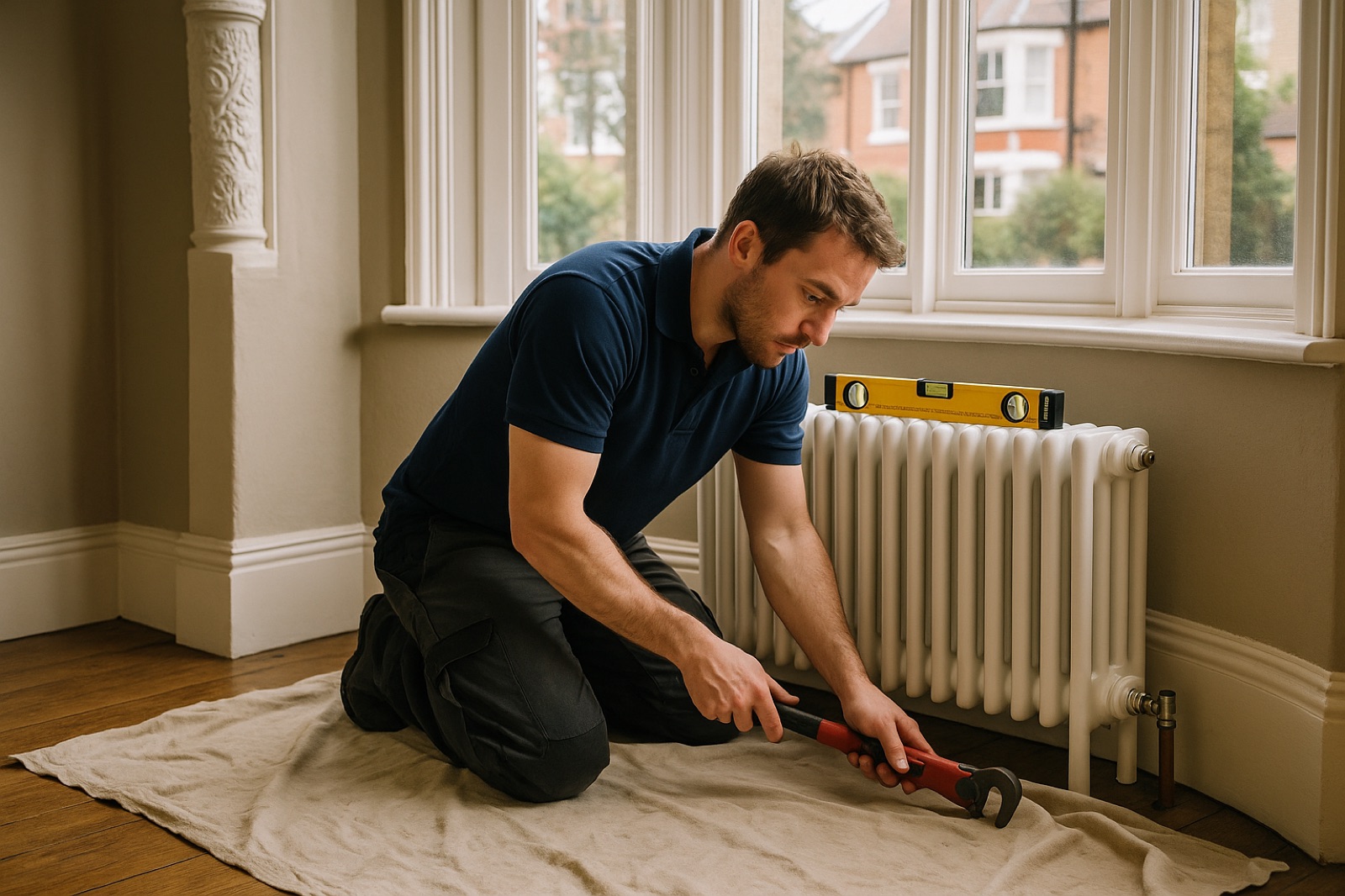
Home Heating engineers Bournemouth
Central heating engineers in Bournemouth, Christchurch and Poole
Power flushing, new radiators, zoning and full systems. We pass your request to heating engineers covering the BCP area.
Larger detached homes are common in Bournemouth, Christchurch and Poole, and they bring heating problems that small terraces don't: long pipe runs, rooms nobody uses, and one thermostat trying to control two floors.
Bungalows bring their own: everything on one level, often with old microbore pipes buried in the floor.
Bournemouth at a glance
- Detached homes
- 35.6% of households in Bournemouth, Christchurch and Poole (61,946) lived in a detached house in 2021, against 9.9% in terraces. The Census counts bungalows within these house types. Source
- How homes are heated
- 77.2% of BCP households heat with mains gas only and 11.6% with electricity only. 248 homes use oil only and 637 use tank or bottled gas only. Source
- Water hardness
- Bournemouth Water says most of its supply is moderately hard, about seven on a scale of one to ten, and offers a postcode search for exact figures. Source
- Energy ratings
- About 45% of homes with an EPC in Bournemouth, Christchurch and Poole are rated band D or below (median score 70, band C), against 47% across England. Based on certificates lodged in the 10 years to March 2025. Source
Zoning a large home
Splitting upstairs and downstairs onto separate zones, each with its own thermostat and motorised valve, stops the whole house heating to suit one room. Smart radiator valves can do a similar job room by room without new pipework.
Sludge and cold spots
Radiators cold at the bottom need a flush; cold at the top need bleeding, which our how to bleed a radiator guide explains. After a flush, a magnetic filter keeps the system clean.
Systems that have run for decades without inhibitor are the ones most likely to have a sludge problem. Ask the engineer to test the system water during the visit.
Microbore in bungalows
Thin 8mm or 10mm pipes block easily and restrict flow. If several radiators are poor after a flush, replacing the worst runs may be the fix.
Lowering running costs
Turning down the boiler flow temperature, fitting thermostatic valves and balancing the radiators so each heats evenly are cheap jobs that save gas. In a larger detached house, they often make more difference than a new boiler.
A weather compensation sensor on an outside wall lets the boiler run cooler on mild days, which suits a mild coastal climate.
Bournemouth homes and what they need
Interwar and post-war semis and detached houses
Separate zones and a well-placed thermostat make the biggest difference here.
Flats in converted villas and purpose-built blocks
Electric heating is common in some blocks. An engineer can advise on modern alternatives.
Bungalows across the suburbs and Christchurch
Underfloor pipes can leak unseen. Rising gas use or pressure loss is the clue.
Areas covered
Engineers who cover Bournemouth work across areas including Boscombe, Southbourne, Westbourne, Winton, Charminster, Kinson, Moordown, Pokesdown, Christchurch and Poole.
Questions people in Bournemouth ask
Will upgrading radiators help if I later get a heat pump?
Yes. Larger radiators let the system run at lower temperatures, which suits both a condensing boiler and a heat pump.
My bungalow's heating takes ages to warm up. Why?
Common causes are sludge, undersized radiators and microbore pipes. An engineer can test the flow and temperatures to find which.
Do I need Gas Safe registration for radiator work?
Not for radiators and pipes on the water side. For anything involving the boiler or gas pipe, the engineer must be on the Gas Safe Register.
Sources
Also nearby: Heating engineers in Southampton, Heating engineers in Portsmouth, Heating engineers in Exeter