Home Heating engineers Cambridge
Central heating engineers in Cambridge
From bleeding radiators to replacing a scaled-up cylinder. Tell us what is wrong and we pass it to heating engineers covering Cambridge.
Very hard water shapes a lot of heating work in Cambridge. Open-vented systems that top up with fresh water bring in more scale over time, and hot water cylinders slowly lose efficiency as their coils fur up.
Cambridge at a glance
- Water hardness
- Very hard. Cambridge Water's 2025 report for its Cambridge City North zone gives an average of 334.6 mg/l calcium carbonate (23.4 degrees Clark). Source
- How homes are heated
- 75.1% of Cambridge households heat with mains gas only, 11.6% with electricity only and 2.1% (1,096 homes) from a district or communal heat network. Oil alone heats just 97 homes. Source
- Energy ratings
- About 34% of homes with an EPC in Cambridge are rated band D or below (median score 73, band C), against 47% across England. Based on certificates lodged in the 10 years to March 2025. Source
Cylinders and hot water
If your hot water takes longer to heat than it used to, the cylinder coil may be coated in scale. A heating engineer can test it and advise whether a descale or a new cylinder makes more sense.
If the immersion heater keeps failing, scale is often the reason. Ask about a model designed for hard water areas.
Sludge and cold radiators
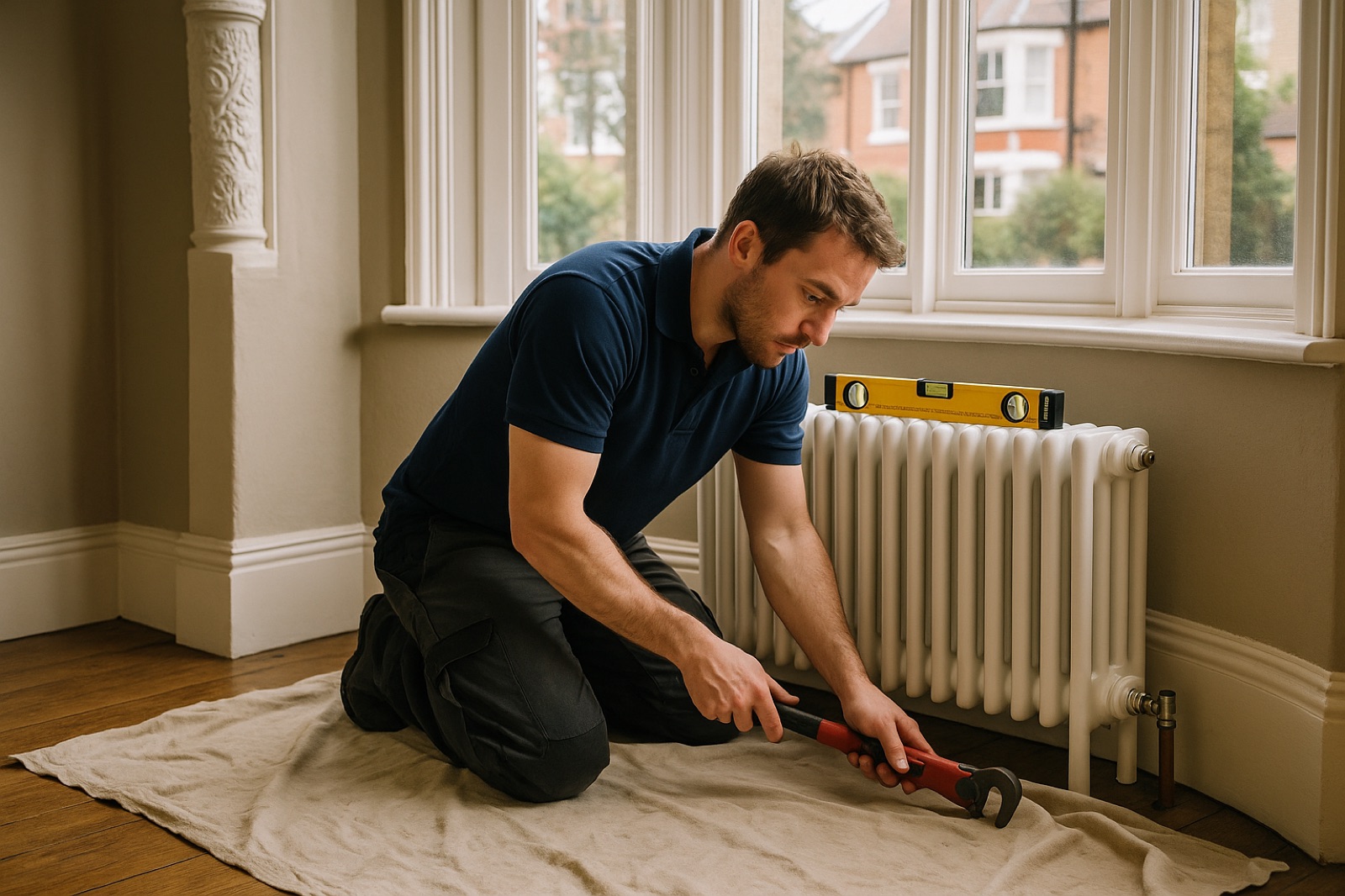
Radiators cold at the bottom have sludge. A chemical clean or power flush, with a magnetic filter and inhibitor afterwards, usually fixes it. Our how to bleed a radiator guide covers the easy first step for radiators cold at the top.
In open-vented systems, check the feed and expansion tank in the loft. If it is filling and overflowing, a valve has failed and fresh hard water is getting in.
Heat network homes
About 1,100 Cambridge homes get heat from a district or communal network. Problems with radiators and controls inside your home can usually be fixed by a heating engineer, but the heat exchanger unit belongs to the network operator. Call them first if you have no heat at all.
Leaks and pressure loss
If a sealed system needs topping up more than once or twice a year, water is escaping somewhere. Each refill brings in fresh, very hard Cambridge water and new oxygen, which speeds up both scale and corrosion. A heating engineer can trace the leak, often a radiator valve, a joint under the floor or the boiler's pressure relief valve.
Cambridge homes and what they need
Victorian gault brick and red brick terraces
Pipe runs to rear extensions and loft rooms are often undersized. Balancing the system or adding a larger radiator can fix a cold room.
Interwar and post-war semis in the northern and eastern suburbs
Converting an old open-vented system to sealed removes loft tanks and cuts scale and sludge.
Recent developments on the city fringes
Underfloor heating is more common in new homes. Its manifold and mixing valve need occasional checks by a heating engineer.
Areas covered
Engineers who cover Cambridge work across areas including Chesterton, Romsey, Cherry Hinton, Trumpington, Arbury, Newnham, Histon, Girton, Great Shelford and Milton.
Questions people in Cambridge ask
Do heating engineers need Gas Safe registration?
Only for work on the boiler or gas pipes. Radiators, valves and cylinders do not require it, though unvented cylinders need a specific qualification.
Should I add inhibitor after draining the system?
Yes. Whenever the system is drained or refilled, inhibitor should go back in at the right concentration. A test strip shows whether the level is still adequate.
Sources
- Cambridge Water: Cambridge City North water quality zone, 2025
- ONS Census 2021, TS046 central heating (Nomis)
- Gas Safe Register
Also nearby: Heating engineers in Peterborough, Heating engineers in Chelmsford, Heating engineers in Luton, Heating engineers in Norwich