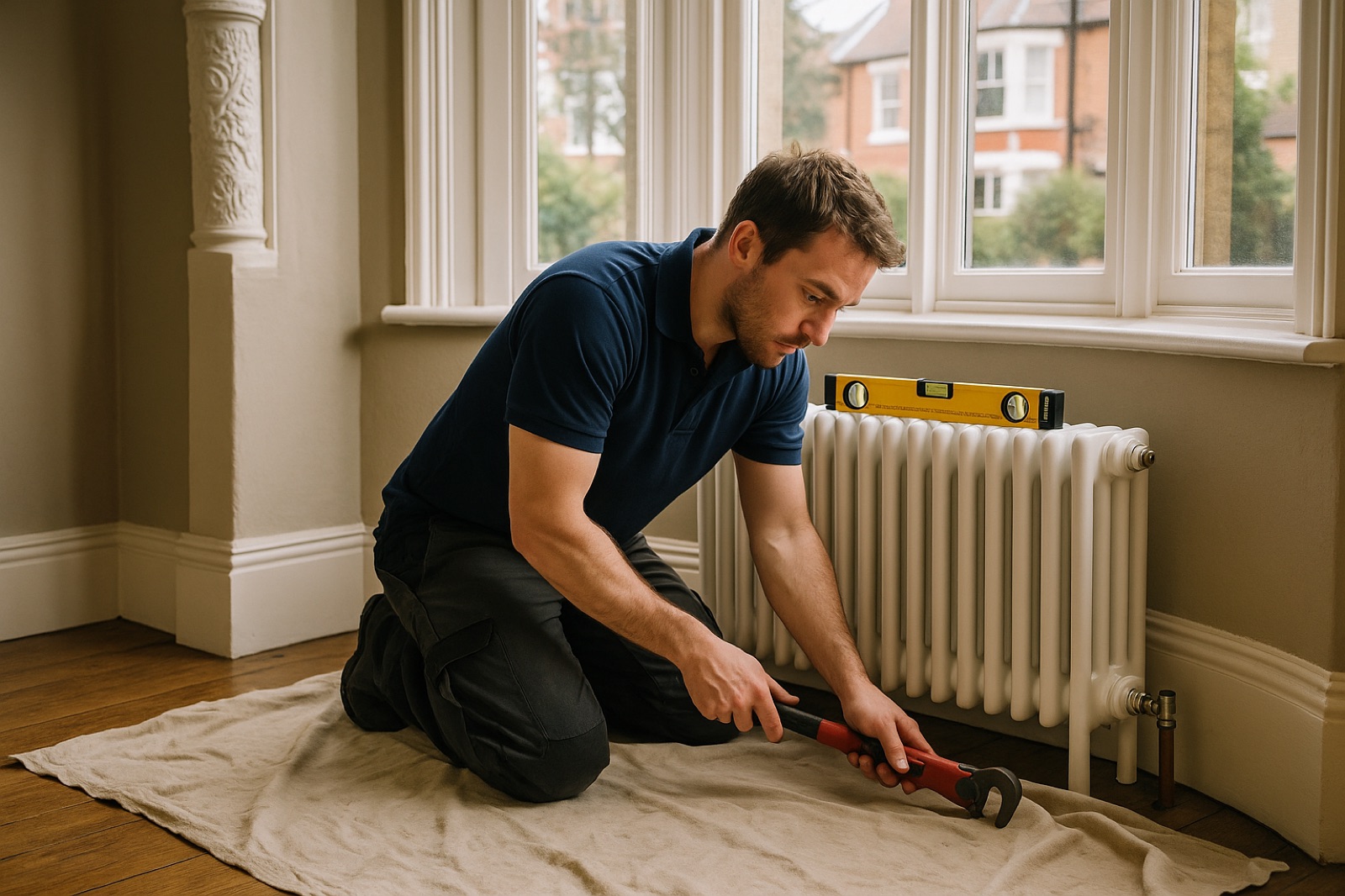
Home Heating engineers Newcastle
Heating engineers in Newcastle
Radiators, pipework, pumps, cylinders and controls. We pass your job to heating engineers who cover your area, with Gas Safe registration where gas work is involved.
Not every heating problem is the boiler. In Newcastle's older streets, a lot of the trouble sits in pipework and radiators fitted decades ago, then extended and patched as homes were split into flats or knocked through.
About 9% of Newcastle households had two or more types of heating in 2021, such as gas central heating plus electric storage heaters. Mixed systems like that need someone who looks at the whole house, not one appliance.
Newcastle at a glance
- Water hardness
- Moderately soft to moderately hard. Northumbrian Water's 2025 averages were 108 mg/l of calcium carbonate in the Fenham and Gosforth Park zone, 109 mg/l in the zone feeding the city centre and 103 mg/l in Byker and Wallsend. Source
- How homes are heated
- 74.8% of Newcastle households heat with mains gas only and 10.1% with electricity only. 2.3% (2,880 homes) are on a district or communal heat network. Oil-only heating covers 131 households, about 0.1%. Source
- Energy ratings
- About 43% of homes with an EPC in Newcastle upon Tyne are rated band D or below (median score 70, band C), against 47% across England. Based on certificates lodged in the 10 years to March 2025. Source
Balancing and cold rooms
If the radiator nearest the boiler is roasting and the back bedroom is cold, the system probably needs balancing. An engineer adjusts the lockshield valves so water reaches every radiator at the right rate.
Before you call, try bleeding the radiators. Our guide on how to bleed a radiator covers it, and remember to check the boiler pressure afterwards.
Sludge in older systems
Black water from a bleed valve means magnetite sludge. It settles in the bottom of radiators and shortens pump and heat exchanger life. A power flush, followed by inhibitor and a magnetic filter, usually sorts it.
Hardness isn't the main driver here. Newcastle's mains water is moderately soft to moderately hard, so scale in the heating circuit is less of a problem than corrosion debris.
Moving off electric heating
One in ten Newcastle homes used electric heating only in 2021, often storage heaters in flats. Adding a wet system means new pipework, radiators and a heat source. A heating engineer can price the work and check whether a heat pump or a gas boiler makes more sense for the building.
Newcastle homes and what they need
Tyneside flats and brick terraces
Pipes often run under floorboards shared between upper and lower flats. Lifting boards may need the neighbour's agreement, so plan the route first.
Interwar and postwar semis
Old microbore pipework of 8 or 10 mm is common after 1970s refits. It blocks easily and restricts flow, which matters if you plan a heat pump later.
Newer estates on the city edge
Underfloor heating downstairs with radiators upstairs is common. Check that the mixing valve and zone controls are set correctly before replacing anything.
Areas covered
Engineers who cover Newcastle work across areas including Jesmond, Heaton, Gosforth, Fenham, Byker, Benwell, Walker, Kenton, Westerhope and Denton Burn.
Questions people in Newcastle ask
Do I need someone on the Gas Safe Register for radiator work?
Only for work on gas pipes or appliances. Radiator and pipework jobs on the water side don't legally need it, but many heating engineers hold it anyway.
Can a heating engineer fit a new cylinder?
Yes. An unvented cylinder also needs the installer to hold a G3 qualification, so ask for proof.
Sources
- ONS Census 2021, table TS046 central heating (Nomis)
- Northumbrian Water: Fenham and Gosforth Park zone report (N201)
Also nearby: Heating engineers in Sunderland, Heating engineers in Middlesbrough