Home Heating engineers Reading
Central heating engineers in Reading
Power flushing, radiator upgrades, new systems and controls. We pass your request to heating engineers covering Reading.
Most Reading homes have a gas boiler and radiators, and the most common heating calls are for radiators that won't get hot, noisy systems and rooms that never warm up. About one household in six heats with electricity alone, and some of those want a wet system fitted.
Reading at a glance
- Water hardness
- Thames Water, which supplies Reading, classes all of its water as hard (200 to 300 mg/l of calcium carbonate) or very hard (over 300 mg/l). Source
- Housing mix
- 28.2% of Reading households lived in a terraced house, 25.9% in a semi, 12.2% in a detached house and about a third in flats in 2021. Source
- How homes are heated
- 71.9% of Reading households heat with mains gas only and 15.7% with electricity only. 441 homes (0.7%) use tank or bottled gas only and 90 use oil only. Source
- Energy ratings
- About 45% of homes with an EPC in Reading are rated band D or below (median score 70, band C), against 47% across England. Based on certificates lodged in the 10 years to March 2025. Source
Sludge and scale
Radiators cold at the bottom are full of sludge; a power flush or chemical clean followed by a magnetic filter usually sorts it. In very hard Thames Water areas, scale also builds in the boiler and cylinder.
Where only the top of a radiator stays cool, trapped air is the culprit, and our guide on bleeding a radiator walks you through releasing it.
Adding central heating
If you're moving from electric heaters to radiators, design the system for low flow temperatures so it can run on a heat pump later. Larger radiators and good controls make the most of either heat source.
Getting heat to every room
Balancing the system with lockshield valves makes sure water reaches the far radiators. Thermostatic radiator valves on each radiator stop warm rooms overheating while the cold ones catch up.
Lowering the boiler flow temperature at the same time lets a condensing boiler recover more heat from its flue gases, which cuts gas use without making the house colder.
Reading homes and what they need
Victorian brick terraces in the town's older streets
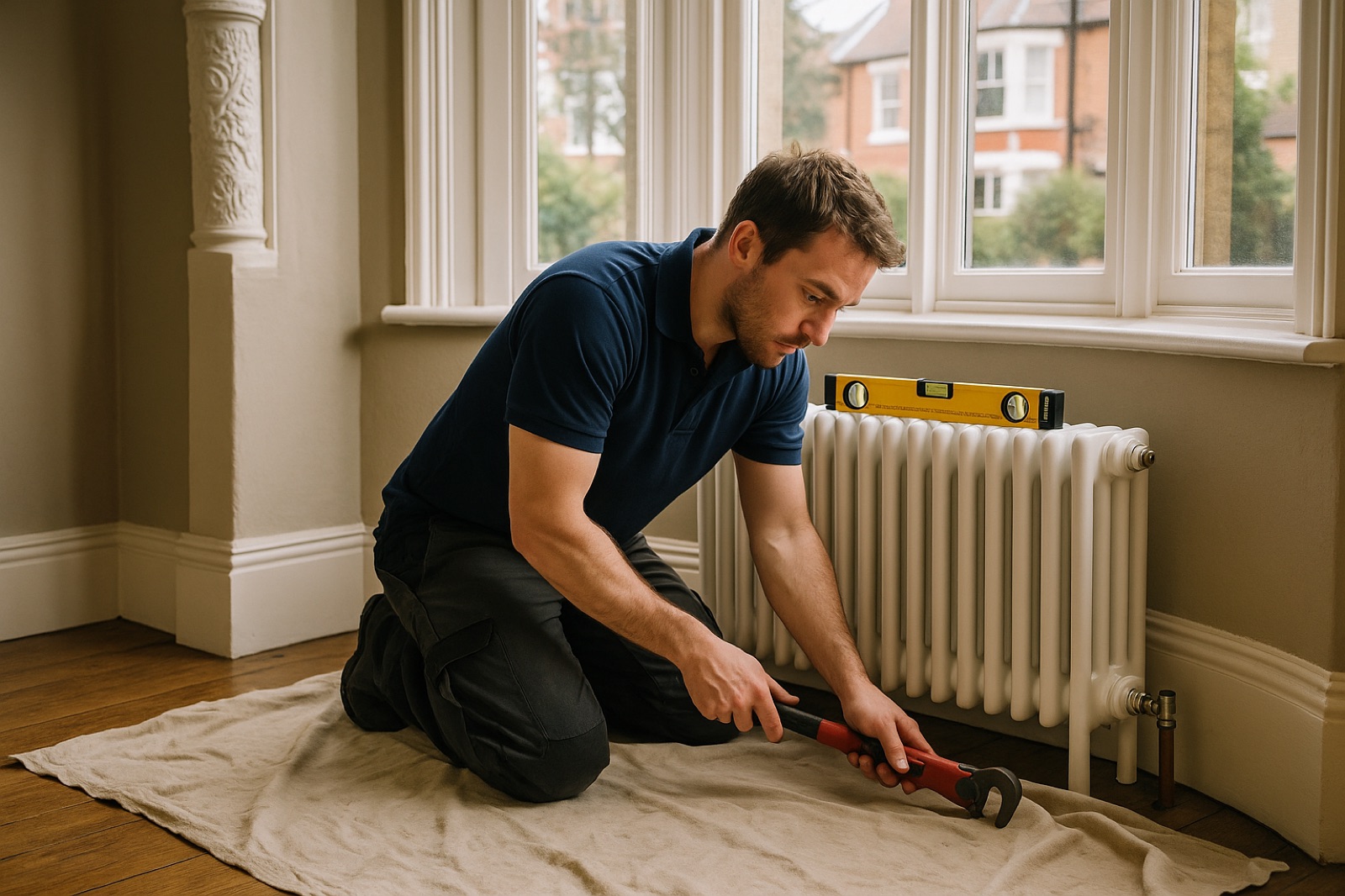
Front rooms in bay-fronted terraces lose heat fast. Check the radiator there is big enough.
Interwar and post-war semis in the suburbs
Older semis may have undersized radiators. Upsizing them helps now and prepares for a heat pump.
Estates and apartments built from the 1970s onwards
Estate homes often have microbore pipes that block easily. Replacing the worst runs can help.
Areas covered
Engineers who cover Reading work across areas including Caversham, Tilehurst, Earley, Woodley, Whitley, Emmer Green, Lower Earley, Southcote, Calcot and Theale.
Questions people in Reading ask
Do I need a Gas Safe engineer for radiators?
Only if gas work is involved. Radiator and pipework jobs on their own don't need it.
My Reading semi's radiators take an hour to warm up. Is that normal?
Not usually. Sludge, a failing pump or an unbalanced system are the common causes, and a heating engineer can test each in one visit.
Can a heating engineer convert my storage heaters to radiators?
Yes, but it needs a heat source too: a gas boiler if you have a gas supply, or a heat pump. Get advice on both before pipework goes in.
Sources
- ONS Census 2021, TS046 central heating (Nomis)
- Thames Water: Hard water
- ONS Census 2021, TS044 accommodation type (Nomis)
Also nearby: Heating engineers in Oxford, Heating engineers in Swindon, Heating engineers in London, Heating engineers in Southampton