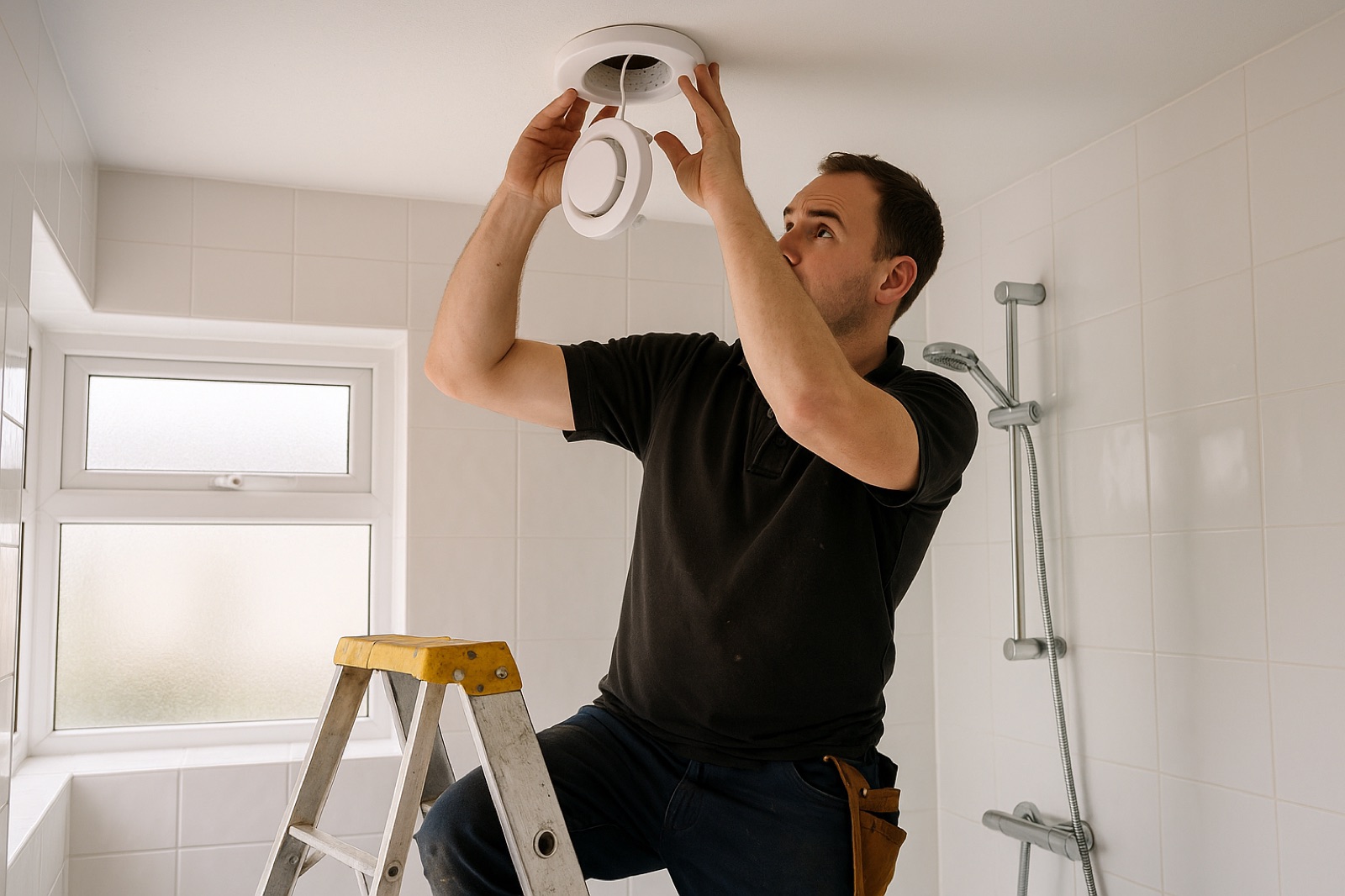
Home Ventilation installation Derby
Ventilation installation in Derby
From extractor fans to whole-house heat recovery, we pass your ventilation job to installers covering Derby.
Derby's outskirts have grown fast, with modern estates in Mickleover, Chellaston and Oakwood. New homes are built far more airtight than older ones, which saves heat but means ventilation has to be designed in, and kept working, rather than left to draughts.
Derby at a glance
- Types of home
- 39.1% of Derby households live in a semi-detached house and 24.1% in a detached house, a high share for a city. 21.8% live in a terrace and 12.2% in a purpose-built block of flats. Source
- Record heat nearby
- Coton-in-the-Elms in south Derbyshire reached 38.9°C on 19 July 2022, 17°C above its July average maximum. Source
- Local grant
- Derby City Council secured £1.6m from the Warm Homes: Local Grant over three years for low-income, privately owned homes rated EPC D to G, with up to £30,000 per property. YES Energy Solutions delivers it; eight homes were retrofitted in year one and 120 more are planned over the next two years. Source
Signs of poor ventilation
Streaming windows every morning, a musty smell in bedrooms and black spots on ceilings in corners all point to moisture that isn't getting out. A cheap hygrometer helps: humidity above about 60% for long spells in winter is a warning.
Check the basics first. Open trickle vents, clean fan grilles and dry washing outside where you can.
New builds and MVHR
Some newer homes have mechanical ventilation with heat recovery. It needs its filters changing regularly, often every six to twelve months, and the system balancing if airflow drops. Blocked filters are a common cause of stuffy rooms and condensation in new builds.
If you're extending or renovating heavily, MVHR can be added while ceilings are open.
PIV for older semis
In 1930s to 1960s semis, positive input ventilation is often the simplest whole-house fix for condensation. A loft unit feeds filtered air into the landing and pushes moist air out.
Fans in kitchens and bathrooms
The extract rates in Approved Document F are a useful yardstick for kitchens and bathrooms. An installer should measure what your existing fans actually move and check the ducting ends outside rather than in the loft.
Kitchen hoods that recirculate air through a charcoal filter catch smells and grease but return the steam to the room. Ducting the hood outside, or adding a wall fan, deals with the moisture.
Derby homes and what they need
Modern estates on the outskirts
If your new build has trickle vents, keep them open. They're part of how the house was designed to ventilate.
Victorian terraces near the centre
Keep air bricks clear to ventilate suspended floors, and vent any blocked chimney breasts.
Suburban semis from the 1930s to the 1960s
Bathrooms with only a small window need a humidity-controlled fan to stop winter mould.
Areas covered
Engineers who cover Derby work across areas including Allestree, Darley Abbey, Mickleover, Littleover, Chaddesden, Normanton, Alvaston, Oakwood, Spondon and Chellaston.
Questions people in Derby ask
Can ventilation help in a heatwave?
Yes. MVHR with a summer bypass brings cooler night air in. With Coton-in-the-Elms reaching 38.9°C in 2022, night cooling matters more than it used to.
Can a grant help?
Derby's Warm Homes funding focuses on insulation, heating and renewables. Ventilation may be included where insulation work needs it.
How often should MVHR filters be changed?
Follow the manufacturer's guidance, typically every six to twelve months. Clogged filters cut airflow and can let condensation build up.
Sources
- GOV.UK: Approved Document F, ventilation
- Met Office: Unprecedented extreme heatwave, July 2022
- Derby City Council: Derby gets £1.6m for warm homes
Also nearby: Ventilation installation in Nottingham, Ventilation installation in Leicester, Ventilation installation in Sheffield, Ventilation installation in Stoke-on-Trent