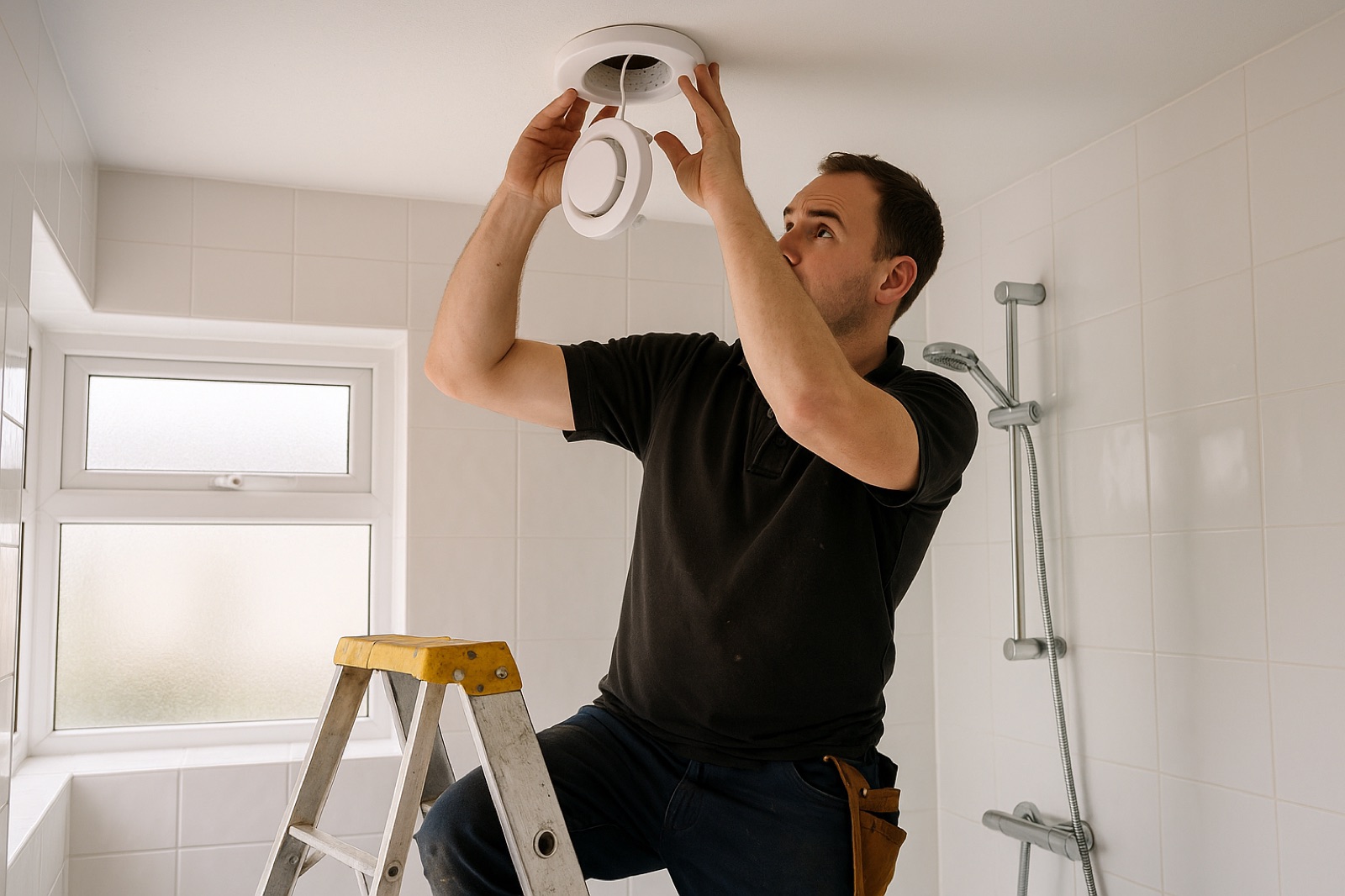
Home Ventilation installation Plymouth
Ventilation installation in Plymouth
Extractor fans, PIV and heat recovery systems that stop condensation at the source.
Plymouth's privately rented homes have the weakest energy ratings in the city: only 38.9% of those with an EPC were rated C or above. Cold, poorly ventilated rented flats are where condensation and mould are most common.
Plymouth at a glance
- Housing mix
- 32.8% of Plymouth households lived in terraced houses in 2021 and 30.1% in semis. 25.4% lived in flats, including 7.5% in flats carved out of converted or shared houses. Source
- Energy ratings
- 46.7% of Plymouth homes with an EPC lodged up to March 2022 were rated C or above. Privately rented homes fared worse, at 38.9%, and homes built before 1930 were at 17.3%. Source
- Local grant
- Plymouth City Council runs the Warm Homes: Local Grant with Plymouth Energy Community. It announced £2.5 million in July 2025, expected to upgrade more than 200 privately owned homes rated EPC D to G, usually where household income is £36,000 or less. Source
- Social housing damp rules
- Since 27 October 2025, Awaab's Law requires social landlords in England to investigate significant damp and mould hazards within 10 working days and make emergency hazards safe within 24 hours. Source
Rented flats come first
Plymouth has a lot of small rented flats in converted houses, often with an internal bathroom and a kitchen in the living room. Without a working extractor in each, steam from showers and cooking has nowhere to go. Landlords should check fans at every change of tenant, not just when a complaint comes in.
A quiet continuous-running fan with a humidity boost is the simplest fix. Tenants are much less likely to switch off a fan they can't hear.
PIV for houses
A positive input ventilation unit pulls air from the loft of a Plymouth house and feeds it gently onto the landing. It suits semis and terraces with a central stairwell, and is often enough to clear condensation on bedroom windows. It isn't a fix for rain getting in or a leaking pipe.
MVHR for deep retrofits
Mechanical ventilation with heat recovery supplies fresh air to living rooms and bedrooms and extracts from kitchens and bathrooms, keeping most of the heat. It suits homes that have been made airtight with external insulation and new windows, or new-build flats. Filters need changing at least yearly.
Grants and ventilation
Plymouth's Warm Homes: Local Grant pays for wall, loft and underfloor insulation in eligible homes. Insulating without ventilating can trap moisture, so ask the surveyor how the house will be ventilated after the work and whether fans or trickle vents are included.
Plymouth homes and what they need
Interwar and postwar semis
PIV in the loft plus a ducted kitchen hood and a humidity-controlled bathroom fan covers most semis. Keep the loft eaves clear when topping up insulation.
Victorian terraces on the hills
Bathrooms in rear extensions often have small or painted-shut windows. A wall fan ducted straight outside, wired to run on after use, makes the biggest difference.
Waterfront and city-centre flats
Newer flats around Sutton Harbour and the Royal William Yard may already have MVHR or continuous extract. Find the unit, check it's running and change the filters before blaming the building.
Areas covered
Engineers who cover Plymouth work across areas including Plympton, Plymstock, Mutley, Mannamead, Peverell, Stoke, Devonport, Stonehouse, Hartley and Saltash.
Questions people in Plymouth ask
Who fits ventilation in Plymouth?
Electricians usually fit extractor fans and PIV units. MVHR needs a designer to size the ducts and balance the airflow, then an installer to fit and commission it.
Will an extractor fan stop mould in my Plymouth flat?
It removes the moisture that causes most mould, as long as it's sized properly and left running. Our window condensation guide covers other everyday habits that help.
Sources
- ONS: Energy efficiency of housing, local authority districts
- Plymouth City Council: Free energy upgrades offered to Plymouth homes
Also nearby: Ventilation installation in Exeter