Home Gas engineer courses Hull
Gas engineer courses in Hull
The steps from a plumbing course in Hull to working as a Gas Safe registered engineer.
More than 92,000 Hull households heat with gas alone, and over half of all households rent, each rented home needing a gas safety check every year. On top of that, the city's very hard water creates a steady stream of repairs. It's a good place to work as a gas engineer.
Hull at a glance
- How homes are heated
- 80.1% of Hull households heat with mains gas only and 7.1% with electricity only. Just 40 homes in the city use oil only. In the neighbouring East Riding of Yorkshire, 8,770 households (5.8%) heat with oil only. Source
- Renting
- Only 48.3% of Hull households owned their home in 2021. 27.0% were social tenants (18.9% renting from the council) and 22.0% rented from a private landlord or letting agency. Source
- Plumbing training
- Hull College runs a one-year, full-time Level 3 plumbing course at its Queen's Gardens campus covering advanced plumbing and heating systems, fault-finding and electrical principles, for students who have completed Level 2. Source
Start with plumbing at Hull College
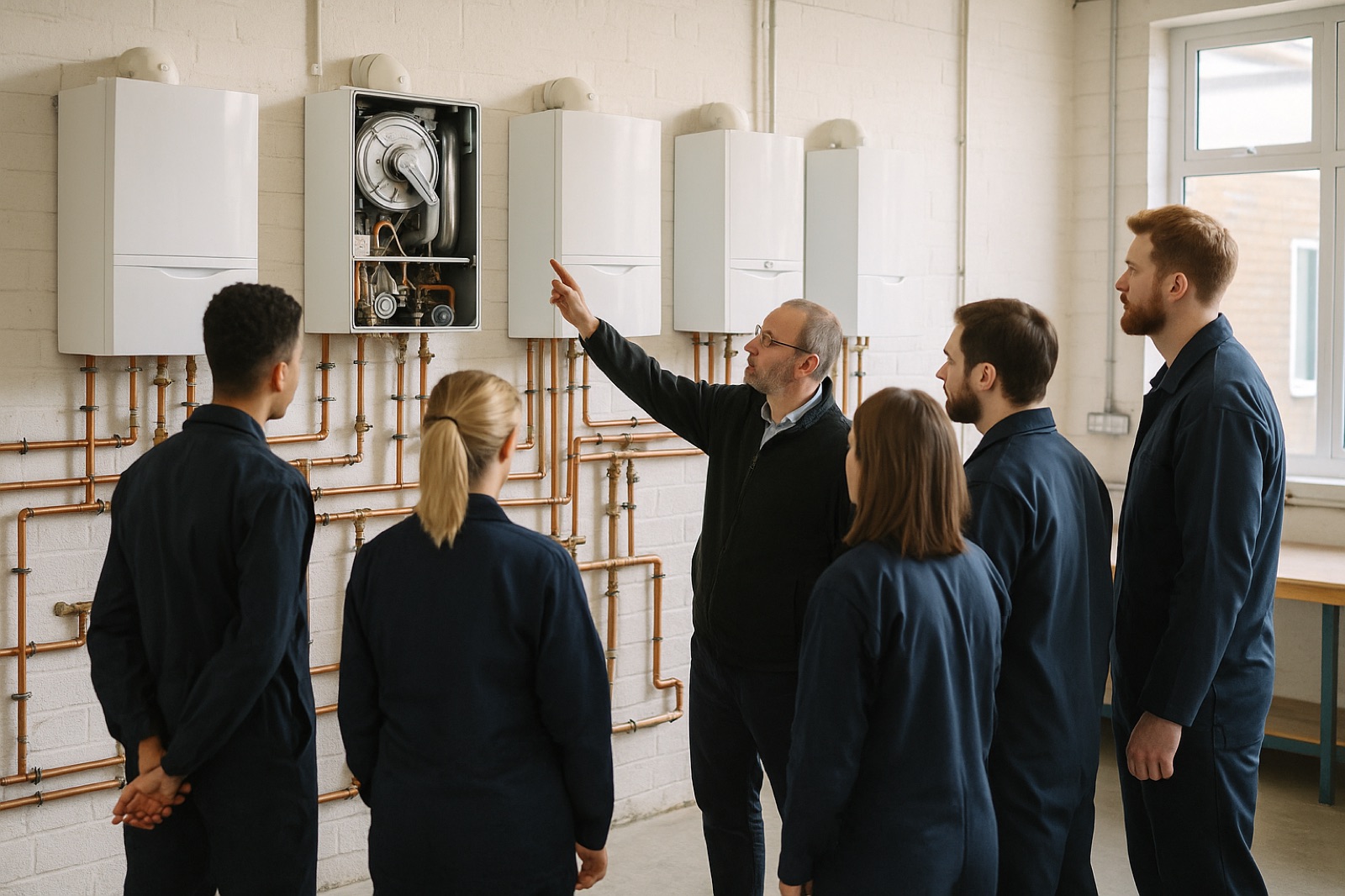
Hull College runs a one-year, full-time Level 3 plumbing course at its Queen's Gardens campus, for students who've completed Level 2. It covers advanced plumbing and heating systems, fault-finding and the electrical principles behind heating controls.
A plumbing qualification doesn't let you work on gas, but it's the usual foundation for gas training.
Qualifying in gas
The usual route is the Level 3 Gas Engineering Operative apprenticeship with an employer. Adults changing career more often take a managed learning programme with supervised site work, followed by ACS assessments. Then you register with Gas Safe.
We couldn't confirm a gas apprenticeship provider in Hull itself. Ask Hull College and local heating firms what's running, and check any private training centre carefully before paying.
Work in Hull
Hull City Council and housing associations manage a large stock of homes, and their contractors carry out thousands of gas safety checks and services a year. Private landlords add more. Many new engineers start on that planned work, then move into installations and repairs.
Engineers who learn to deal with scale, from descaling plate heat exchangers to fitting the right scale reducers, are always in demand here.
Extra skills
Once you're registered, adding F-Gas certification opens up air conditioning and air-to-air heat pumps. Joining or working for an MCS certified firm lets you fit heat pumps paid for by the Boiler Upgrade Scheme. With semis and bungalows across Hull's suburbs and villages, heat pump work is growing.
Areas covered
Engineers who cover Hull work across areas including The Avenues, Newland Park, Hessle, Cottingham, Anlaby, Kirk Ella, Willerby, Sutton-on-Hull, Bransholme and Kingswood.
Questions people in Hull ask
How long does it take to qualify?
Plan on two to three years via an apprenticeship. Adults who already plumb can move faster, but ACS assessment still needs months of supervised gas jobs in a portfolio.
What about oil heating?
Hull itself has almost none, but the East Riding has thousands of oil-heated homes. Oil comes under OFTEC, which has its own training.
Sources
- Hull College: Level 3 in Plumbing
- Gas Safe Register
- ONS Census 2021, TS046 central heating (Nomis)
- ONS Census 2021, TS054 tenure (Nomis)
Also nearby: Gas engineer courses in York, Gas engineer courses in Doncaster, Gas engineer courses in Leeds