Home Gas engineer courses Reading
Gas engineer courses in Reading
Routes into gas engineering for people in Reading, from a first plumbing qualification to ACS assessment and Gas Safe registration.
Nearly 49,000 Reading households heat with mains gas only, and more than 21,000 homes are privately let, each needing a gas safety check every year. That's the core of the work for Gas Safe registered engineers in the town.
We couldn't confirm a gas-specific course at a college inside Reading itself, so the routes below combine local plumbing training with gas training elsewhere.
Reading at a glance
- Private renting
- 31.9% of Reading households (21,623) rented privately in 2021, and 16.1% socially. Source
- How homes are heated
- 71.9% of Reading households heat with mains gas only and 15.7% with electricity only. 441 homes (0.7%) use tank or bottled gas only and 90 use oil only. Source
- Landlord gas checks
- Landlords must have every gas appliance and flue checked by a Gas Safe registered engineer every 12 months. Source
- Plumbing training
- Reading College lists a one-year full-time Plumbing Level 2 Diploma covering cold water, hot water and central heating. Source
Start with plumbing
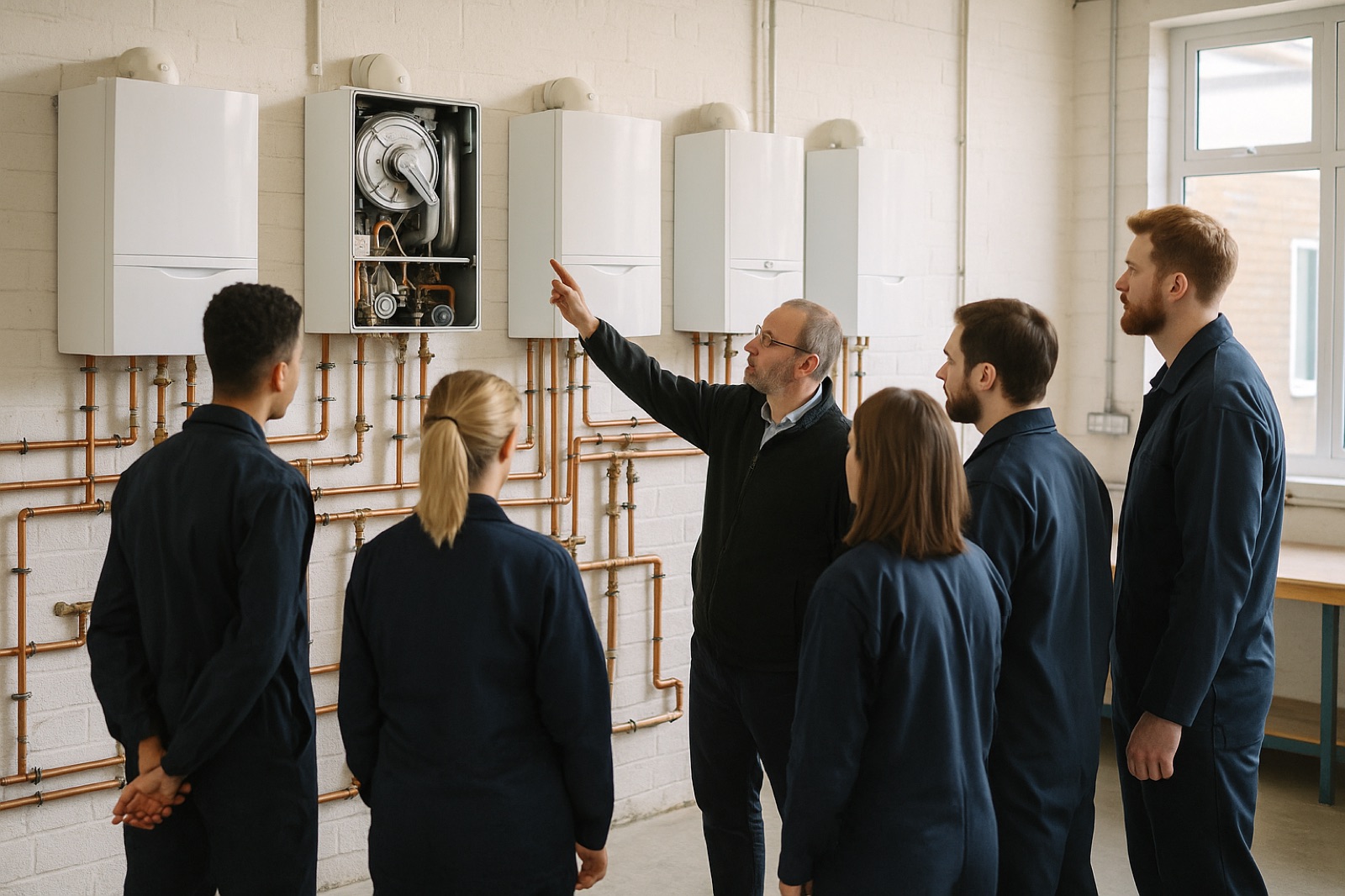
Reading College lists a one-year full-time Plumbing Level 2 Diploma for school leavers, covering cold water, hot water and central heating. It gives you the foundation employers look for when taking on a gas apprentice.
Check current entry requirements and start dates with the college.
Gas apprenticeships
A Level 3 gas apprenticeship combines paid work for an employer with college training, usually on day release. Search the GOV.UK Find an apprenticeship service for Reading and Berkshire vacancies; housing associations and heating firms advertise there with the college already arranged.
Further afield, City of Portsmouth College runs a Level 3 Gas Engineering Operative apprenticeship at its North Harbour Campus.
The ACS route for plumbers
Experienced plumbers usually take a managed learning programme, build a portfolio of gas work supervised by a registered engineer, then pass ACS assessments. Those certificates are the basis for Gas Safe registration. Be wary of fast-track courses that skip the portfolio.
Where the work is
Reading's large private rented sector means a steady stream of landlord gas safety checks, often booked through letting agents. Combi swaps in Victorian terraces and semis, and repairs in housing association homes, make up much of the rest.
About one home in six here is heated electrically, so engineers who add heat pump skills later will find a growing market as those homes upgrade.
Areas covered
Engineers who cover Reading work across areas including Caversham, Tilehurst, Earley, Woodley, Whitley, Emmer Green, Lower Earley, Southcote, Calcot and Theale.
Questions people in Reading ask
How long does it take?
A gas apprenticeship typically runs around two years. The ACS route depends on how quickly you complete the portfolio.
What about heat pumps and air conditioning?
Those need separate qualifications: MCS for grant-funded heat pump installs and F-Gas for refrigerant work.
Do I need a job before I start a gas apprenticeship?
Yes. An apprenticeship is a job with training, so the employer comes first and the college place follows.
Sources
- Reading College: Plumbing Level 2 Diploma
- City of Portsmouth College: Level 3 Gas Engineering Operative Apprenticeship
- Gas Safe Register
- HSE: Gas safety, landlords and letting agents
- ONS Census 2021, TS046 central heating (Nomis)
Also nearby: Gas engineer courses in Oxford, Gas engineer courses in Swindon, Gas engineer courses in London, Gas engineer courses in Southampton