Home Damp and mould removal Guide
How to stop condensation on windows
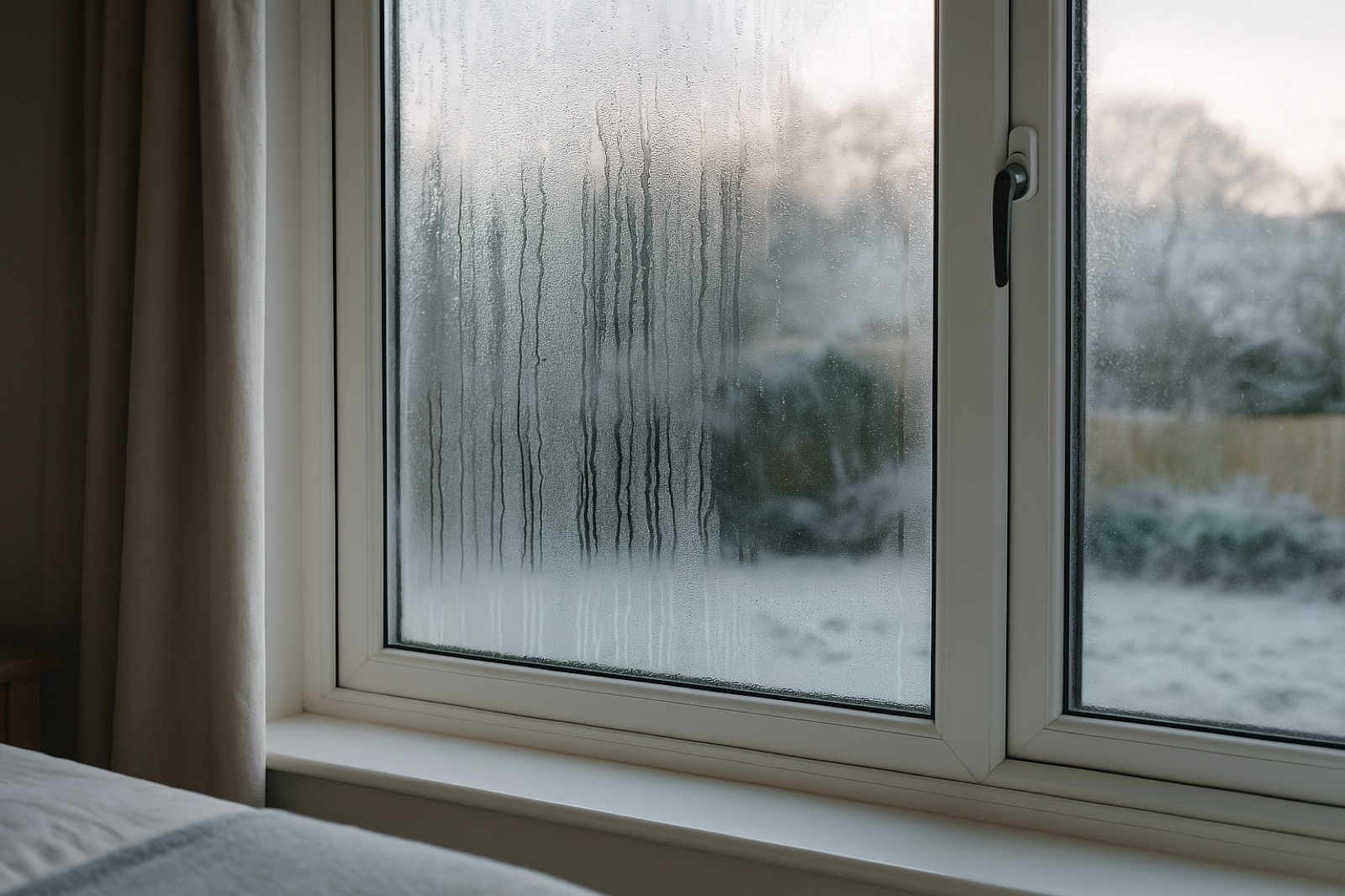
Streaming windows on a cold morning are a sign of wet air meeting cold glass. Once you understand dew point, it becomes clear why damp traps barely help and what does.
If you wake up to windows so wet the sills are puddled, you’re not alone, and you’re not doing anything unusual. Knowing how to stop window condensation starts with one idea: warm, moist air dumps its water when it touches something cold, and on a winter night your window is the coldest thing in the room. Fix the moisture or the cold, and the water goes away.
At a glance
| Fix | What it does | How well it works |
|---|---|---|
| Wipe or window vac each morning | Removes water before it soaks into frames and sills | Stops damage, doesn’t stop the cause |
| Extractor fans, trickle vents, opening windows | Lets wet air out | Tackles the cause |
| Steady, low heating | Keeps surfaces warmer | Helps, especially in cold bedrooms |
| Electric dehumidifier | Pulls water out of the air | Works well with windows closed |
| Damp traps and crystal pots | Absorb a little moisture nearby | Only for low-level condensation |
Why your windows are soaking every morning
Air always holds some water as invisible vapour. Warm air can hold more than cold air. Cool any air enough and it reaches its dew point, the temperature at which it becomes saturated and the vapour turns back into liquid water. When a surface is colder than the dew point of the air touching it, water forms on that surface.
Indoors, that surface is usually the glass. Which? puts it simply: condensation happens when humid air meets cold surfaces such as walls and windows. Overnight the outside temperature drops, the glass cools, and the moist air in your bedroom hits it for eight hours straight.
Where does the water come from? You. Cooking, showering, bathing and even breathing all add moisture to the air. Tandridge District Council’s guide puts the total for a household at up to 28 pints (about 16 litres) in a day. Drying one 2.75kg load of washing indoors adds 10 pints of that, and two people at home add 3 pints just by being there. A bedroom with two people, a closed door and the heating off is a perfect recipe for streaming glass by morning.
This is also why turning the heating off to save money can backfire. Colder rooms mean colder walls and windows, and colder surfaces reach the dew point sooner.
How to stop window condensation
You have two levers: put less water into the air, and keep the glass and walls warmer. Work through these in order.
- Wipe the glass every morning. Use a towel, a squeegee or a window vac, and wring the water into a sink rather than leaving it to evaporate back into the room. This stops sills rotting and mould growing on frames.
- Get the steam out at source. Run the kitchen and bathroom extractor fans while cooking and showering and for a while afterwards. Put lids on pans and close the kitchen or bathroom door so the moisture doesn’t drift into bedrooms.
- Open your trickle vents and leave them open. Those slots at the top of the frame provide background ventilation. Keep them and any air bricks clear.
- Ventilate after moisture-heavy jobs. Open a window after a bath or shower. If security allows, a window in its vent position gives a steady trickle of fresh air.
- Dry washing carefully. Outdoors is best. If you have to dry indoors, use one room with the door shut and a window open or an extractor running, rather than radiators all over the house.
- Keep the heating steady. Which? says a constant low heat is better for damp than big swings between cold and hot. Smart or programmable heating controls make this easier to manage.
- Leave a gap behind furniture. Wardrobes pushed hard against outside walls create cold, still pockets where moisture settles.
- Run a dehumidifier if the problem continues. Which? suggests running one at night with the heating on low. Keep windows shut while it runs, or you’re just drying the outdoors.
A cheap hygrometer shows you if it’s working. The US Environmental Protection Agency advises keeping indoor relative humidity below 60%, ideally between 30% and 50%.
If your fans are weak or you have none, better ventilation is often the long-term fix. Options range from a properly sized extractor fan to whole-house systems.
Do window condensation absorbers work?
The little pots of crystals on the windowsill are the first thing many people buy, and the most common disappointment. They work by absorbing water vapour from the air around them, but slowly. Which? describes damp traps as costing around £10 and being good for low-level condensation, but says they won’t do much with a serious damp problem.
Testing by CHOICE, the Australian consumer group, shows the scale of the gap. In a 65% humidity test, a DampRid absorber removed about 2ml of water an hour. The worst dehumidifier in its current reviews removed 113ml an hour, and the best 388ml. If your home puts litres of water into the air every day, a few pots on the sill can’t keep up.
An electric dehumidifier costs more, usually over £100 according to Which?. Refrigerant models suit heated rooms; desiccant models cope better in cold rooms such as an unheated bedroom or conservatory.
Condensation on new double glazing
“Are my six-month-old windows supposed to be like that?” is one of the most common questions after new windows go in. Where the water forms tells you what’s going on.
- On the inside face of the glass: the room air is too wet. Double glazing is warmer than single glazing, so it attracts less condensation, but it can’t remove moisture. New windows also tend to seal up draughts that used to carry wet air away, so make sure the trickle vents are open.
- On the outside face: usually a good sign. Modern low-emissivity glass stops heat getting through, so the outer pane stays cold and dew forms on it like it does on a car.
- Between the panes: the seal has failed and moisture has got into the sealed unit. You can’t wipe it away. Which? suggests checking your warranty, as the unit may be covered for repair or replacement.
When it’s more than condensation
If you’ve tackled moisture and heating and you still get damp patches, especially on one wall or after rain, you may have a leak or penetrating damp rather than condensation. That needs a different fix. Our damp and mould hub covers how to tell the types apart and how to deal with mould once it has taken hold.
Don’t ignore it. The government’s 2023 guidance on damp and mould says they mainly affect the airways and lungs, and can also affect the eyes and skin. Children, older people and anyone with asthma, COPD or a weakened immune system are most at risk.
If you rent, the same guidance says it is totally unreasonable to blame damp and mould on “lifestyle choices”. Report it to your landlord in writing. In England, social landlords must now investigate significant damp and mould within 10 working days under Awaab’s Law, in force since 27 October 2025.
Questions people ask
Why do my bedroom windows get wetter than the rest of the house?
You breathe out moisture all night in a closed room, and bedrooms are often kept cooler. Wet air plus a cold window means more water on the glass. Open the trickle vents and keep the door ajar if you can.
Should I open my windows in winter to prevent mould?
Short bursts help, especially after showering, cooking or drying clothes. Leaving windows wide open all day wastes heat and cools the room, which can make condensation worse. Trickle vents give steady background ventilation without the heat loss.
Is condensation on windows dangerous?
The water itself isn’t, but left on the glass day after day it soaks frames and sills and lets mould grow on windows and nearby walls. Mould is linked to breathing problems, so wipe it away each morning and tackle the cause.
Does the vinegar spray trick work?
Which? mentions a mix of water, white vinegar and a drop of washing-up liquid sprayed on glass to slow condensation coming back. Treat it as a minor tip. It does nothing about the wet air causing the problem.
Sources
- GOV.UK / UKHSA: Understanding and addressing the health risks of damp and mould in the home
- Met Office: Dew
- Which?: How to stop condensation
- Which?: 5 ways to get the most out of your dehumidifier
- CHOICE: Does DampRid really work?
- Tandridge District Council: Condensation
- US EPA: A brief guide to mold, moisture and your home
- Homebuilding & Renovating: What causes condensation outside windows?
- GOV.UK: Millions of tenants safe from black mould through Awaab’s Law