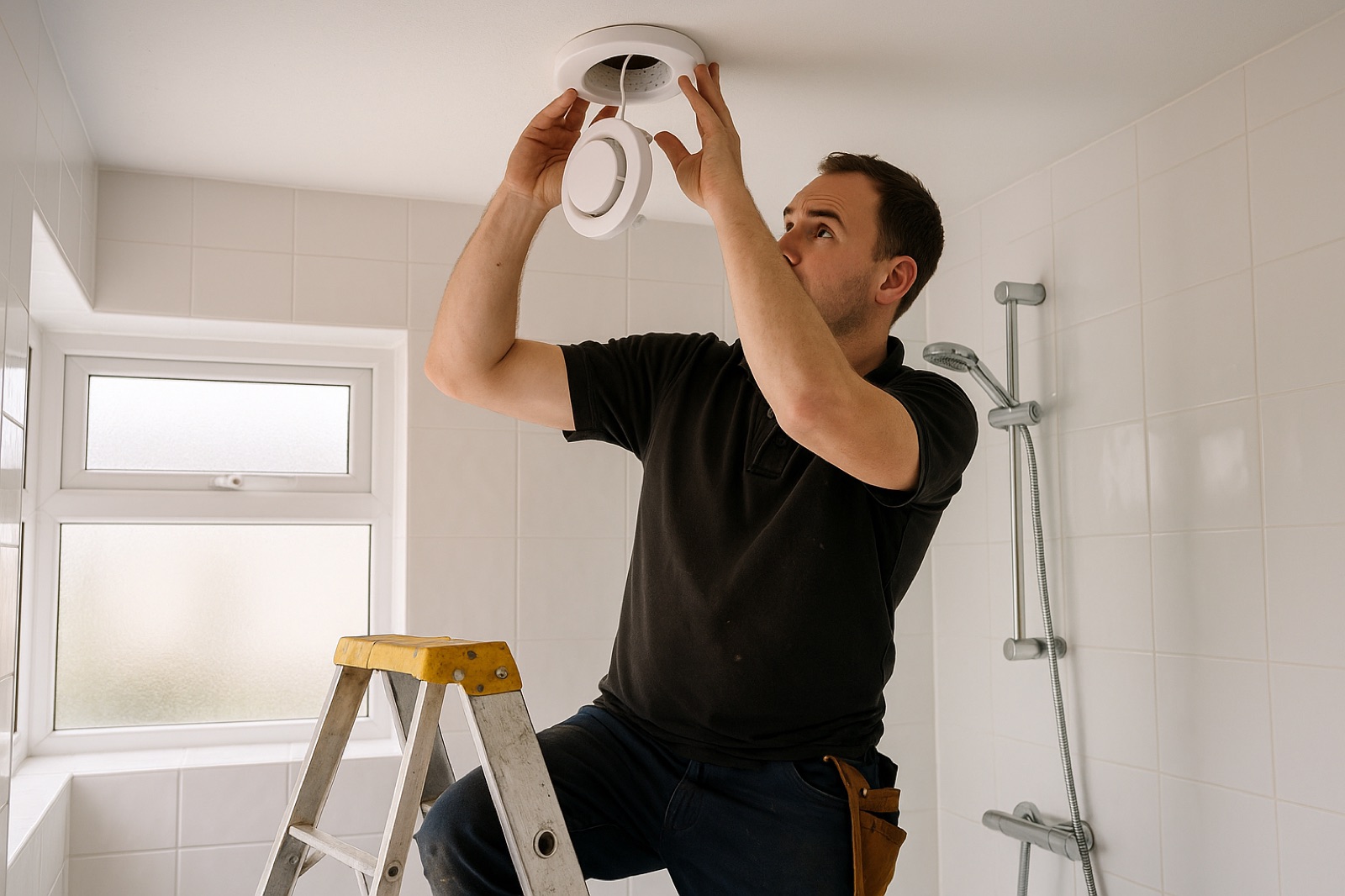
Home Ventilation installation Cardiff
Ventilation installation in Cardiff
Extractor fans, PIV units and whole-house heat recovery, fitted to stop condensation where it starts.
Cardiff is wet. Bute Park averaged about 1,200 mm of rain a year over 1991 to 2020. Outdoor air is damp for long stretches, so moisture made indoors by cooking, showers and drying clothes needs a clear way out.
Cardiff at a glance
- Homes that are flats
- 26.5% of Cardiff households lived in a flat, maisonette or apartment in 2021: 20.2% in purpose-built blocks and 5.0% in converted or shared houses. Another 29.6% lived in terraced houses. Source
- Energy ratings
- 47.5% of Cardiff homes with an EPC lodged up to March 2022 were rated C or above, so just over half sat at D or below. Among homes built before 1930, only 17.1% reached C. Source
- Rain and winter cold
- The Met Office station at Cardiff Bute Park recorded about 1,200 mm of rain a year on average over 1991 to 2020. January nights averaged 2.5°C and July days 21.8°C. Source
- Renting rules in Wales
- Under the Renting Homes (Wales) Act 2016, landlords must keep a working carbon monoxide alarm in any room with a gas, oil or solid fuel appliance they supplied, and damp and mould are listed hazards when judging whether a home is fit to live in. Source
Kitchens and bathrooms first
Most condensation complaints start with a bathroom fan that is too weak, blocked, or switched off because it's noisy. A quiet continuous-running fan with a humidity boost is the simplest upgrade, and often the only one needed.
Cooker hoods should duct outside. A recirculating hood filters grease but leaves the steam in the room.
Positive input ventilation
A PIV unit sits in the loft and pushes filtered air gently into the landing, which pushes damp air out through gaps and vents. It suits houses with a loft and a central stairwell, which describes many Cardiff semis. It is not a fix for a leak or rising damp.
Heat recovery for airtight homes
Mechanical ventilation with heat recovery (MVHR) supplies fresh air to living rooms and bedrooms and extracts from wet rooms, keeping most of the heat. It needs ducts, so it fits best in a deep retrofit or a new flat.
If you upgrade windows or insulate walls, check ventilation at the same time. Sealing a house without adding ventilation is a common cause of new mould.
If you rent
Under the Renting Homes (Wales) Act, damp and mould are among the hazards used to judge whether a home is fit to live in. If a broken fan is causing condensation, report it to your landlord in writing.
Cardiff homes and what they need
Victorian bay-fronted terraces
Bathrooms in the rear outrigger often have no window that opens fully. A ducted fan through the outside wall, with a humidistat, makes the biggest difference here.
Interwar and post-war semis in the northern suburbs
A good candidate for PIV in the loft. Pair it with a working kitchen extractor and trickle vents in replacement windows.
Modern apartments around Cardiff Bay and the centre
Many newer flats already have MVHR or continuous extract. Mould in these flats often means the unit has been switched off or the filters haven't been changed, so check that before paying for anything new.
Areas covered
Engineers who cover Cardiff work across areas including Roath, Cathays, Canton, Pontcanna, Grangetown, Splott, Llandaff, Whitchurch, Rhiwbina and Penarth.
Questions people in Cardiff ask
Does PIV make a house colder?
Slightly, in very cold weather, though most units temper the air from the loft. In return you get drier air, which feels warmer and is cheaper to heat.
Who fits ventilation in Cardiff?
Extractor fans and PIV units are usually fitted by electricians or ventilation specialists. MVHR needs a designer as well as an installer, because the ducts have to be sized and balanced room by room.
Sources
- Met Office historic station data: Cardiff Bute Park
- Welsh Government: Fitness for human habitation, guidance for contract-holders
- ONS Census 2021, table TS044
Also nearby: Ventilation installation in Swansea, Ventilation installation in Bristol, Ventilation installation in Gloucester