Home Damp and mould removal Brighton
Mould removal and damp treatment in Brighton and Hove
Black mould usually comes back unless the cause is found. We pass your request to damp and mould specialists who cover your postcode.
Most mould in Brighton and Hove homes is condensation: warm, wet air meeting a cold wall, window or ceiling. Coastal humidity, solid walls and flats packed into old houses make it common here.
Leaking gutters and failed render on seafront facades can add penetrating damp on top, so a good survey looks inside and out.
Brighton at a glance
- Homes in converted houses
- 19.6% of Brighton and Hove households (23,803) lived in part of a converted or shared house in 2021, and 27.6% in a purpose-built block. Together with other flats, about half of all homes are flats. Source
- Private renting
- 32.7% of Brighton and Hove households (39,684) rented privately in 2021. Source
- Local grant
- Brighton and Hove is in the Portsmouth-led Warm Homes: Local Grant consortium, branded Warmer Homes and delivered by Agility Eco. It is aimed at households on £36,000 or less, or on a means-tested benefit, in homes rated EPC D to G. Source
If you rent
About a third of the city's households rent privately. Tell your landlord about mould in writing, with photos and dates. Landlords must keep homes free of serious hazards, and damp and mould is one of them.
If nothing happens, Brighton and Hove City Council's private sector housing team can inspect. Keep notes of what you've reported and when.
What the survey should cover
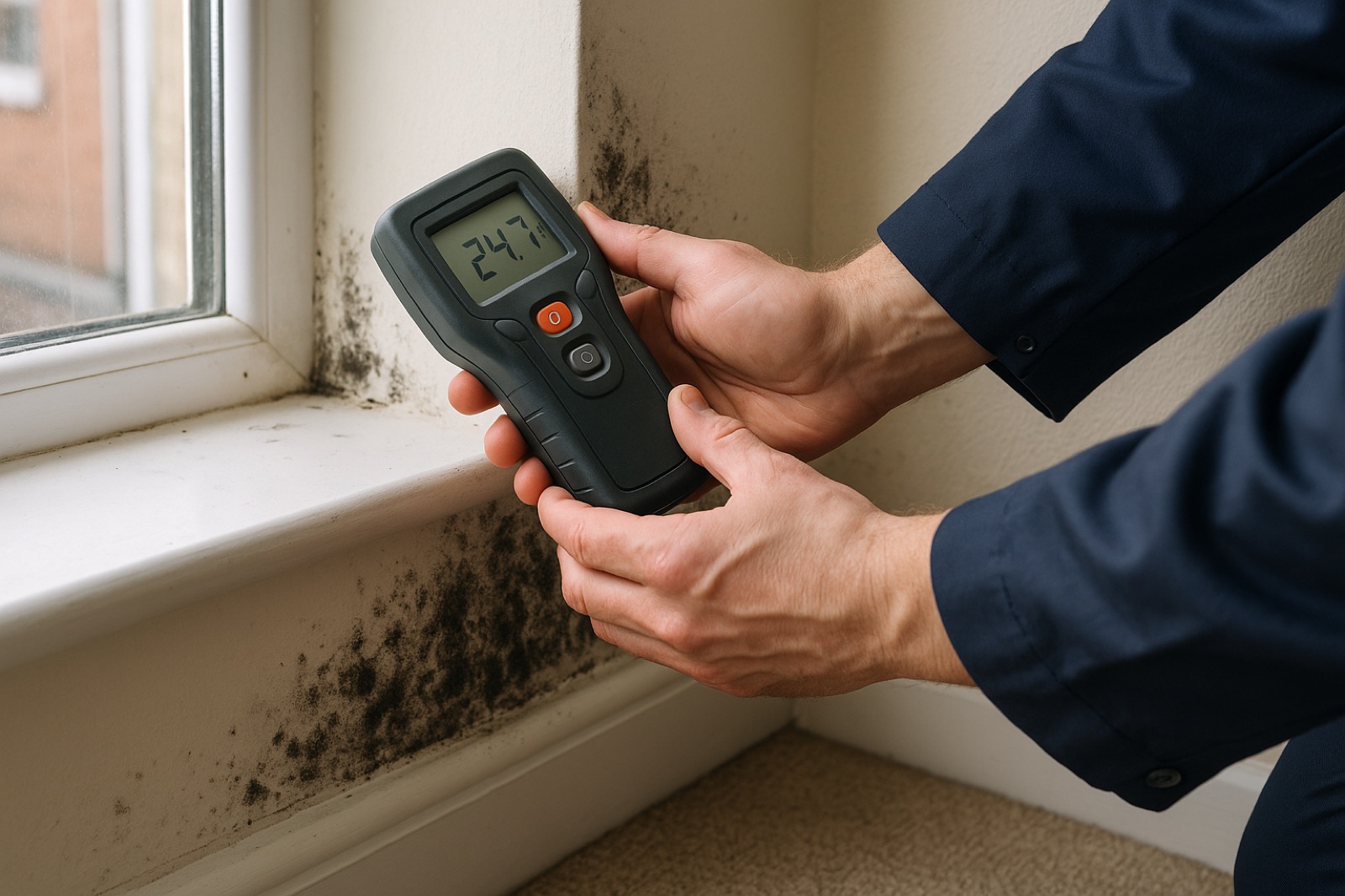
A specialist should take moisture readings, look at ventilation, check gutters, downpipes and render, and say whether the cause is condensation, rising damp or water getting in. Be wary of anyone who recommends a chemical damp-proof course before checking the outside.
Ask for the findings in writing, with the cause, the fix and the price separated.
Treating it
Small patches can be cleaned with a mould remover, and our guide on removing mould from walls explains how. Larger areas, or mould that keeps coming back, need the cause fixed first: better fans, PIV, insulation or a repair to the outside wall.
Brighton homes and what they need
Flats in converted Regency and Victorian houses
Bedrooms on north-facing back walls and basement flats suffer most. Window condensation every morning is the warning sign; our window condensation guide covers it.
Victorian terraces on the hills
Rear wings and bay windows are cold spots. External wall insulation isn't always allowed in conservation areas, so internal insulation may be the option.
Interwar semis in the northern suburbs
Mould behind wardrobes on outside walls is typical. Move furniture a few centimetres off the wall and check whether the cavity has been filled.
Areas covered
Engineers who cover Brighton work across areas including Hove, Kemptown, Hanover, Preston Park, Patcham, Withdean, Hollingbury, Woodingdean, Rottingdean and Portslade.
Questions people in Brighton ask
Is there help to pay for insulation that would stop mould?
Lower-income households in homes rated EPC D to G may qualify for Warmer Homes, the local Warm Homes: Local Grant scheme, which funds insulation and ventilation.
Will a dehumidifier fix it?
It helps, particularly while drying washing indoors, but it treats the symptom. If mould returns within weeks of cleaning, the room needs better extraction or a warmer wall surface.
Sources
Also nearby: Damp and mould removal in Portsmouth, Damp and mould removal in London