Home Damp and mould removal London
Damp and mould removal in London
Until the cause is dealt with, mould in a London home will keep returning. A specialist works out whether it's condensation, a leak or damp getting through the walls.
In London the usual cause is condensation: small rooms, washing dried indoors and solid walls that stay cold all winter. A blocked gutter on a terrace or a leak from the flat upstairs can look the same on your ceiling, which is why the survey has to come before any treatment.
London at a glance
- Homes that are flats
- 54.0% of London households (1.8 million) lived in a flat, maisonette or apartment in 2021, against 21.7% across England and Wales. Source
- Private renting
- 30.0% of London households rented privately in 2021, the highest share of any region. Source
- Local grant
- The Warm Homes: Local Grant is run across London by the Greater London Authority for privately owned homes rated EPC D to G, usually with household income of £36,000 or less and savings under £25,000. Source
Renting with mould
About 30% of London households rent privately. Write to your landlord about the damp and mould, adding dated photos. The landlord is responsible for the structure and for fixing causes such as a broken extractor fan or a leaking pipe. If a private landlord won't act, your borough's private housing or environmental health team can inspect.
Social housing tenants in England have extra protection under Awaab's Law, in force since 27 October 2025. The landlord has 10 working days to investigate a significant damp or mould hazard in a London social home, then 5 working days to make it safe.
What a damp survey should cover
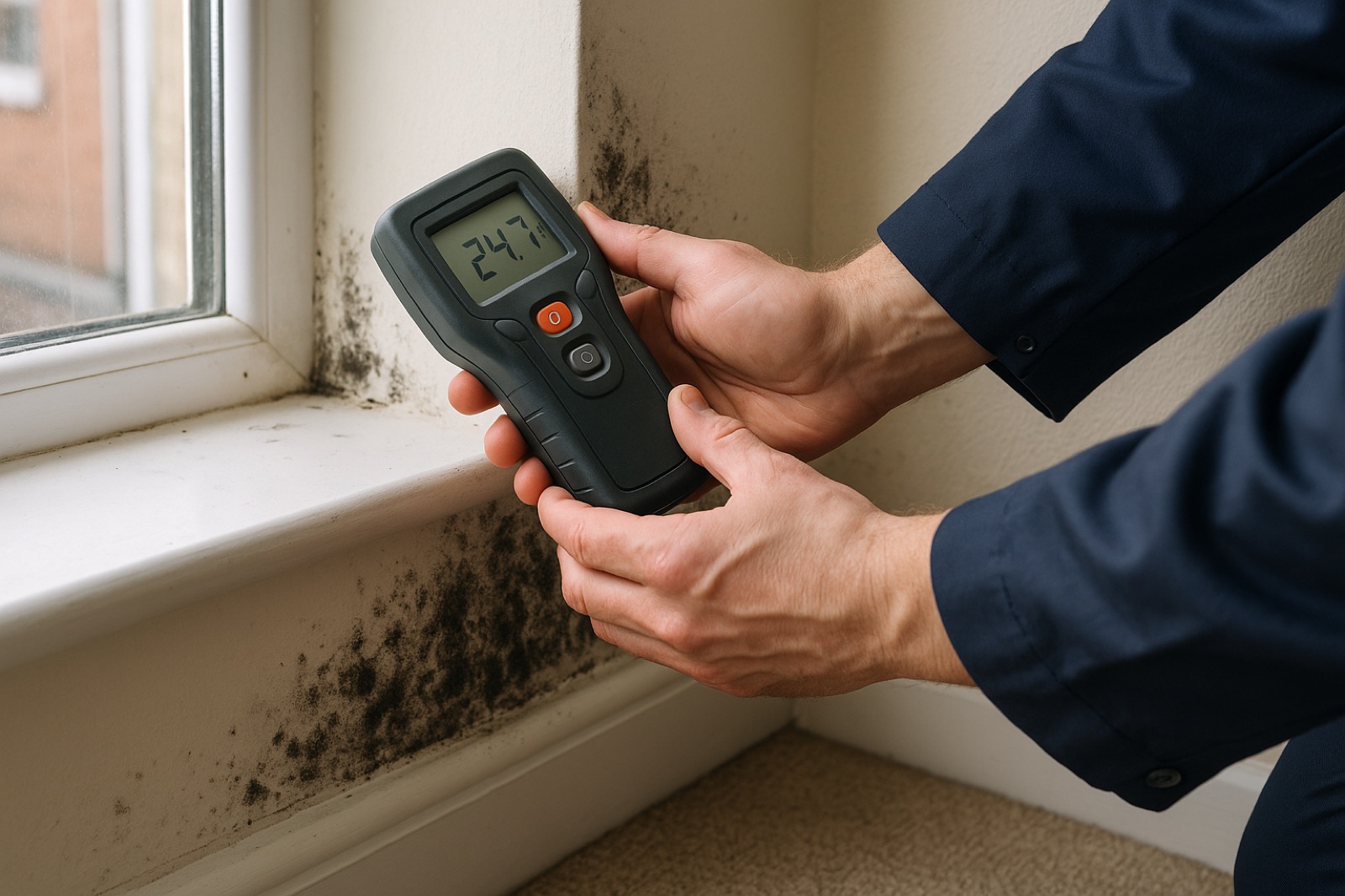
A proper survey measures humidity and moisture in the walls, checks gutters, downpipes and the damp course outside, and tells you which cause it found. Be wary of anyone who sells injected damp-proofing on the first visit without ruling out condensation or a leak.
Cleaning up and keeping it off
Small patches on paint or sealant can be cleaned yourself; our guide to removing mould from walls covers the safe way. Mould behind a wardrobe on an outside wall means the wall is too cold, so pull furniture a few centimetres away and deal with the cause.
Streaming windows every morning are a warning sign. Our window condensation guide explains what's going on and how to cut it.
Where damp starts in London homes
Victorian and Edwardian terraces
Solid brick walls, suspended timber floors and cold bay windows. Blocked air bricks and garden soil piled above the damp course are common culprits.
Converted flats and mansion blocks
Basement flats can take damp from the ground and top floors from the roof, while middle floors mostly get condensation. Leaks from a neighbouring flat or shared roof are for the freeholder or managing agent.
Outer-borough 1930s semis
Many have had their cavities filled. Badly installed cavity insulation can let rain bridge across, showing as damp patches inside exposed gable walls.
Areas covered
Engineers who cover London work across areas including Islington, Hackney, Camden, Brixton, Wimbledon, Ealing, Croydon, Walthamstow, Greenwich and Richmond.
Questions people in London ask
Is there help with the cost of fixing damp?
In London the Warm Homes: Local Grant can fund ventilation and damp prevention alongside insulation for eligible homes. It doesn't pay for one-off mould cleaning.
Sources
- ONS: Housing, England and Wales, Census 2021
- GOV.UK: Awaab's Law, guidance for tenants in social housing
- Greater London Authority: Warm Homes: Local Grant
Also nearby: Damp and mould removal in Reading, Damp and mould removal in Luton, Damp and mould removal in Chelmsford, Damp and mould removal in Brighton