Home Damp and mould removal Reading
Damp and mould removal in Reading
Mould comes back unless the cause is fixed. We pass your request to damp and mould specialists working across Reading.
Almost a third of Reading households rent privately and another 16% rent from the council or a housing association. Most mould problems in those homes are the landlord's to fix, and tenants need to report them properly.
The cause is usually condensation, with leaks or failing gutters adding to it in older brick terraces.
Reading at a glance
- Private renting
- 31.9% of Reading households (21,623) rented privately in 2021, and 16.1% socially. Source
- Housing mix
- 28.2% of Reading households lived in a terraced house, 25.9% in a semi, 12.2% in a detached house and about a third in flats in 2021. Source
- Local grant
- Reading Borough Council offers the Warm Homes: Local Grant with Portsmouth City Council and 31 other councils: up to £15,000 for energy saving measures plus up to £15,000 for low-carbon heating, for homes rated EPC D or below. Source
Renting with mould
Tell your landlord or agent in writing, with photos and dates. Private landlords must deal with serious hazards, and Reading Borough Council's private sector housing team can inspect if they don't.
Council and housing association tenants should report through their landlord's repairs service. Since October 2025, social landlords have faced legal deadlines to investigate and fix damp and mould under Awaab's Law.
What a proper survey looks like
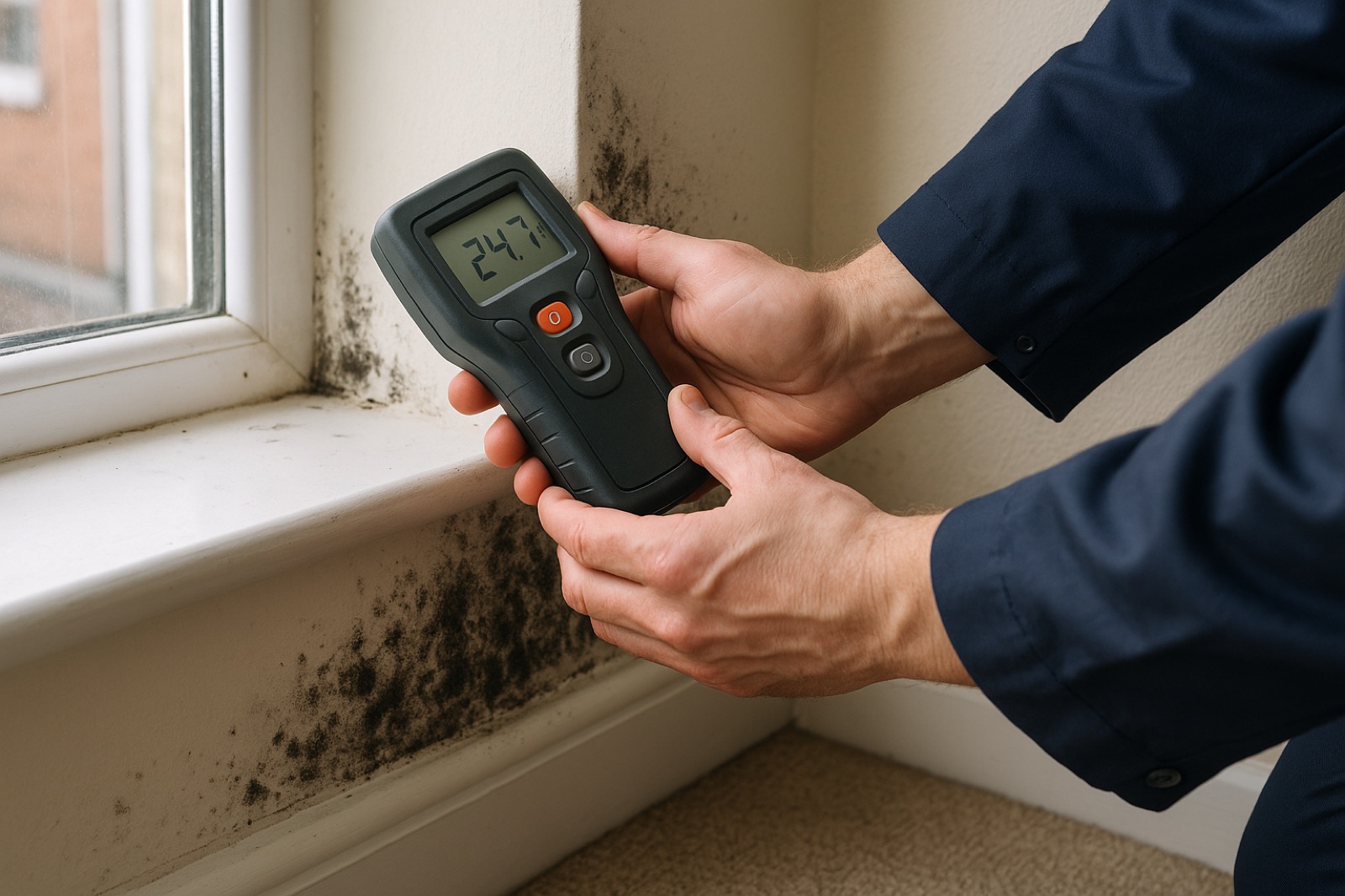
A specialist should take moisture readings, check fans and airflow, look at gutters, downpipes, pointing and ground levels outside, and say in writing whether the cause is condensation, a leak or rising damp. Be wary of a chemical damp-proof course recommended before anyone has checked the outside.
Grants that tackle the cause
Reading's Warm Homes: Local Grant funds insulation and ventilation for eligible lower-income households in homes rated EPC D or below. Warmer walls and better airflow stop the condensation that feeds mould.
Cleaning up
Small patches can be cleaned following our removing mould from walls guide. Throw away mouldy soft furnishings that won't wash clean, and keep heating steady and low rather than off and on.
Reading homes and what they need
Victorian brick terraces in the town's older streets
Solid brick walls stay cold, and mould often appears in corners of back bedrooms and in bathrooms in rear extensions.
Interwar and post-war semis in the suburbs
Mould behind wardrobes on outside walls is a sign of unfilled cavities. Cavity insulation, if suitable, usually ends it.
Estates and apartments built from the 1970s onwards
In 1970s flats, cold concrete lintels and window reveals attract mould. Our window condensation guide explains how to cut the moisture.
Areas covered
Engineers who cover Reading work across areas including Caversham, Tilehurst, Earley, Woodley, Whitley, Emmer Green, Lower Earley, Southcote, Calcot and Theale.
Questions people in Reading ask
Will a dehumidifier solve it?
It helps, particularly when drying washing indoors, but if mould returns soon after cleaning, the home needs better ventilation or warmer walls.
Should I paint over mould with anti-mould paint?
Only after the cause is fixed and the wall is clean and dry. On its own, the paint hides the problem for a few months.
Sources
Also nearby: Damp and mould removal in Oxford, Damp and mould removal in Swindon, Damp and mould removal in London, Damp and mould removal in Southampton