Home Damp and mould removal Oxford
Mould removal and damp treatment in Oxford
Get the cause found as well as the mould cleaned. We pass your request to damp and mould specialists who cover Oxford.
Half of Oxford's households rent, either privately (32.2%) or from the council or a housing association (20.9%). If that includes you, the landlord is responsible for fixing damp caused by the building, and the law has recently got tougher on social landlords.
Oxford at a glance
- Private renting
- 32.2% of Oxford households rented from a private landlord or letting agency (or other private arrangement) in 2021. Another 20.9% rented from the council or a housing association. Source
- HMO licensing
- Oxford City Council runs additional HMO licensing across the whole city for houses shared by 3 or 4 tenants, on top of the national mandatory scheme for 5 or more. A new five-year designation starts on 25 June 2026. Source
- Homes that are flats
- 30.8% of Oxford households lived in a flat in 2021: 24.1% in purpose-built blocks and 4.9% in converted or shared houses, with the rest in other converted or commercial buildings. Source
- Local grant
- Oxfordshire County Council runs the Warm Homes: Local Grant with Welcome the Warmth, for homes rated EPC D to G where household income is £36,000 or less or someone gets a qualifying means-tested benefit. Demand is high and new applicants join a waiting list. Source
Your rights as a tenant
Tell your Oxford landlord about the mould in writing, keeping dated photos as a record. If you rent from the council or a housing association, Awaab's Law now sets deadlines for investigating and fixing hazards such as damp and mould.
Private tenants can ask Oxford City Council to inspect if the landlord does not act. Shared houses are licensed by the council, and the licence gives it extra leverage over conditions in the property.
Finding the cause
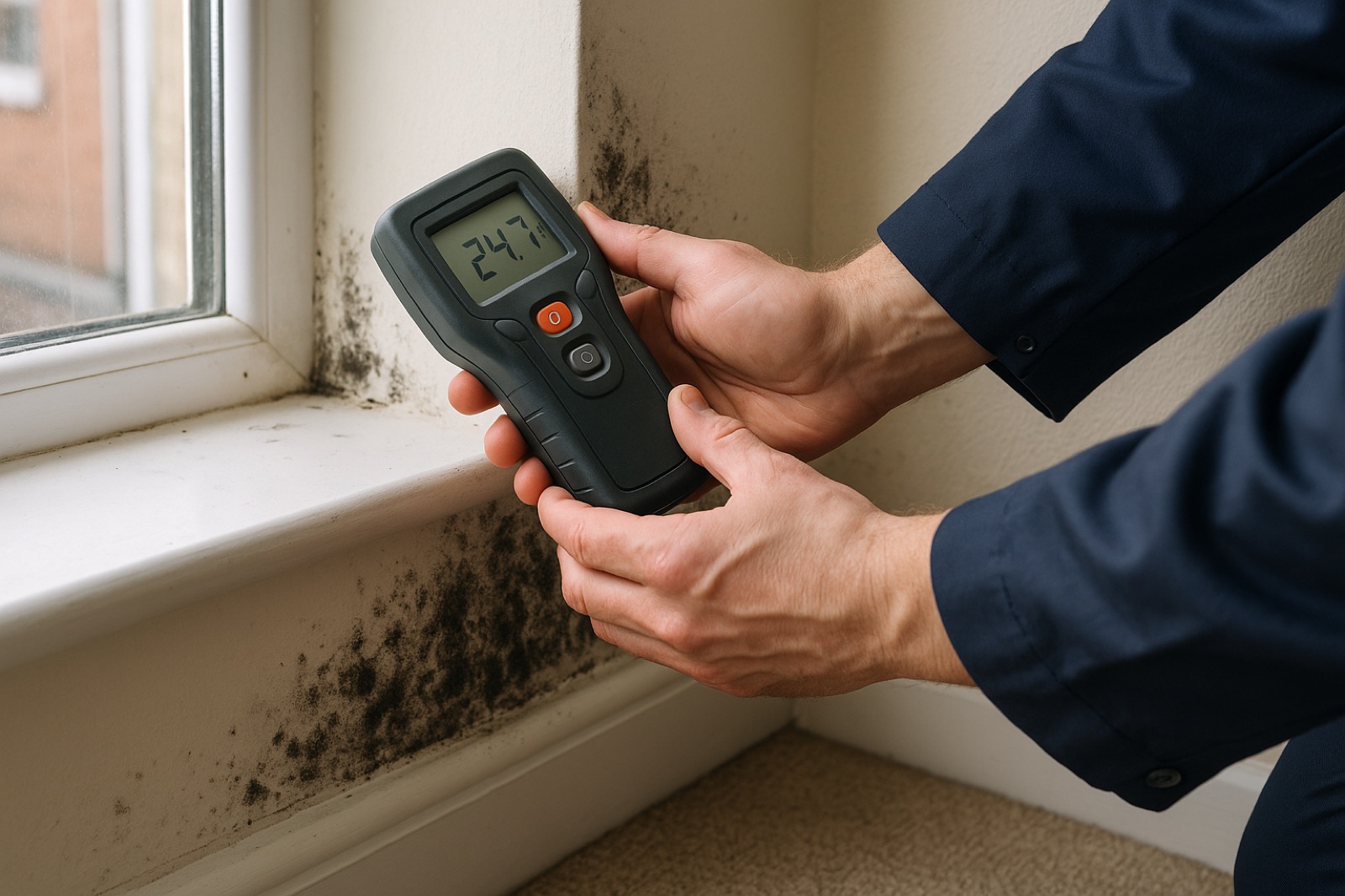
Mould has three usual causes: condensation, water coming in from outside, and water rising from the ground. A good survey separates them, using a moisture meter, a look at gutters, downpipes and pointing, and a check of extractor fans and heating patterns.
Be cautious of a survey that recommends a chemical damp-proof course without finding a fault in the existing one. In older Oxford houses, blocked air bricks and raised garden soil against the wall are common, cheaper culprits.
Cleaning and keeping it away
Small patches on paint or tiles can be cleaned with a mould spray, wearing gloves and a mask. Our removing mould from walls guide covers how. Large areas, mould on plaster or carpets, or mould that keeps coming back need a professional.
Keeping it off usually means steady low heat, lids on pans, drying clothes outside or in a vented room, and extract fans that run long enough.
Oxford homes and what they need
Victorian terraces in Jericho and East Oxford
Solid walls and suspended timber floors need to breathe. Cement render or plastic paint over old brick traps moisture, and lime-based repairs are often the real fix.
Flats and converted houses
Mould in a corner of an outside wall in a converted flat often marks a cold bridge. Internal insulation of that wall, done with a vapour control layer, can solve it.
Areas covered
Engineers who cover Oxford work across areas including Headington, Cowley, Jericho, Summertown, Marston, Iffley, Botley, Kidlington, Littlemore and Wolvercote.
Questions people in Oxford ask
Can I get help paying for insulation that stops mould?
If your income is low and the home is rated EPC D to G, the Warm Homes: Local Grant run by Oxfordshire County Council may fund insulation. There is a waiting list.
Sources
- ONS Census 2021, TS054 tenure (Nomis)
- GOV.UK: Awaab's Law guidance for social housing tenants
- Oxford City Council: Additional HMO licensing
- Oxfordshire County Council: Warm Homes: Local Grant
Also nearby: Damp and mould removal in Reading, Damp and mould removal in Swindon, Damp and mould removal in Milton Keynes