Home Damp and mould removal Swindon
Mould removal and damp treatment in Swindon
Find the source of the damp, not just the mould. We pass your request to damp and mould specialists covering Swindon.
Mould in a Swindon home is usually condensation, especially in houses where windows have been replaced and air bricks blocked. Rising damp is rarer than many sales pitches suggest, so get the cause diagnosed before agreeing to expensive treatment.
Swindon at a glance
- Who owns and rents
- 63.7% of Swindon households owned their home in 2021, 19.3% rented privately and 15.6% rented from the council or a housing association. Source
- Council homes
- Swindon Borough Council is running a £48m energy programme on its own homes from 2024 to 2029. A £10m heating contract covers around 1,800 homes, with 412 new A-rated condensing boilers fitted by March 2026. Source
Renting with mould
If you rent privately, and about one in five Swindon households does, the landlord must fix damp caused by the building. Report it in writing and keep photos. If nothing happens, contact Swindon Borough Council's private sector housing team.
Council and housing association tenants are covered by Awaab's Law, which sets deadlines for social landlords to investigate and repair damp and mould. Swindon Borough Council has also been fitting new windows, roofs and insulation on its own homes.
What the surveyor should check
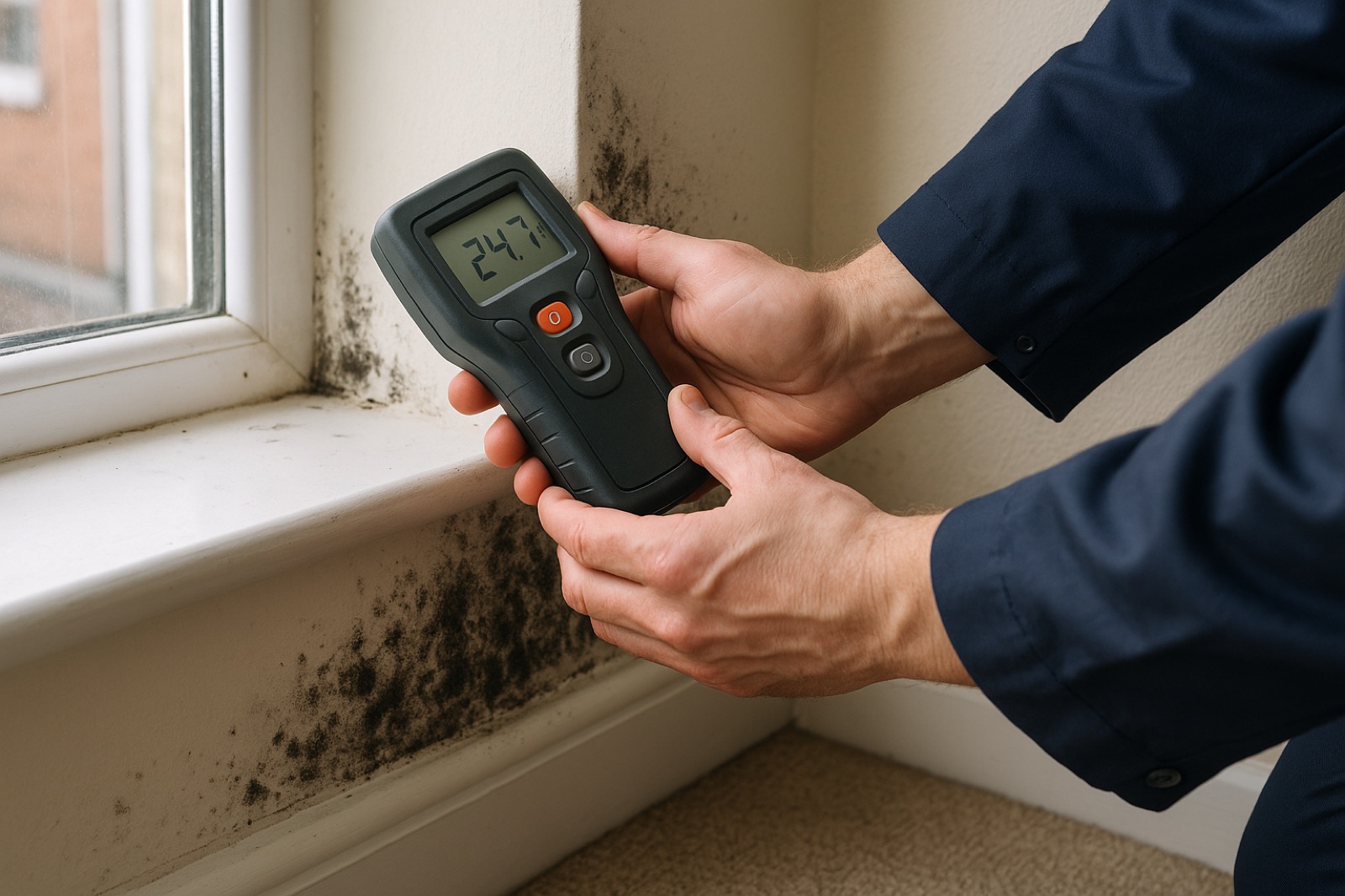
A proper survey looks at the outside first: gutters, downpipes, pointing and ground levels against the walls. Inside, it measures moisture in the walls and checks ventilation and heating patterns.
Ask for a written report that names the cause. If it recommends injection damp-proofing, ask how they ruled out condensation and leaks.
Removing mould safely
Small patches can be cleaned with a mould spray, wearing gloves and a mask. The method is in our removing mould from walls guide. Mould on soft materials like carpets or plasterboard usually needs replacing rather than cleaning. Our window condensation guide covers the daily habits that keep it from coming back.
Swindon homes and what they need
Estates from the 1970s to today
Cold corners at the junction of walls and ceilings are common in 1970s homes where loft insulation has shifted. Topping it up and extending it to the eaves often stops the mould.
Victorian railway-era terraces
Solid walls without a cavity can let rain soak through if the pointing is worn. Repointing with a lime mortar and fixing gutters usually cures it.
Postwar semis
Blocked air bricks under suspended floors cause damp and musty smells. Clear them and do not let garden beds or paths rise above them.
Areas covered
Engineers who cover Swindon work across areas including Old Town, Wroughton, Highworth, Stratton St Margaret, Haydon Wick, Royal Wootton Bassett, Wichelstowe, Penhill, Freshbrook and Covingham.
Questions people in Swindon ask
Will bleach kill mould?
Bleach can lighten the stain but often does not kill mould roots in porous surfaces. A dedicated fungicidal wash is better, and fixing the moisture source matters most.
Sources
- ONS Census 2021, TS054 tenure (Nomis)
- GOV.UK: Awaab's Law guidance for social housing tenants
- Swindon Borough Council: Energy improvements to council homes, March 2026
Also nearby: Damp and mould removal in Oxford, Damp and mould removal in Reading, Damp and mould removal in Bristol, Damp and mould removal in Gloucester