Home Damp and mould removal Bristol
Mould removal and damp treatment in Bristol
Damp and mould specialists covering Bristol, from condensation in flats to penetrating damp in old terraces.
Bristol's old housing and high share of rented homes make damp a common problem. 26.2% of households rent privately and 18.7% from the council or a housing association. If you rent, your landlord should be your first call.
Bristol at a glance
- Converted flats
- 35.1% of Bristol households lived in a flat in 2021. 10.2% were in a converted or shared house, about one household in ten, and 21.9% in purpose-built blocks. Source
- Renting
- 26.2% of Bristol households rented privately in 2021 and 18.7% from the council or a housing association. Source
- Local grant
- In April 2025 Bristol City Council approved accepting £13,458,463 of Warm Homes: Local Grant funding, with partners, for energy efficiency and renewable measures in low-income private households with poor energy ratings. Source
Tenants
Report mould in writing with photos. Social housing tenants are covered by Awaab's Law, which sets deadlines for investigating and fixing damp and mould hazards.
Private tenants who get no response can contact Bristol City Council's private housing team.
Keep a simple log of when you reported the problem and what happened next. If it ends up with the council or an ombudsman, dated photos and copies of messages make your case much stronger.
Common causes
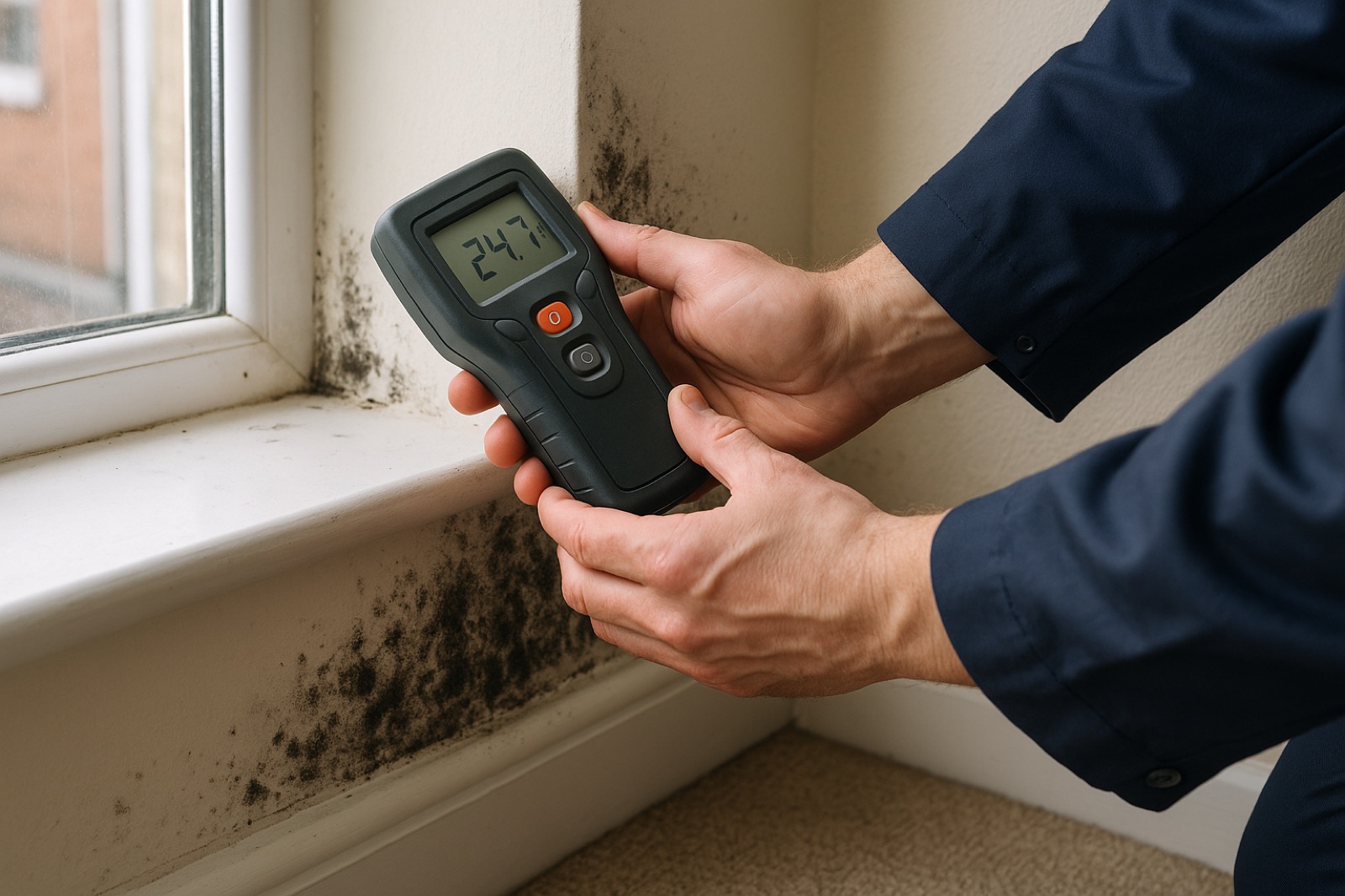
In Bristol's old solid-walled terraces, rain soaking through worn pointing or failed gutters is common. In lower-ground flats, cold walls and poor ventilation cause condensation. Rising damp is less common than often claimed.
A good survey checks the outside first, measures moisture and identifies the cause before recommending treatment.
Cleaning and prevention
Small patches can be cleaned with a fungicidal wash; our removing mould from walls guide covers the method. Keep heating steady, use fans and dry clothes outside or with a vented dryer.
Grants
Bristol City Council and partners secured over £13 million of Warm Homes: Local Grant funding for insulation and other measures in low-income private households with poor energy ratings.
Eligibility usually depends on income, the home's EPC band and who owns the property. Start with the GOV.UK eligibility checker, which passes your details to the council.
Bristol homes and what they need
Victorian terraces on the city's hills
Fix gutters and pointing first. Cement render on old brick traps moisture; lime is often better.
Flats in converted Georgian and Victorian houses
Lower-ground flats need good extraction and clear light wells.
Interwar and post-war semis on the outskirts
Cold corners point to missing cavity or loft insulation at the edges.
Areas covered
Engineers who cover Bristol work across areas including Clifton, Bedminster, Southville, Bishopston, Redland, Easton, Fishponds, Horfield, Kingswood and Keynsham.
Questions people in Bristol ask
Is household mould a health risk?
It can trigger or worsen asthma, allergies and other breathing problems, particularly for children and older people. Treat it promptly and avoid sleeping in a room with heavy growth.
Should I use bleach?
Bleach can lighten the stain but often leaves mould roots in porous surfaces. A dedicated fungicidal wash works better, and it will come back unless the moisture problem is fixed.
Sources
- ONS Census 2021, TS054 tenure (Nomis)
- GOV.UK: Awaab's Law guidance for social housing tenants
- Bristol City Council: Warm Homes: Local Grant decision, April 2025
- ONS Census 2021, TS044 accommodation type (Nomis)
Also nearby: Damp and mould removal in Swindon, Damp and mould removal in Gloucester, Damp and mould removal in Cardiff, Damp and mould removal in Exeter