Home Damp and mould removal Exeter
Damp and mould removal in Exeter
Mould keeps coming back until its cause is fixed. A damp specialist works out whether it's condensation, rain getting in or rising damp before treating it.
Four in ten Exeter households rent: 24.9% from private landlords and 16.6% from the council or a housing association. Private renting in Exeter is dominated by student houses and small flats, where several people cook, shower and dry clothes in a small space. That's ideal for condensation mould.
Exeter at a glance
- Housing mix
- 31.3% of Exeter households lived in terraced houses in 2021, 26.9% in semis and 15.1% in detached houses. 26.0% lived in flats, maisonettes or apartments. Source
- Renting
- 24.9% of Exeter households rented privately in 2021 and 16.6% rented from the council or a housing association. Source
- Energy ratings
- 49.2% of Exeter homes with an EPC lodged up to March 2022 were rated C or above. The figure was 41.5% for privately rented homes, 18.6% for homes built before 1930 and 97.4% for new builds. Source
- Social housing damp rules
- Awaab's Law has applied to social landlords in England since 27 October 2025. They must investigate significant damp and mould hazards within 10 working days and make emergency hazards safe within 24 hours. Source
Council and housing association tenants
Since 27 October 2025, Awaab's Law has required social landlords in England to investigate significant damp and mould hazards within 10 working days of becoming aware of them, and to make emergency hazards safe within 24 hours. Report mould to your landlord, keep the reference number, and take dated photos.
Private tenants and students
Report mould to your landlord or letting agent by email, with photos, and ask them to inspect. If they don't act, Exeter City Council can inspect privately rented homes. Students can also ask the university's accommodation or advice service for help.
Your part is to use extractor fans, heat the rooms steadily and avoid drying clothes on radiators without ventilation. Privately rented homes in Exeter rate worse than average, at 41.5% C or above, so landlords also need to improve insulation and heating.
Finding the cause
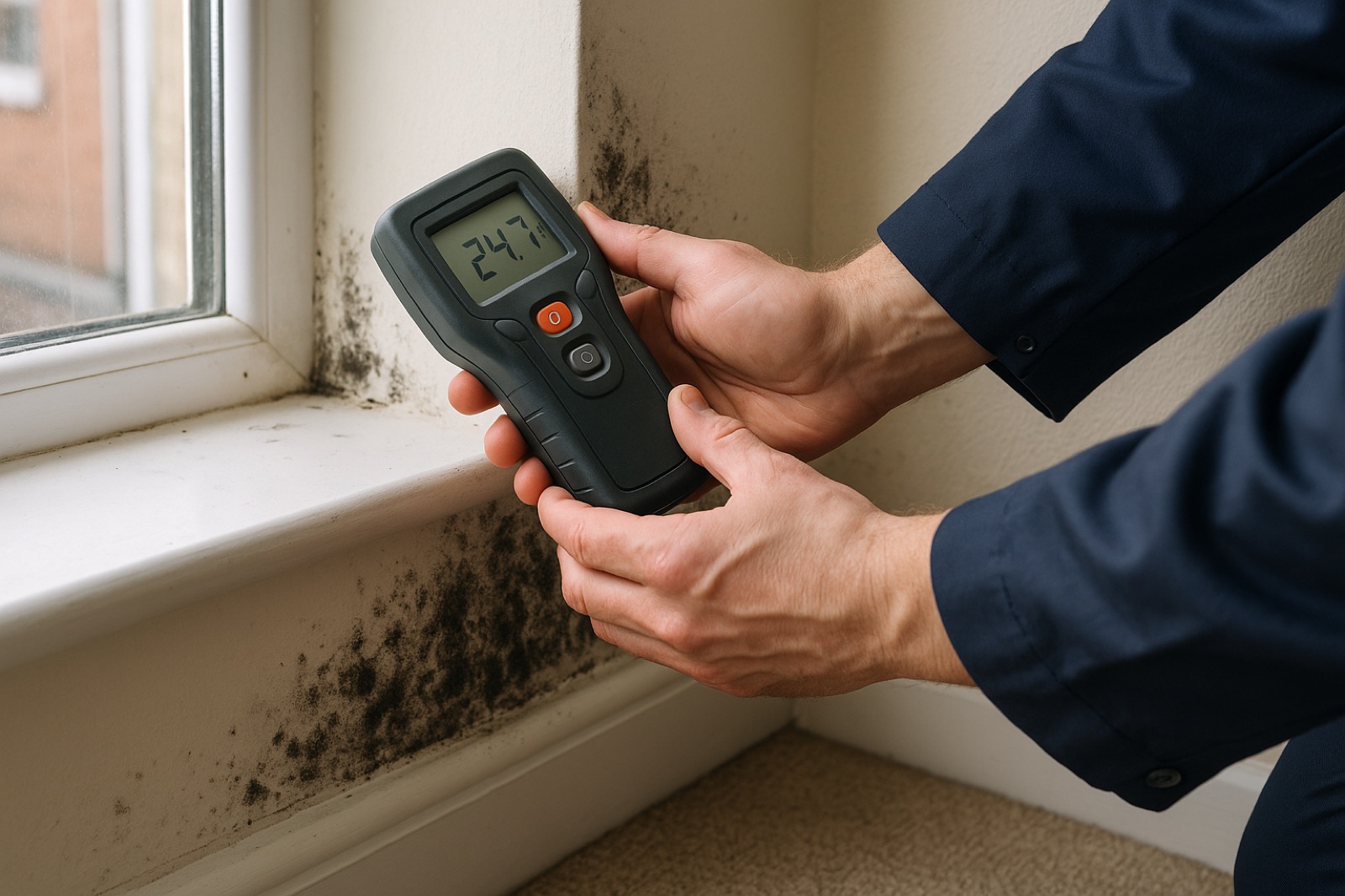
A proper survey checks gutters, downpipes, pointing and ground levels outside, and measures humidity and wall temperatures inside. Condensation is the most common cause and is fixed with ventilation, heating and insulation. Rain penetration and rising damp need building repairs.
Be wary of quotes for injected damp-proofing based only on a moisture meter reading.
Cleaning and prevention
For small patches in an Exeter home, a mould remover will do, using our guide to removing mould from walls. Large areas, or homes where someone has asthma, need a specialist. Our window condensation guide covers daily habits that help.
Exeter homes and what they need
Interwar and post-war semis
Mould behind wardrobes and in bedroom corners is usually condensation on cold external walls. Check the cavity walls are insulated and the bathroom fan works.
Victorian and Georgian terraces
Solid walls need to breathe. Cement render or plastic paint on old walls can trap moisture, so use lime-based materials when repairing.
New-build estates on the edge of the city
Mould in a new build usually means the ventilation system isn't running or isn't maintained. Check it before calling a damp specialist.
Areas covered
Engineers who cover Exeter work across areas including Heavitree, St Thomas, St Leonard's, Pennsylvania, Alphington, Whipton, Pinhoe, Exwick, Topsham and Cranbrook.
Questions people in Exeter ask
Who pays for mould treatment in an Exeter student house?
If the cause is a building defect, such as a leak or a broken fan, the landlord should fix it. If it's from how the house is used, both sides need to play a part.
Can grants help with damp in Exeter?
The Warm Homes: Local Grant can fund insulation and heating in eligible privately owned homes, which reduces condensation. It doesn't pay for building repairs.
Sources
- Shelter: How Awaab's Law changes the rules on hazards in social housing
- ONS Census 2021, table TS054
- ONS: Energy efficiency of housing, local authority districts
Also nearby: Damp and mould removal in Plymouth, Damp and mould removal in Bristol, Damp and mould removal in Bournemouth