Home Damp and mould removal Plymouth
Damp and mould removal in Plymouth
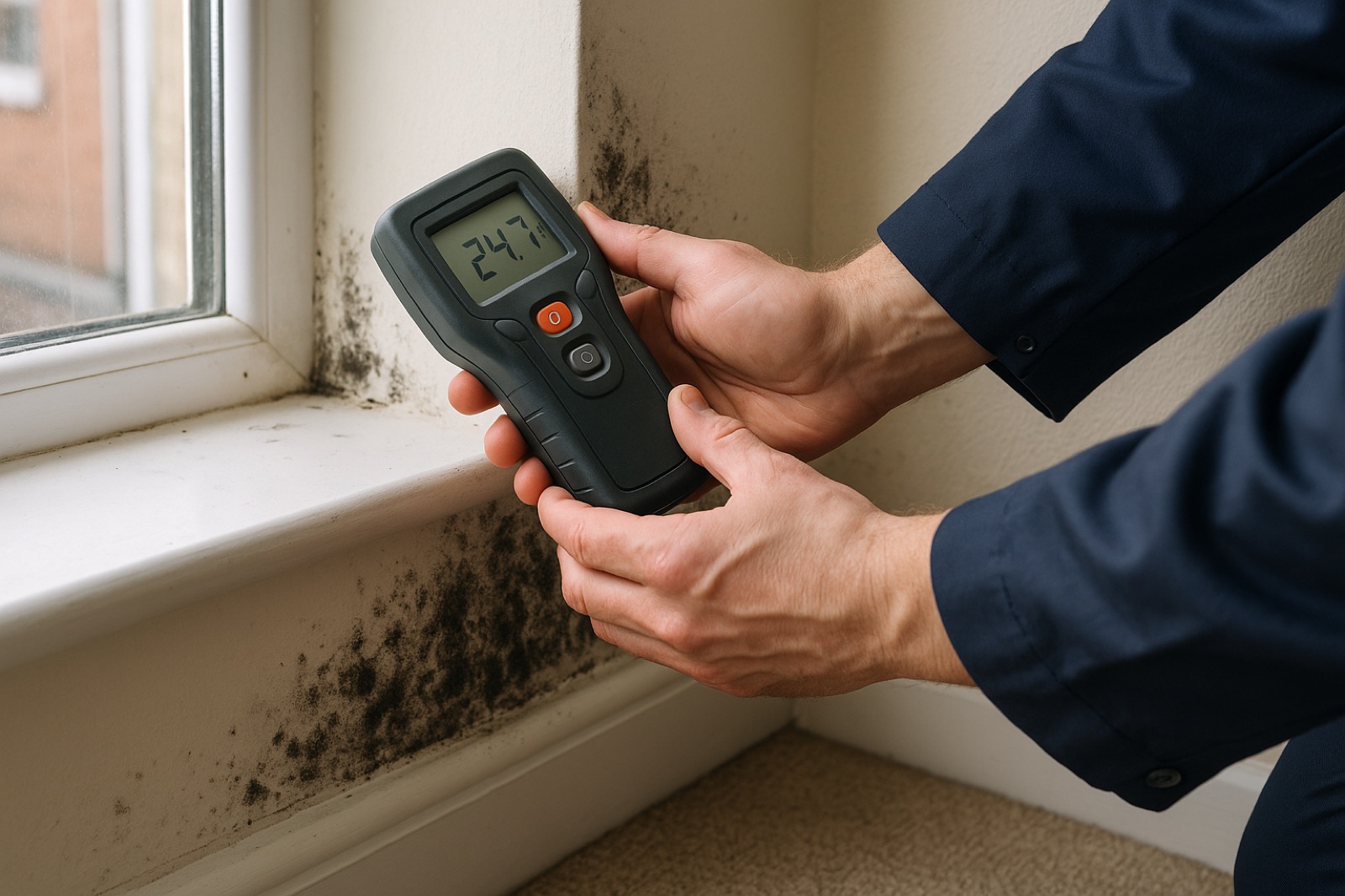
Find the cause of damp and mould, whether condensation, rain penetration or rising damp, then fix it before treating the mould.
Four in ten Plymouth households rent, and the rules for dealing with mould changed for social tenants in 2025. Since 27 October 2025, Awaab's Law has required social landlords in England to investigate significant damp and mould hazards within 10 working days.
Plymouth at a glance
- Housing mix
- 32.8% of Plymouth households lived in terraced houses in 2021 and 30.1% in semis. 25.4% lived in flats, including 7.5% in flats carved out of converted or shared houses. Source
- Renting
- 22.6% of Plymouth households rented privately in 2021 and 18.4% rented from the council or a housing association. Source
- Energy ratings
- 46.7% of Plymouth homes with an EPC lodged up to March 2022 were rated C or above. Privately rented homes fared worse, at 38.9%, and homes built before 1930 were at 17.3%. Source
- Local grant
- Plymouth City Council runs the Warm Homes: Local Grant with Plymouth Energy Community. It announced £2.5 million in July 2025, expected to upgrade more than 200 privately owned homes rated EPC D to G, usually where household income is £36,000 or less. Source
- Social housing damp rules
- Since 27 October 2025, Awaab's Law requires social landlords in England to investigate significant damp and mould hazards within 10 working days and make emergency hazards safe within 24 hours. Source
Social tenants
18.4% of Plymouth households rent from the council or a housing association. Report damp and mould to your landlord. They must investigate significant hazards within 10 working days and give you a written summary of their findings within three working days of the inspection. Emergency hazards must be made safe within 24 hours.
Private tenants
22.6% of Plymouth households rent privately, many in older terraces and converted flats. Report mould to your landlord in writing, with dated photos, and keep copies. If nothing happens, Plymouth City Council can inspect private rented homes and require repairs.
Landlords should look for the cause, not just repaint. A blocked gutter, failed pointing or a broken extractor fan is cheaper to fix than repeated redecoration.
Finding the cause
A good survey checks gutters, pointing, render and ground levels, and measures humidity and surface temperatures inside. Condensation is the most common cause and is fixed by heating, ventilation and insulation.
Be wary of a quote for injected damp-proofing based only on a moisture meter reading. Meters often over-read on old plaster, and the real cause is frequently outside the wall or in the way the room is used.
Cleaning it off and keeping it away
For small patches, wear gloves and a mask and use a mould remover; our guide to removing mould from walls explains how. For larger areas, or if anyone in the home has asthma or a weak immune system, get a specialist in.
Long term, steady background heating, extractor fans that run and furniture kept off cold outside walls stop most condensation mould coming back.
Plymouth homes and what they need
Interwar and postwar semis
Black spots behind wardrobes and in bedroom corners are usually condensation on cold external walls. Check whether the cavity walls were ever insulated, and whether the insulation has bridged or got wet.
Victorian terraces on the hills
Solid walls facing the prevailing weather soak up rain. Check gutters, downpipes, pointing and render before treating inside, and use breathable lime-based materials when replastering.
Waterfront and city-centre flats
Mould in airtight flats is usually down to moisture with nowhere to go. Drying washing indoors without ventilation is a common cause, so use the extractor or a dehumidifier.
Areas covered
Engineers who cover Plymouth work across areas including Plympton, Plymstock, Mutley, Mannamead, Peverell, Stoke, Devonport, Stonehouse, Hartley and Saltash.
Questions people in Plymouth ask
Does Awaab's Law cover private tenants in Plymouth?
Not yet. The current rules apply to council and housing association homes. Private tenants should go to the landlord and then to Plymouth City Council.
Can the Warm Homes: Local Grant help with mould?
It funds insulation and heating improvements for eligible privately owned homes, which can cut condensation. It doesn't pay for repairs such as gutters or roofs.
Sources
- Shelter: How Awaab's Law changes the rules on hazards in social housing
- ONS Census 2021, table TS054
- Plymouth City Council: Free energy upgrades offered to Plymouth homes
Also nearby: Damp and mould removal in Exeter