Home Damp and mould removal Cambridge
Mould removal and damp treatment in Cambridge
Damp and mould specialists who cover Cambridge, from small condensation problems to full surveys.
Most Cambridge households rent: 31.4% privately and 22.7% from the council or a housing association. If you rent and have mould, the first step is your landlord, and the law gives you more support than many tenants realise.
Cambridge at a glance
- Renting
- 31.4% of Cambridge households rented privately in 2021 and 22.7% rented from the council or a housing association. Only 44.1% owned their home. Source
- Local grant
- Cambridge City Council leads the Cambridgeshire Energy Retrofit Partnership, which won £8.5 million of Warm Homes: Local Grant funding for low-income homes across Cambridgeshire and Peterborough. Eligibility details are on the Action on Energy website. Source
- Council homes
- The council also won £3.8 million from the Warm Homes: Social Housing Fund to upgrade council homes rated below EPC C, as part of a programme to bring its housing to at least C. Source
Renters and landlords
Report damp and mould in writing, with photos and dates. Social housing tenants are covered by Awaab's Law, which sets deadlines for investigating and fixing hazards.
Cambridge City Council won £3.8 million from the Warm Homes: Social Housing Fund to upgrade its own homes rated below EPC C. Private tenants who get no response can contact the council's private sector housing team.
Landlords should treat mould as a sign of a problem, not a cleaning job. Persistent mould can be a hazard under housing law.
Finding the cause
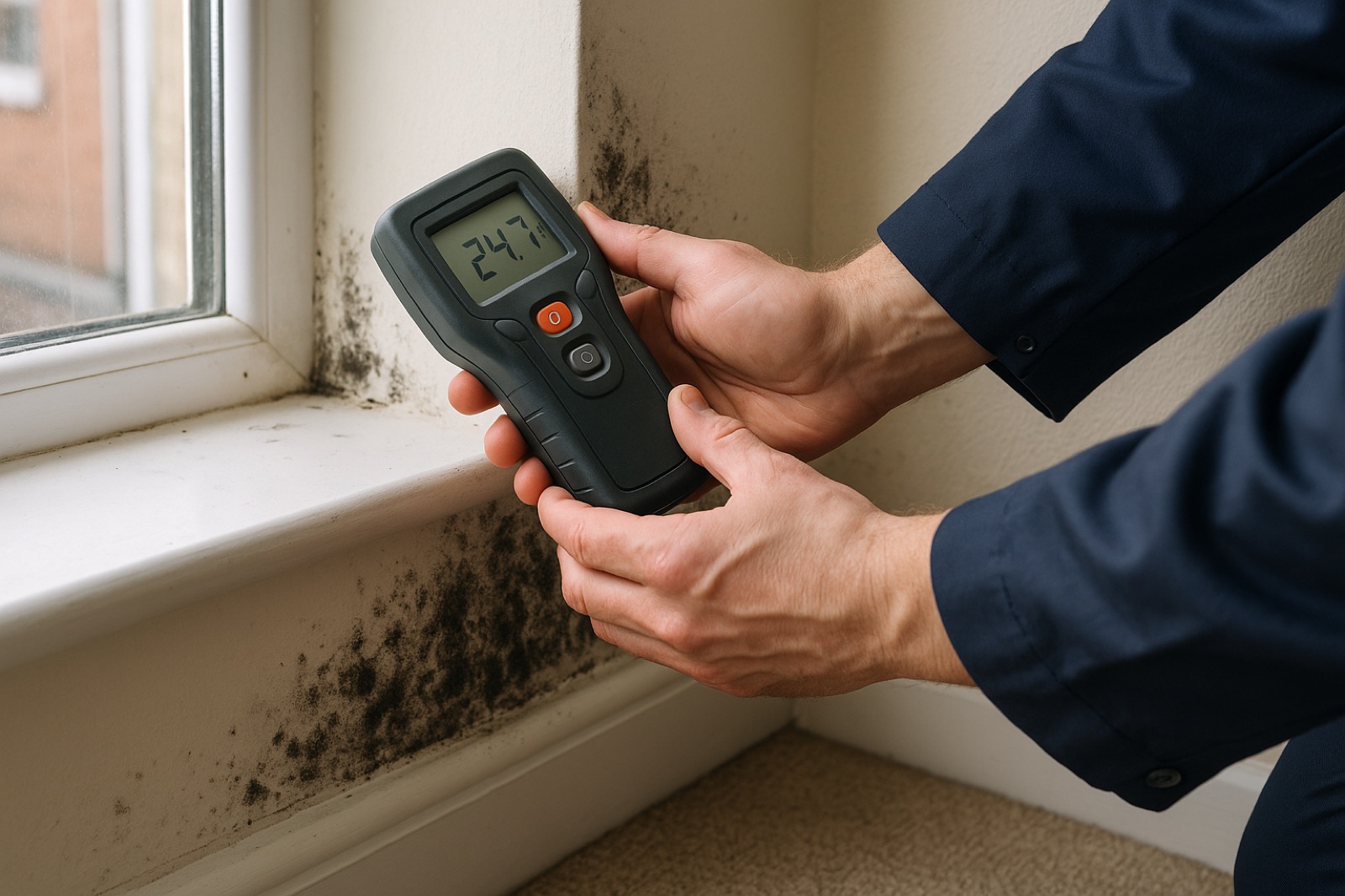
A good survey distinguishes condensation, penetrating damp and rising damp. It checks gutters, pointing and ground levels outside, measures moisture inside and looks at how the home is heated and ventilated.
Be wary of anyone who recommends a chemical damp-proof course without clear evidence that the existing one has failed.
Cleaning and prevention
Small patches on hard surfaces can be cleaned with a fungicidal wash. Our removing mould from walls guide explains how. Steady heating, working fans and drying clothes outside or in a vented dryer keep it away.
Cambridge homes and what they need
Victorian gault brick and red brick terraces
Solid walls need to breathe. Cement render or plastic paint traps moisture; lime-based repairs are often the cure.
Interwar and post-war semis in the northern and eastern suburbs
Black mould in corners of outside walls points to missing cavity or loft insulation at the edges.
Recent developments on the city fringes
Mould in a new home usually means ventilation is not working. Check fans, trickle vents and any MVHR filters.
Areas covered
Engineers who cover Cambridge work across areas including Chesterton, Romsey, Cherry Hinton, Trumpington, Arbury, Newnham, Histon, Girton, Great Shelford and Milton.
Questions people in Cambridge ask
Can I get insulation funded?
Low-income owners and private tenants may qualify for the Warm Homes: Local Grant through Cambridge City Council's partnership. Check the Action on Energy website.
Is mould dangerous?
It can aggravate asthma, allergies and other breathing problems, especially in children and older people. Do not ignore it, and do not sleep in a room with heavy mould growth if you can avoid it.
Will a dehumidifier help?
A dehumidifier can cut condensation in a flat with poor ventilation, particularly when drying clothes indoors. It treats the symptom, so keep pressing for fans or other fixes if you rent.
Sources
- ONS Census 2021, TS054 tenure (Nomis)
- GOV.UK: Awaab's Law guidance for social housing tenants
- Cambridge City Council: £12 million for energy efficiency, March 2025
Also nearby: Damp and mould removal in Peterborough, Damp and mould removal in Chelmsford, Damp and mould removal in Luton, Damp and mould removal in Norwich