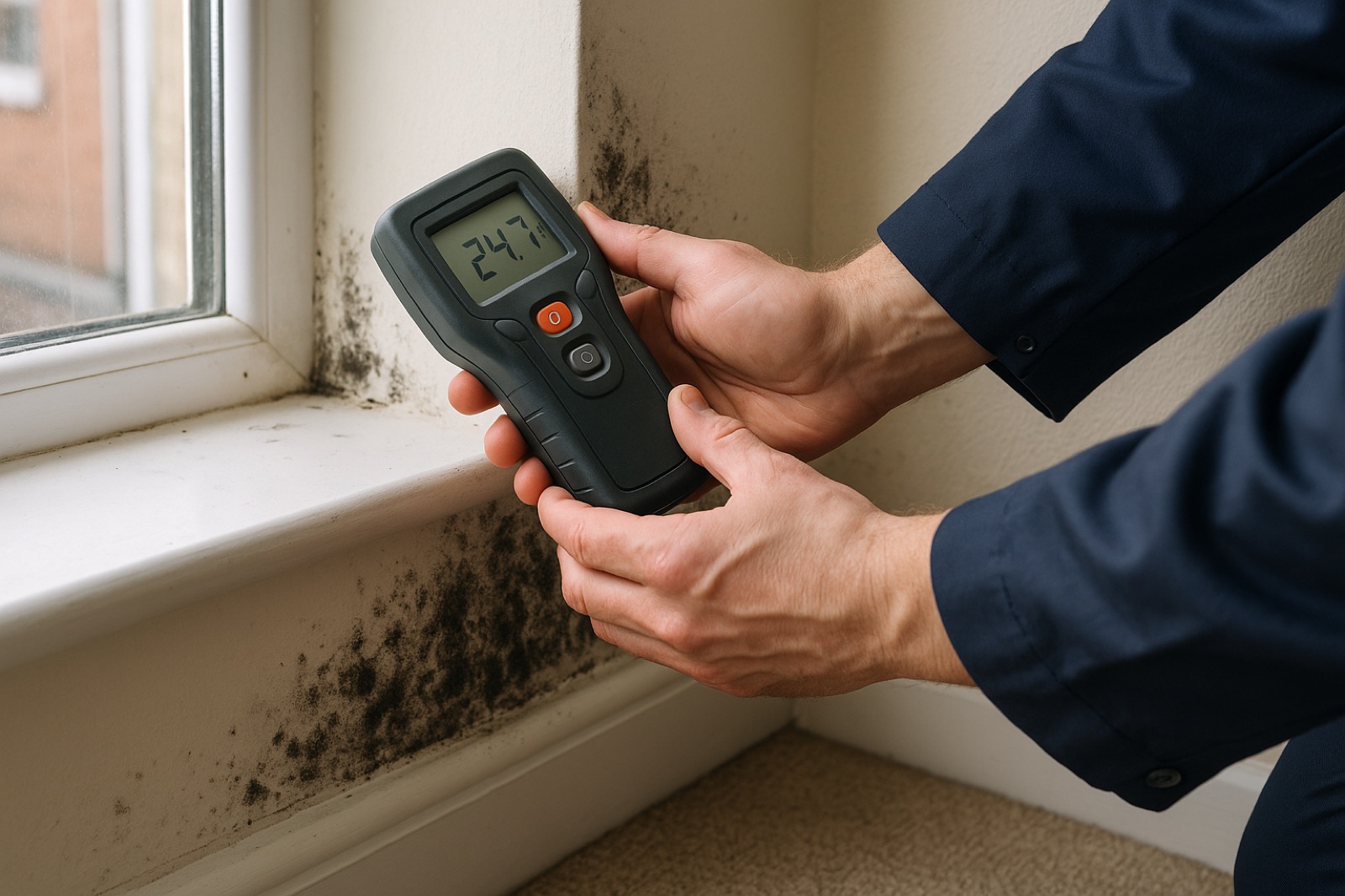
Home Damp and mould removal Derby
Damp and mould removal in Derby
A damp specialist works out what's causing the mould, then fixes the cause so it doesn't come back.
Mould in Derby shows up in very different homes: solid-walled Victorian terraces in Normanton, filled-cavity semis in Chaddesden and airtight new builds on the edge of the city. The cause in each is often different, so a survey comes before any treatment.
Derby at a glance
- Types of home
- 39.1% of Derby households live in a semi-detached house and 24.1% in a detached house, a high share for a city. 21.8% live in a terrace and 12.2% in a purpose-built block of flats. Source
- Tenure
- 59.0% of Derby households own their home. 21.3% rent privately and 18.8% rent from a social landlord. Source
- Local grant
- Derby City Council secured £1.6m from the Warm Homes: Local Grant over three years for low-income, privately owned homes rated EPC D to G, with up to £30,000 per property. YES Energy Solutions delivers it; eight homes were retrofitted in year one and 120 more are planned over the next two years. Source
What a survey should include
A proper Derby damp survey logs humidity, checks moisture levels in the walls and looks outside at gutters, downpipes, pointing and the damp course. It should name the cause: condensation, a leak, penetrating damp or rising damp.
Be cautious of a firm that sells injected damp-proofing on the first visit without ruling out condensation.
If you rent
21.3% of Derby households rent privately. Report damp to your landlord in writing with photos. Landlords must fix structural causes such as leaks, broken fans and failed gutters. The council's housing team can inspect if they don't.
Social housing tenants are protected by Awaab's Law since 27 October 2025. Landlords must investigate significant damp and mould hazards within 10 working days and then make them safe within 5 working days.
Cleaning and prevention
Our guide to removing mould from walls covers cleaning small patches safely. Our window condensation guide explains why windows stream in the morning and how to reduce it.
Day-to-day prevention
Run extractor fans during and after showers and cooking, and leave them on until the room is dry. Keep the heating on low in cold weather rather than letting rooms get very cold, since cold walls attract condensation.
Leave a small gap between furniture and outside walls, and avoid drying washing on radiators without opening a window.
Damp in Derby homes
Victorian terraces near the centre
Blocked air bricks, soil above the damp course and leaking downpipes are common causes. Rear extensions often have cold, mouldy bathrooms.
Suburban semis from the 1930s to the 1960s
Poorly installed cavity fill can carry rain across to inside walls, showing as damp patches on exposed gables.
Modern estates on the outskirts
Mould in new builds usually means ventilation isn't working: closed trickle vents, weak fans or clogged MVHR filters.
Areas covered
Engineers who cover Derby work across areas including Allestree, Darley Abbey, Mickleover, Littleover, Chaddesden, Normanton, Alvaston, Oakwood, Spondon and Chellaston.
Questions people in Derby ask
Can a grant help with damp?
Derby's Warm Homes: Local Grant can fund insulation and heating for eligible low-income owners in homes rated EPC D to G. It doesn't pay for one-off mould cleaning.
Is black mould dangerous?
Mould can worsen asthma and allergies, especially for children and older people. Deal with it promptly, and if you rent, report it rather than repeatedly cleaning it.
Sources
- ONS Census 2021, TS054 tenure (Nomis)
- GOV.UK: Awaab's Law, guidance for tenants in social housing
- Derby City Council: Derby gets £1.6m for warm homes
Also nearby: Damp and mould removal in Nottingham, Damp and mould removal in Leicester, Damp and mould removal in Sheffield, Damp and mould removal in Stoke-on-Trent