Home Damp and mould removal Nottingham
Mould removal and damp specialists in Nottingham
Find damp specialists who cover Nottingham. They trace the cause before treating the mould.
In 2021, 18.3% of Nottingham households rented from the council and another 7.2% from a housing association. Since October 2025, Awaab's Law has set fixed deadlines for social landlords to investigate and fix damp and mould hazards. If you are a council or housing association tenant, that gives you a clear route.
Private renters, who make up another 28.6% of households, rely on the council's housing standards team if a landlord won't act.
Nottingham at a glance
- Renting
- 28.6% of Nottingham households rented privately in 2021 and 25.5% rented socially, including 18.3% from the council. 45.1% owned their home. Source
- Age of homes
- 17.4% of Nottingham's homes were built before 1919, and 20.6% between 1965 and 1982, according to the Valuation Office Agency's March 2024 count. Source
- Local grant
- Nottingham City Council's Warm Homes: Local Grant is handled by Nottingham Energy Partnership. It is for homes rated EPC D to G with household income below £36,000 or certain benefits. The council says it is oversubscribed and the waiting list could take up to a year. Source
Council and housing association tenants
Put any damp and mould in your Nottingham home to your landlord in writing, with photos attached. Under Awaab's Law they must investigate within set timescales and tell you what they found. Emergency hazards must be dealt with faster.
Keep a diary of dates and responses. If things stall, go to the Housing Ombudsman.
Owners and private tenants
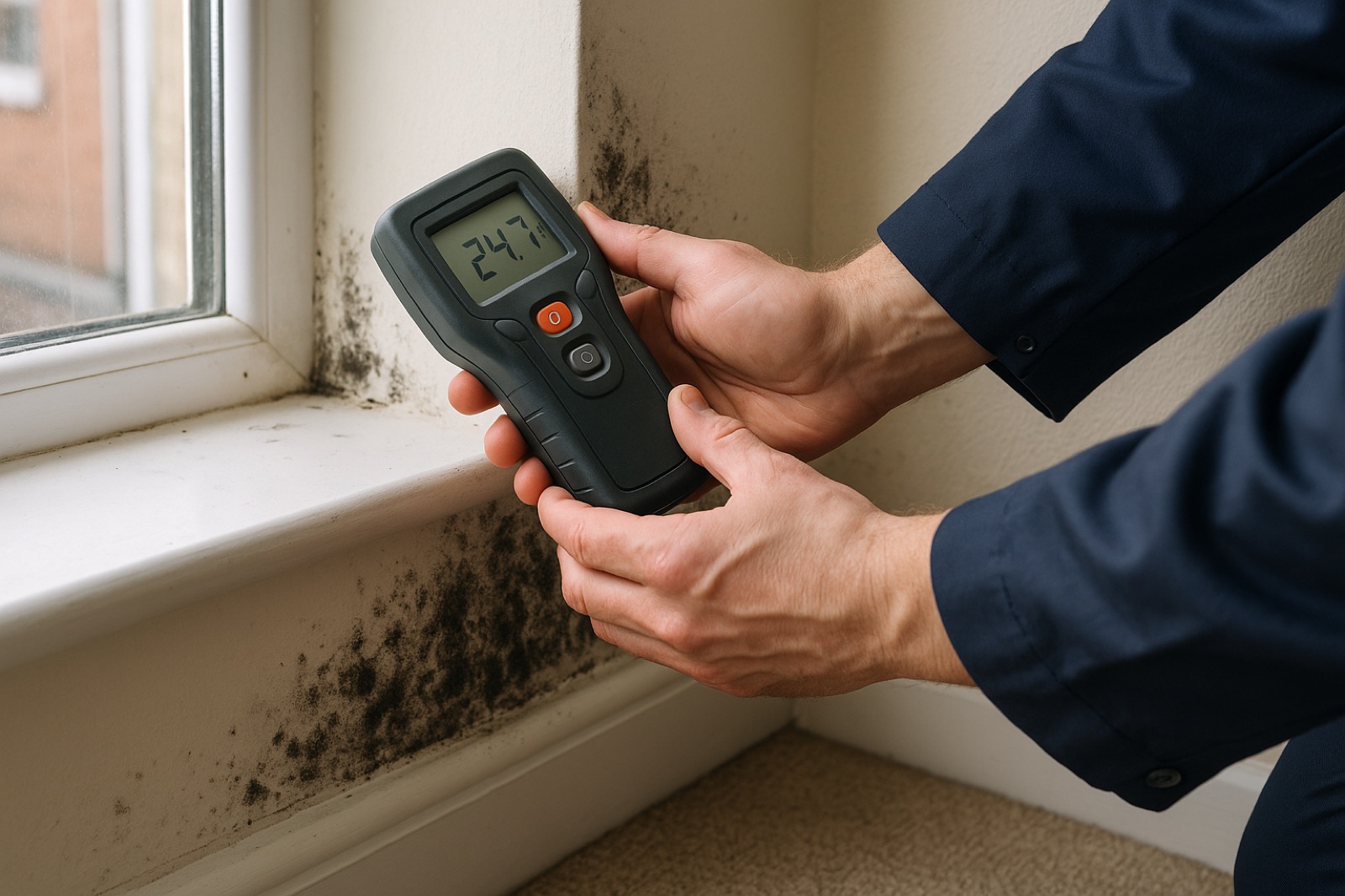
A survey should test moisture levels at different heights, look for leaks and defects outside, and check ventilation. Rising damp is less common than people think. Condensation and penetrating damp from gutters and pointing are far more common.
Be wary of a firm that sells damp-proof injection before checking these causes.
Ask for a written report with the moisture readings, photos and a clear explanation of the cause. You will need it if you later dispute the work or go to your landlord.
Cleaning safely
Wipe small areas with a mould remover, wearing gloves and a mask. Bag and bin the cloths. Follow the steps in our guide to removing mould from walls. Then deal with the moisture, or it will be back within weeks.
Nottingham homes and what they need
Victorian terraces
Solid walls are cold inside, so condensation forms in corners and behind furniture. Rendered or painted brick can trap moisture, so check what has been applied outside.
Interwar and post-war semis
Check for bridged damp-proof courses: patios and paths built up above the original level are a common cause.
City-centre flats and warehouse conversions
Thick old walls and big windows produce condensation. Keep heating steady and the extractor fans running.
Areas covered
Engineers who cover Nottingham work across areas including West Bridgford, Beeston, Wollaton, Sneinton, Lenton, Mapperley, Arnold, Carlton, Bulwell and Hucknall.
Questions people in Nottingham ask
Can a grant help?
Nottingham City Council's Warm Homes: Local Grant can fund insulation that keeps walls warmer, which reduces condensation. It doesn't fund mould cleaning, and there is a waiting list.
Do dehumidifiers help?
Yes, as a short-term measure while the cause is fixed. Empty it daily and run it with the door closed.
Sources
- ONS Census 2021, table TS054 tenure (Nomis)
- GOV.UK: Awaab's Law guidance for social housing tenants
- Nottingham City Council: Greener HousiNG
Also nearby: Damp and mould removal in Derby, Damp and mould removal in Leicester, Damp and mould removal in Sheffield