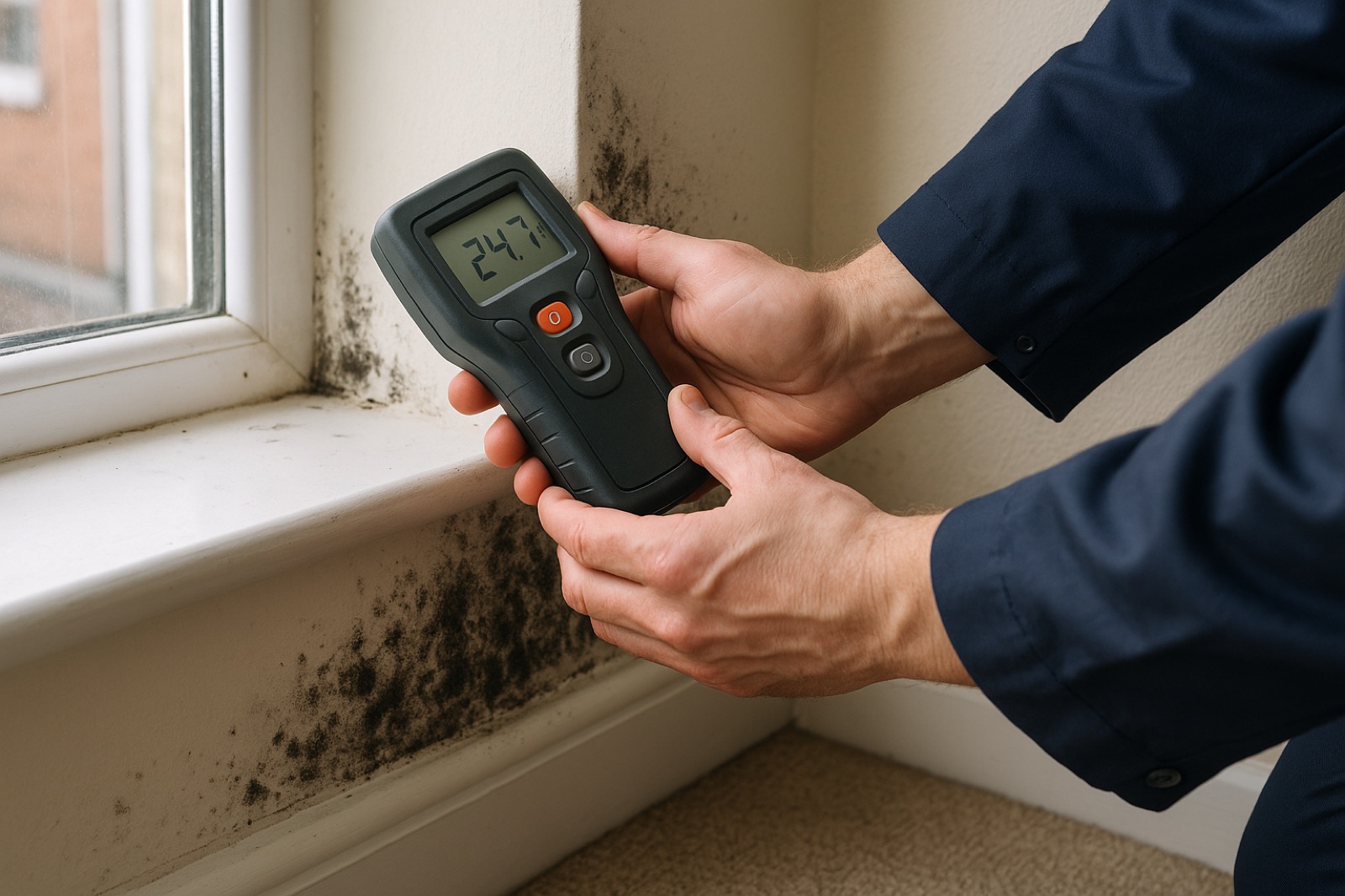
Home Damp and mould removal Glasgow
Damp and mould removal in Glasgow
Mould needs moisture. Finding where it comes from is the job, and we pass your request to damp specialists who cover Glasgow.
More than a third of Glasgow households rent from the council or a housing association, a far higher share than across Scotland. For those tenants, and for the 16.4% renting privately, new rules on damp and mould came into force on 6 October 2026.
Glasgow at a glance
- Homes that are flats
- 68.5% of Glasgow households live in a flat, maisonette or apartment, the highest share of any Scottish council area (34.4% nationally). Detached houses are just 5.1%. Source
- Tenure
- 34.9% of Glasgow households rent from the council or a housing association, against 22.5% across Scotland. 16.4% rent privately and 46.7% own their home. Source
- Housing condition
- 34% of Glasgow dwellings failed the Tolerable Standard in 2022 to 2024, against 28% across Scotland. The survey links the rise to criteria added in 2022 for smoke, heat and carbon monoxide alarms. 11% of dwellings had condensation. Source
What your landlord must now do
Once a landlord knows about damp or mould, a competent person must investigate within 10 working days. You should get a written summary within 3 working days after that. If repairs are needed, they must start within 5 working days of the investigation.
Social landlords must complete the repair within 20 working days of starting it. Private landlords have no fixed deadline to finish, but must do so as soon as reasonably practicable. Report the problem in writing, with photos, so the clock starts.
Condensation or leak?
Condensation shows up as black spots in corners, behind furniture and around windows, worse in winter. Glasgow's condensation rate was 11% of dwellings in 2022 to 2024. Leaks show as tide marks, patches that spread after rain, or damp near pipes and roofs. The fix for one does nothing for the other.
Our guide to removing mould from walls covers safe cleaning of small areas while the cause is sorted.
Owners in tenements
If you own a tenement flat, leaks from the roof, gutters or stonework are usually a shared repair. The Tenement Management Scheme lets a majority of owners agree and share the cost when the title deeds are silent.
Glasgow homes and what they need
Sandstone tenement flats
Blocked rhones and failed pointing let water into the top flats; back court drainage problems affect ground floors. Sandstone needs lime-based repairs to dry properly.
Four-in-a-block and cottage flats
Cold, exposed corners in bedrooms are typical condensation spots. Insulation and a working fan are usually the answer.
Suburban semis and bungalows
Mould along the top of bedroom walls often means thin loft insulation at the eaves. Topping it up warms that edge.
Areas covered
Engineers who cover Glasgow work across areas including Partick, Dennistoun, Shawlands, Hyndland, Govan, Maryhill, Pollokshields, Cathcart, Bearsden and Rutherglen.
Questions people in Glasgow ask
Is mould dangerous?
It can worsen asthma and other breathing problems, especially for children and older people. Report it early and do not paint over it.
Can I withhold rent until the mould is fixed?
Not without risking your tenancy. Use the landlord's complaints process, then the Scottish Public Services Ombudsman for social landlords or the First-tier Tribunal for private lets.
Sources
- Scottish Government: Awaab's Law guidance for landlords in Scotland
- Scotland's Census 2022, table UV404
- Scottish House Condition Survey: Local Authority Tables 2022-2024
Also nearby: Damp and mould removal in Edinburgh, Damp and mould removal in Dundee