Home Damp and mould removal Dundee
Damp and mould removal in Dundee
Mould keeps returning until its cause is dealt with. We pass your request to damp and mould specialists covering Dundee.
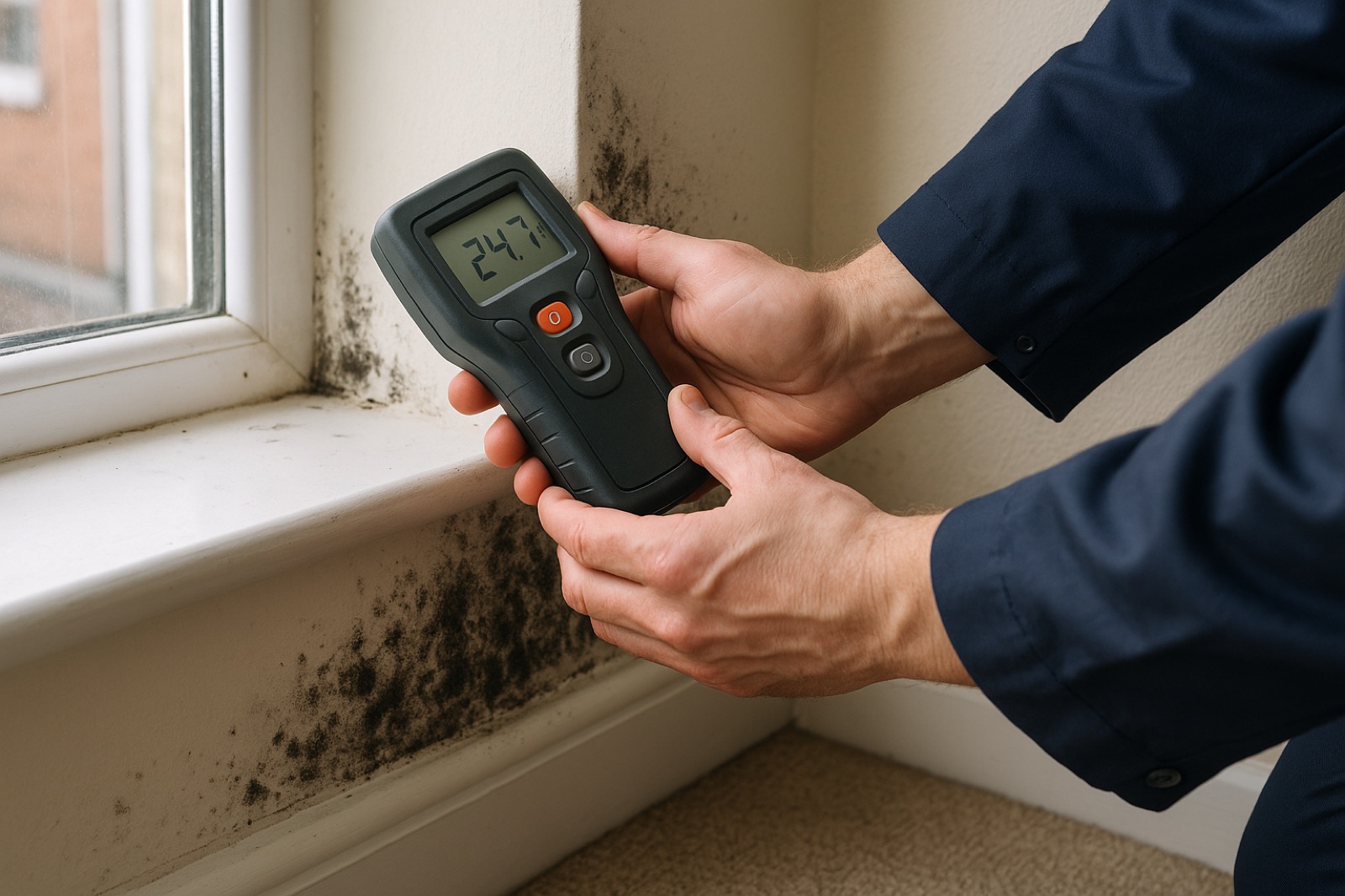
Dundee sits at the top of two Scottish tables you would rather avoid. In 2022 to 2024, 12% of its homes had condensation and 74% had disrepair to critical parts of the building, both the highest rates in Scotland according to the Scottish House Condition Survey. Leaking roofs, cracked render and broken gutters let water in; cold rooms and poor ventilation let it condense.
A specialist should tell you which one you are dealing with before suggesting any treatment.
Dundee at a glance
- Condensation and disrepair
- 12% of Dundee City dwellings had condensation in 2022 to 2024, the highest rate in Scotland. 74% had disrepair to critical elements such as roofs, walls and chimneys, also the highest of any council (47% nationally). Source
- Housing types
- 47.3% of Dundee City households live in a flat, against 34.4% across Scotland. Semi-detached houses account for 26.7% of households. Source
- Renting
- 20.6% of Dundee City households rent from a private landlord or letting agency (12.4% across Scotland), and 26.2% rent from the council or a housing association. Source
- Damp and mould rules for landlords
- From 6 October 2026, Scottish landlords must have damp and mould investigated within 10 working days of becoming aware of it and start any needed repair within 5 working days of the investigation. Source
New rules for landlords
Almost half of Dundee households rent: 20.6% privately and 26.2% from the council or a housing association. Since 6 October 2026, both kinds of landlord must have damp and mould investigated by a competent person within 10 working days of becoming aware of it. They must give you a written summary within 3 working days of that, and start the repair within 5 working days if one is needed.
Social landlords then have 20 working days to finish. Private landlords must finish as soon as reasonably practicable.
Treating it properly
Clean small patches with a mould remover, wearing gloves and a mask. Our guide to removing mould from walls has the details. Then deal with the cause: fix the leak, improve extraction, keep rooms at a steady low heat and move furniture away from cold outside walls.
Avoid paints or sprays sold as a cure. They hide the mould for a few weeks but do nothing about the moisture behind it.
When to call a specialist
Call one if mould keeps coming back within weeks of cleaning, if plaster is crumbling or wet to the touch, or if you can see staining spread after rain. Those signs point to water getting in, which needs a builder or roofer rather than a cleaner.
Dundee homes and what they need
Victorian stone tenements
Shared roofs, gutters and stonework need all owners to pay for repairs. A factor or owners' association makes it easier to get them done.
Four-in-a-block and postwar flats
Concrete and harled walls get cold, and bedrooms with outside walls on two sides are mould hot spots. Insulation and a fan usually fix it.
Suburban semis and bungalows
Bungalows with thin loft insulation get mould where the ceiling meets the outside wall. Topping up the loft insulation warms that corner.
Areas covered
Engineers who cover Dundee work across areas including Broughty Ferry, West End, Lochee, Stobswell, Hilltown, Menzieshill, Downfield, Fintry, Douglas and Monifieth.
Questions people in Dundee ask
Can I get funding for insulation to stop mould?
Yes, if you own your home. Home Energy Scotland can fund insulation through grant and interest-free loan, and Warmer Homes Scotland helps some lower-income households.
Sources
- Scottish House Condition Survey: Local Authority Tables 2022-2024
- Scottish Government: Awaab's Law guidance for landlords in Scotland
- Scotland's Census 2022, table UV404
Also nearby: Damp and mould removal in Edinburgh, Damp and mould removal in Aberdeen, Damp and mould removal in Glasgow