Home Damp and mould removal Ipswich
Damp and mould removal in Ipswich
A survey finds the cause before anything is treated. We pass your request to damp and mould specialists who cover Ipswich.
Mould grows where warm, damp air meets a cold surface. In Ipswich, the homes most at risk include flats heated by electricity, where people often keep the heating low to save money, and older terraces with solid walls.
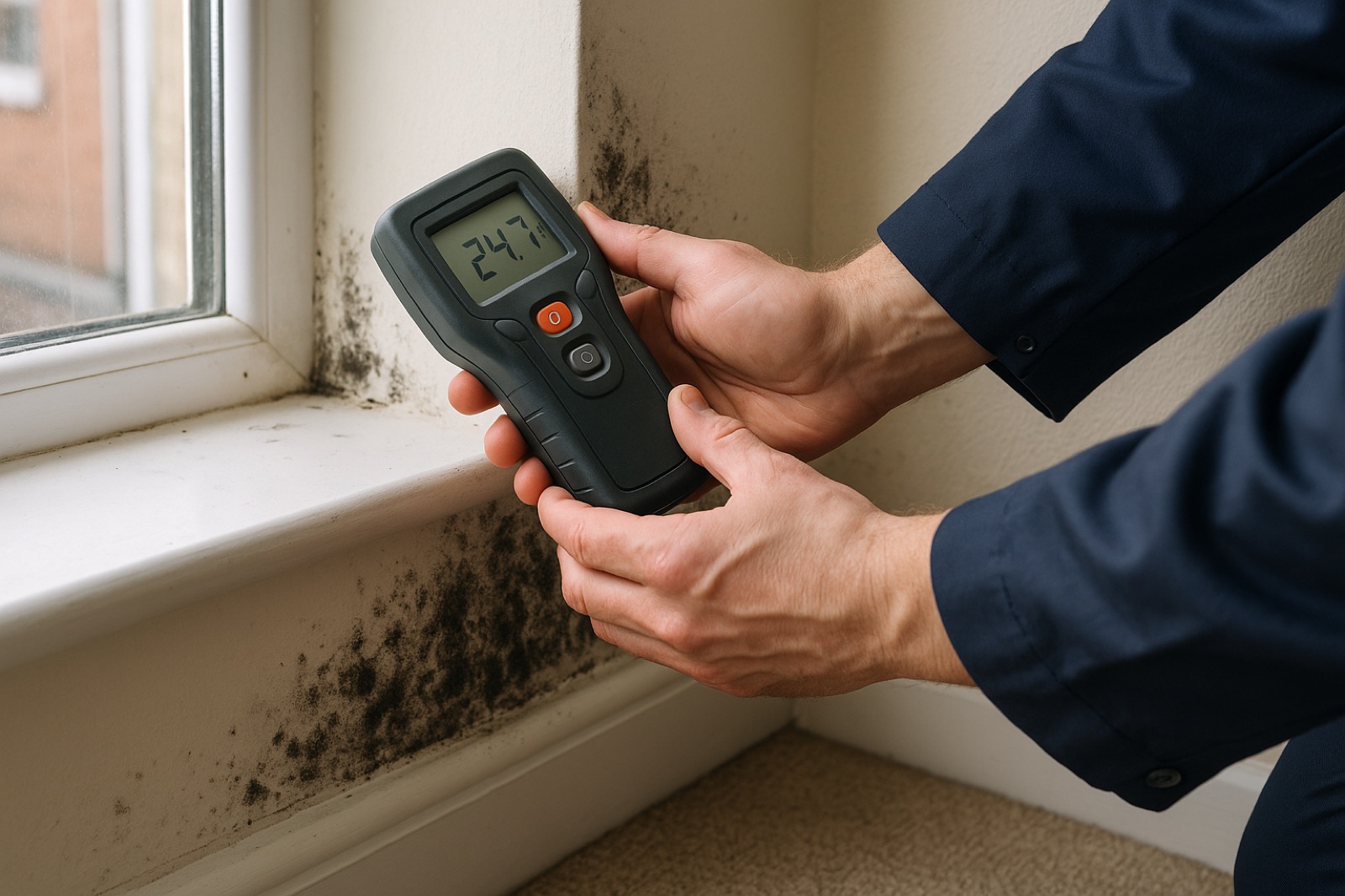
Treating the mould without fixing the moisture won't last. A specialist should find out whether it's condensation, a leak or damp coming through the walls.
Ipswich at a glance
- A town of semis
- 38.5% of Ipswich households live in a semi-detached house, against 31.5% in England. 22.3% live in a terrace, 20.7% in a purpose-built flat and 14.2% in a detached house. Source
- Renting
- 23.0% of Ipswich households rent privately and 20.8% rent from a social landlord, 12.8% of them directly from the borough council. 55.4% own their home. Source
- Warm Homes Suffolk
- Ipswich is part of a Suffolk-wide Warm Homes: Local Grant award of £6,183,974, run as Warm Homes Suffolk. Homes rated EPC D to G can qualify through income under £36,000, a means-tested benefit, an eligible postcode, or a health condition made worse by a cold home. Source
Is it condensation?
Black spots in corners, behind furniture and around windows, worse in winter, usually mean condensation. Better heating, ventilation and insulation are the fix.
Tide marks low on walls, damp patches after rain, or a musty smell under the floor point to a building fault: gutters, pointing, a damp proof course or plumbing.
A good surveyor checks the outside of the house as well as the inside, and explains the moisture readings rather than going straight to a quote.
If you rent
Tell your Ipswich landlord about damp and mould in writing and include photos. Social landlords, including Ipswich Borough Council, now have legal deadlines under Awaab's Law to investigate significant damp and mould. Private landlords must still deal with serious hazards, and the council can inspect if they don't.
Health and grants
Warm Homes Suffolk has a route for people whose health condition is made worse by a cold home, such as a respiratory or heart condition. If your home is rated EPC D to G, that route may open insulation, heating and ventilation work even if your income is above £36,000.
Ipswich homes and what they need
1930s and postwar semis
Mould in the bathroom ceiling often means the fan is too weak or not vented. A ducted fan to the outside usually helps.
Victorian and Edwardian terraces
Solid walls get cold, especially on the north side. Internal insulation can help but must be fitted carefully to avoid trapping moisture.
Newer estates and apartments
Drying clothes indoors in a small, airtight flat adds a lot of moisture. Use a vented dryer or a dehumidifier.
Areas covered
Engineers who cover Ipswich work across areas including Kesgrave, Martlesham, Rushmere St Andrew, Whitton, Chantry, Pinewood, Ravenswood, Gainsborough, Westerfield and Bramford.
Questions people in Ipswich ask
Can I clean mould myself?
Small areas, yes. Our guide on removing mould from walls covers safe methods. For large patches, or if someone in the home has asthma, get professional help.
Does a dehumidifier help?
Yes, as a short-term fix. It won't cure a leak, but it can stop condensation getting worse while you sort out the cause.
Should I paint over it?
Not until the cause is fixed and the wall is dry. Anti-mould paint helps afterwards, but on its own it only hides the problem for a few weeks.
Sources
- Warm Homes Suffolk
- GOV.UK: Awaab's Law, guidance for social landlords
- ONS Census 2021, TS046 central heating (Nomis)
Also nearby: Damp and mould removal in Chelmsford, Damp and mould removal in Norwich, Damp and mould removal in Cambridge