Home Damp and mould removal Wolverhampton
Damp and mould removal in Wolverhampton
Treating mould without fixing its cause just buys time. A specialist finds the source first.
Wolverhampton has a large council-rented sector: 18.8% of households rent directly from the council and 25.2% from a social landlord of any kind. For those households, investigating and fixing damp and mould falls to the landlord.
Wolverhampton at a glance
- Types of home
- 46.0% of Wolverhampton households live in a semi-detached house, far more than any other type. 17.4% live in a purpose-built block of flats, 16.9% in a detached house and 16.4% in a terrace. Source
- Who rents
- 25.2% of Wolverhampton households rent from a social landlord, 18.8% directly from the council. 19.0% rent privately. Source
Awaab's Law
From 27 October 2025, social landlords in England must investigate significant damp and mould hazards within 10 working days of being told and make them safe within 5 working days after that.
Report it in writing with photos and dates. If the council or housing association doesn't respond, you can complain to the Housing Ombudsman.
Private tenants
About one in five households rent privately. Landlords must deal with structural causes such as leaks, broken fans and faulty gutters. If yours won't, the council's private housing team can inspect.
Owners: get a proper survey
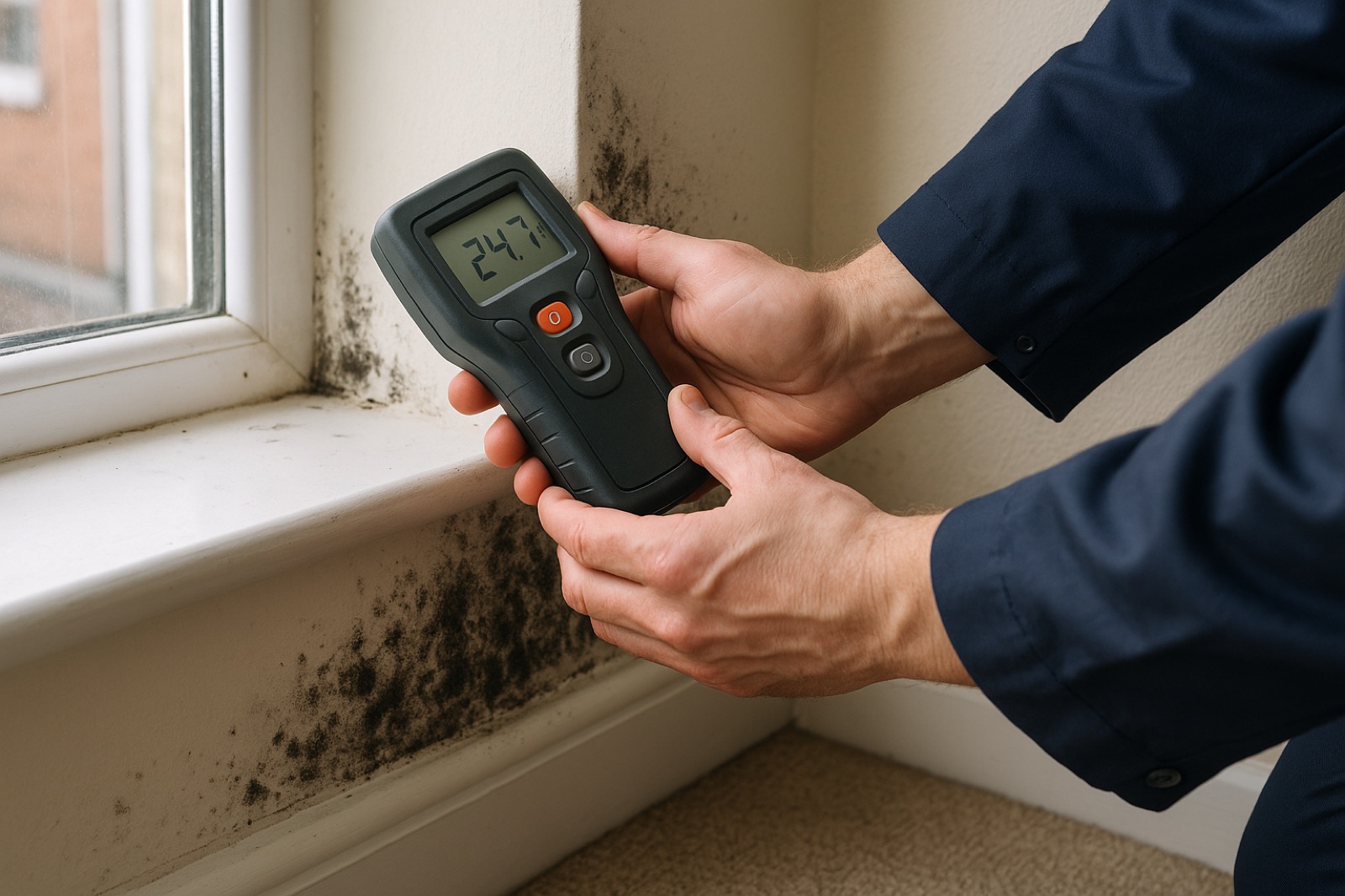
A damp specialist should measure humidity and wall moisture, look at gutters, downpipes and the damp course, and tell you which cause they found. Be careful of firms recommending injected damp-proofing before checking for condensation.
A thermal camera can show cold bridges and missing insulation that you can't see, which is why some surveyors use one in older semis and flats.
Cleaning and prevention
For small patches, our guide to removing mould from walls covers safe cleaning. Our window condensation guide explains why windows run wet and how to cut it.
Common damp spots
Interwar and post-war semis across the estates
Mould behind wardrobes on outside walls and in bathroom ceilings is typical. Poorly installed cavity fill can carry rain across to the inner wall.
Low-rise and tower block flats
Concrete frames create cold bridges at floor edges and window reveals. Mould along these lines is condensation on cold spots.
Victorian red brick terraces near the centre
Solid walls and blocked air bricks lead to damp in ground floor rooms. Check for soil or paving above the damp course outside.
Areas covered
Engineers who cover Wolverhampton work across areas including Tettenhall, Penn, Wednesfield, Bilston, Whitmore Reans, Finchfield, Compton, Bushbury, Fallings Park and Codsall.
Questions people in Wolverhampton ask
Will the council pay for damp work on my own home?
Not usually. Act on Energy can tell you about any grants for insulation and ventilation that may become available.
Is it safe to clean mould myself?
Small patches, roughly the size of a sheet of A4 or less, usually are. Wear gloves and a mask, use a product made for mould and dry the area well. Larger areas or mould that keeps coming back need a specialist and a fix for the cause.
Does a dehumidifier help?
It can control condensation in a bad room while the real fix is arranged. Empty it daily and keep doors shut so it works on one space at a time.
Sources
- GOV.UK: Awaab's Law, guidance for tenants in social housing
- ONS Census 2021, TS054 tenure (Nomis)
- Act on Energy: Wolverhampton Warm Homes Local Grant
Also nearby: Damp and mould removal in Birmingham, Damp and mould removal in Stoke-on-Trent, Damp and mould removal in Coventry