Home Damp and mould removal York
Damp and mould removal in York
Find out what's causing the damp, whether it's condensation, a leak or water through the walls, and fix the source.
In a city with so many older buildings, York sees plenty of damp that's been made worse by modern repairs. Cement render on soft brick, plastic paint on lime plaster, and blocked air bricks all trap moisture. The right survey looks at how the building was meant to work.
York at a glance
- Housing types
- 35.8% of York households live in a semi, 23.8% in a terrace and 22.5% in a detached house. 13.8% live in a purpose-built flat and another 3% in converted buildings. Source
- Ownership and renting
- 36.8% of York households owned their home outright in 2021. 20.0% rented privately and 8.4% rented from the council. Source
- Local grant
- City of York Council was allocated £2,037,677 for the Warm Homes: Local Grant. Source
Old buildings, modern materials
Many York houses were built with lime mortar and plaster, which let moisture evaporate. Replacing them with cement or gypsum can push damp up the wall or into rooms. Injected damp-proof courses are often sold where the real fix is removing impermeable materials and improving drainage outside.
Renting
One in five York households rents privately. Landlords must fix damp and mould that makes a home unfit to live in. City of York Council tenants are also protected by Awaab's Law, which sets time limits for social landlords to investigate and repair serious damp.
Report it in writing and take dated photos. Our window condensation guide helps with the day-to-day.
Cleaning safely
Small patches can be cleaned with a mould spray; our guide on removing mould from walls has the details. Wear gloves and keep the window open.
What to expect from a survey
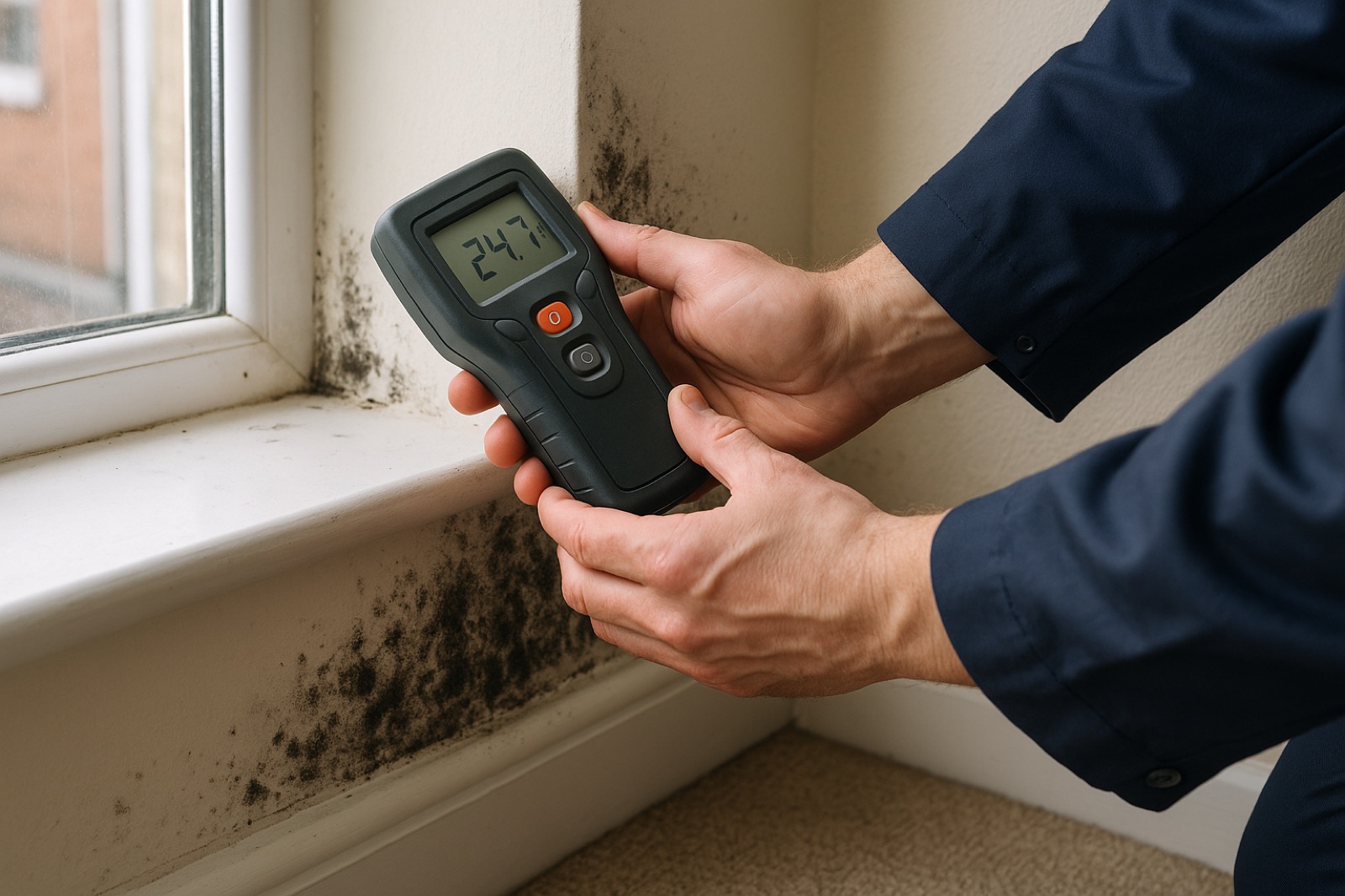
A good surveyor checks moisture readings at different heights, looks at gutters, downpipes and ground levels outside, and asks about heating and drying habits. In a period house, they should recognise lime plaster and solid walls and not recommend treatments that trap moisture. Ask for a written report that says what the cause is, not just what to buy.
Damp in York homes
Victorian and Edwardian terraces
Check that paths and flower beds haven't been built up against the walls, bridging the damp-proof course.
Interwar and postwar semis
Condensation is the usual cause. Better heating and ventilation in bedrooms often fixes it.
Flats and conversions near the centre
Leaks from above and blocked gutters are common in converted townhouses. Find the source before treating the wall.
Areas covered
Engineers who cover York work across areas including Acomb, Clifton, Heworth, Fulford, South Bank, Dringhouses, Huntington, Haxby, Osbaldwick and Bishopthorpe.
Questions people in York ask
Can a grant help?
City of York Council's Warm Homes: Local Grant can fund insulation and ventilation for eligible households, which often solves condensation.
Is rising damp common in York?
True rising damp is less common than it's diagnosed. High ground levels, leaking gutters and condensation explain most low-level damp. A survey should rule those out first.
Sources
- ONS Census 2021, TS054 tenure (Nomis)
- GOV.UK: Awaab's Law, guidance for tenants in social housing
- GOV.UK: Warm Homes: Local Grant, successful local authorities
Also nearby: Damp and mould removal in Leeds, Damp and mould removal in Hull, Damp and mould removal in Wakefield, Damp and mould removal in Bradford