Home Damp and mould removal Hull
Damp and mould removal in Hull
A specialist works out whether your damp comes from condensation, a leak, ground water or past flooding, and fixes the source.
On 25 June 2007, 110mm of rain fell on Hull in a day, and more than 10,000 properties across Hull and the East Riding were damaged. The city sits in a low-lying basin, and some homes have had water through them more than once. Damp that lingers in walls and floors after a flood can show up as mould for years.
Most Hull mould, though, is everyday condensation in terraced houses with solid walls and small rooms.
Hull at a glance
- Terraced homes
- 46.7% of Hull households live in a terraced house, almost double the share in Leeds. 29.4% live in a semi, 8.4% in a detached house and 11.4% in a purpose-built flat. Source
- Renting
- Only 48.3% of Hull households owned their home in 2021. 27.0% were social tenants (18.9% renting from the council) and 22.0% rented from a private landlord or letting agency. Source
- Flood history
- On 25 June 2007, 110mm of rain fell on Hull in 24 hours and more than 10,000 properties were damaged across Hull and the East Riding. Hull City Council describes the city as a flat basin of low-lying land below sea level. Source
- Local grants
- Hull City Council was allocated £3,402,806 for the Warm Homes: Local Grant. East Riding of Yorkshire Council, which covers Hessle, Cottingham, Anlaby, Kirk Ella and Willerby, was allocated £1,500,000. Source
After a flood
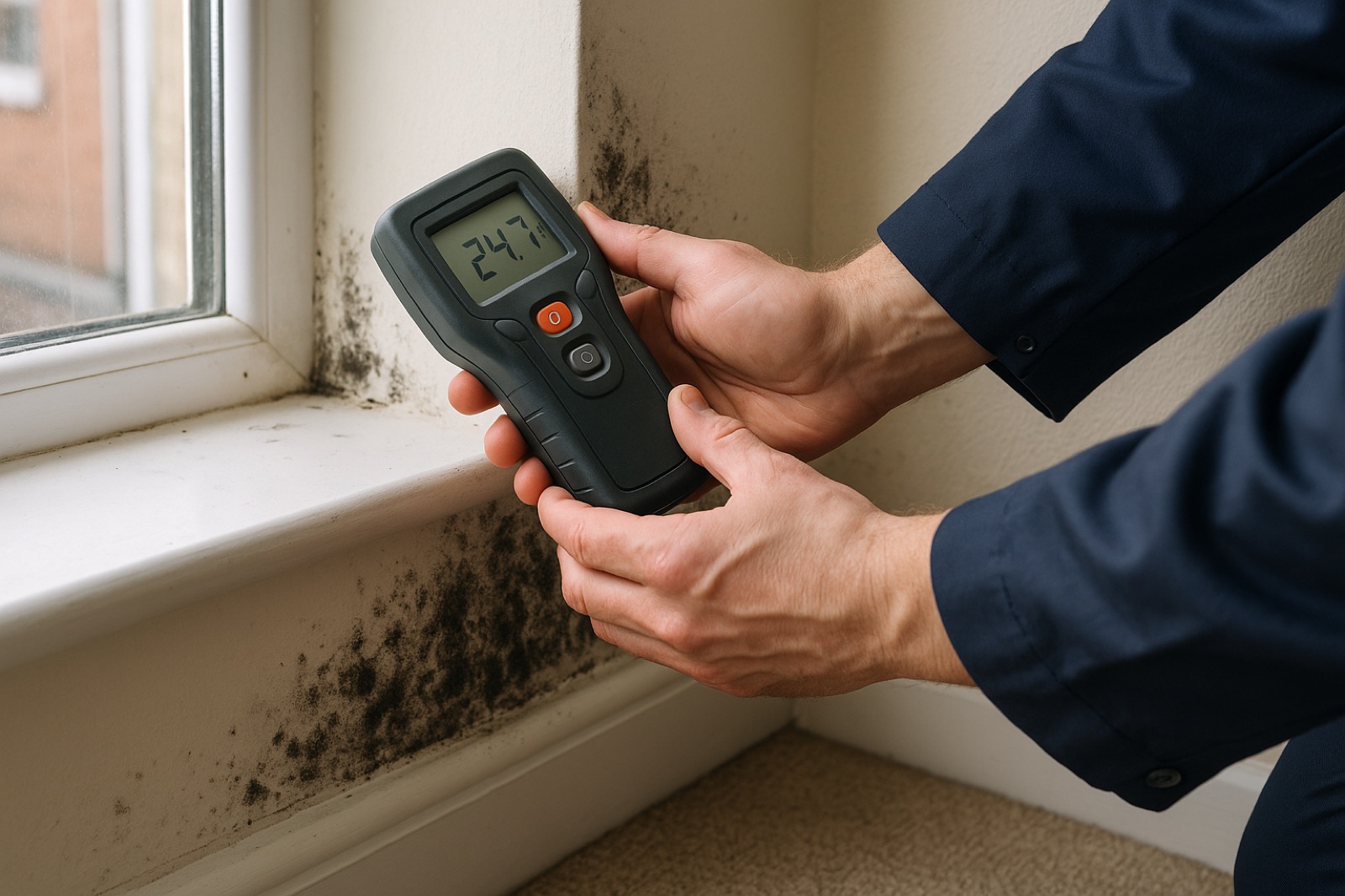
Walls and floors that took in flood water need to dry fully before they're sealed up. If plaster was replaced too soon, or the underfloor void wasn't cleaned out, damp and mould can come back. A surveyor can measure moisture levels in walls and floors and tell you if drying is complete.
Ask your insurer for the drying certificate from any past flood claim.
Council, housing association and private tenants
More than a quarter of Hull households rent from a social landlord, a much higher share than York or Leeds. Under Awaab's Law, social landlords must investigate and fix serious damp and mould within set time limits. Hull City Council tenants can report it through the council's repairs service.
Private landlords must deal with damp that makes a home unfit to live in. Report it in writing with dated photos.
Day-to-day condensation
Heat rooms steadily, use extractor fans, dry washing outside or near an open window, and keep furniture a few centimetres off outside walls. The window condensation guide on this site explains why windows stream in winter, and the guide on removing mould from walls covers cleaning.
Damp in Hull homes
Victorian and Edwardian terraces off the main roads
Blocked air bricks under suspended floors cause musty smells and rot. Clear them before anything else.
Interwar and post-war semis and estate houses
Mould in bedroom corners often comes from cold spots where loft insulation stops short of the eaves.
Bungalows in the villages around the city
Bungalows lose heat through a large roof area. Thin loft insulation leaves ceilings cold enough for mould.
Areas covered
Engineers who cover Hull work across areas including The Avenues, Newland Park, Hessle, Cottingham, Anlaby, Kirk Ella, Willerby, Sutton-on-Hull, Bransholme and Kingswood.
Questions people in Hull ask
Can I get help paying for damp treatment?
Hull City Council and East Riding of Yorkshire Council both have Warm Homes: Local Grant funding for insulation and ventilation in eligible privately owned homes.
Who pays to fix damp in a rented home?
The landlord, if the cause is the building, such as a leak, failed damp course or poor ventilation. Tenants are expected to heat and ventilate reasonably, but that doesn't shift responsibility for defects.
Sources
- Hull City Council: Hull floods 15 years on
- ONS Census 2021, TS054 tenure (Nomis)
- GOV.UK: Awaab's Law, guidance for tenants in social housing
- GOV.UK: Warm Homes: Local Grant, successful local authorities
Also nearby: Damp and mould removal in York, Damp and mould removal in Doncaster, Damp and mould removal in Leeds