Home Damp and mould removal Doncaster
Damp and mould removal in Doncaster
Find damp specialists covering Doncaster. They find the cause first, then treat the mould.
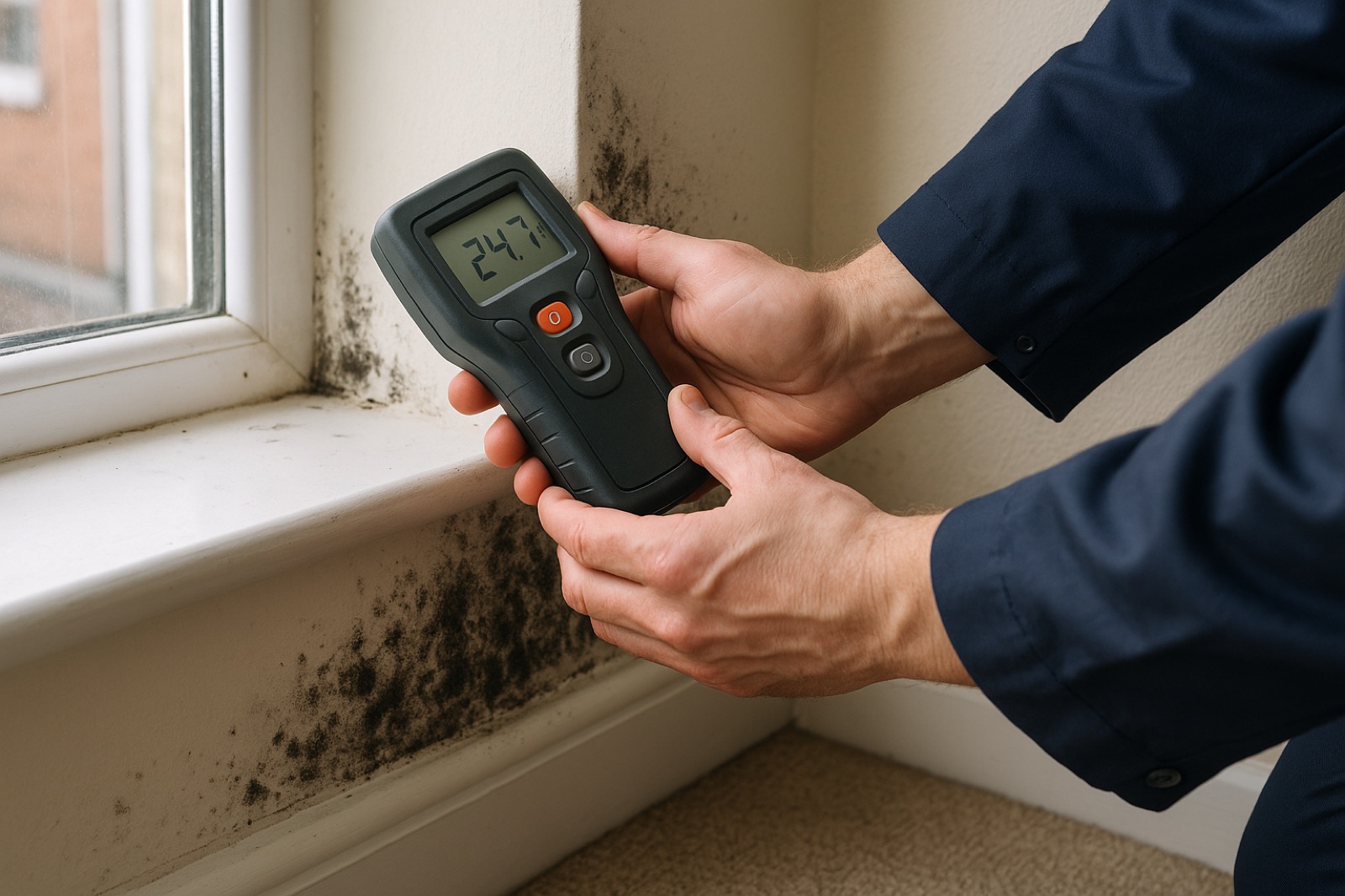
Mould in Doncaster homes is most often condensation. Cold spots on walls, ceilings and window reveals attract moisture, especially in bedrooms in winter. Post-war houses with concrete lintels and early cavity insulation have plenty of these cold spots.
In older terraces and in homes near rivers or low-lying land, penetrating and rising damp also need ruling out.
Doncaster at a glance
- Age of homes
- 29.3% of Doncaster's homes were built between 1945 and 1972 and 20.6% between 1919 and 1939. 13.3% date from before 1919. Source
- Tenure
- 62.8% of Doncaster households owned their home in 2021, a third of them outright. 19.4% rented privately and 17.0% rented socially. Source
- Local grant
- Doncaster Council accepted £1.6 million of Warm Homes: Local Grant funding in March 2025 for energy efficiency work on around 110 privately owned homes. It was the council's sixth successful retrofit bid, bringing its total to £12.2 million over four years. Source
What a good survey covers
The surveyor should take moisture readings at several heights, inspect gutters, downpipes and pointing outside, check ground levels against the damp-proof course and look at ventilation. Ask for a written report with readings and photos.
Be wary of a firm that recommends chemical damp-proofing before checking ventilation and outside defects.
In low-lying parts of the borough, check whether the ground outside has been built up against the walls or whether drains are backing up. Both push moisture into walls and floors.
If you rent
About 36% of Doncaster households rent, privately or socially. Report damp and mould to your landlord in writing with photos. Social landlords must investigate and act within set deadlines under Awaab's Law. Private landlords must deal with serious hazards, and Doncaster Council's housing team can inspect if they don't.
Cleaning and keeping it away
Clean small areas with a mould remover, wearing gloves and a mask. See our guide to removing mould from walls. Then reduce moisture: use extractor fans, keep heating steady, and dry clothes outside or in a vented dryer where you can.
Doncaster homes and what they need
Interwar and postwar semis
Corners of bedrooms and around windows are typical spots. Better loft insulation at the eaves warms the top of the walls.
Red-brick terraces in town and the former pit villages
Check for bridged damp-proof courses where yards or paths have been raised. Solid walls also need breathable finishes.
Bungalows
Ceilings near the eaves are prone to mould if loft insulation doesn't reach the edges. Topping it up there often fixes the problem.
Areas covered
Engineers who cover Doncaster work across areas including Bessacarr, Balby, Armthorpe, Bentley, Wheatley, Hatfield, Thorne, Mexborough, Conisbrough and Tickhill.
Questions people in Doncaster ask
Can a grant help?
Doncaster Council's Warm Homes: Local Grant funds insulation and other energy efficiency work for eligible privately owned homes, which can reduce condensation. It doesn't pay for mould cleaning.
Should I paint over it?
Not until the cause is fixed and the wall has dried. Anti-mould paint on a damp wall only hides the problem for a while.
Is it dangerous?
Mould can trigger asthma and allergies. Children, older people and anyone with breathing problems are most at risk, so act early.
Sources
- ONS Census 2021, table TS054 tenure (Nomis)
- GOV.UK: Awaab's Law guidance for social housing tenants
- Doncaster Council: Rule 16 decision, Warm Homes: Local Grant
Also nearby: Damp and mould removal in Sheffield, Damp and mould removal in Hull, Damp and mould removal in Wakefield, Damp and mould removal in York