Home Damp and mould removal Preston
Mould removal and damp treatment in Preston
We pass your request to damp and mould specialists who cover Preston and can find the cause.
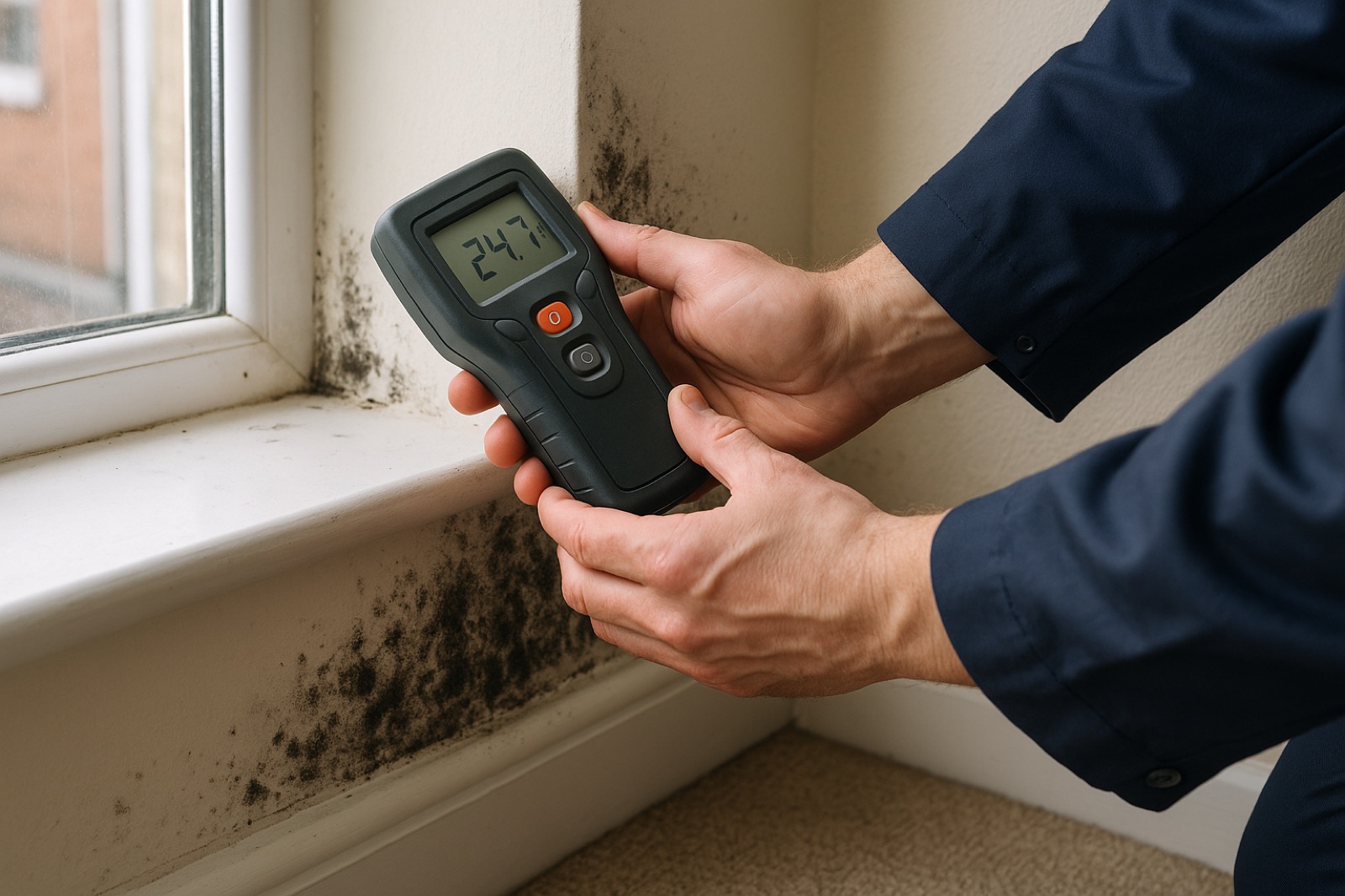
Most mould in Preston homes is condensation: moisture from daily life settling on cold walls, window frames and corners. It's especially common in older terraces shared by several people and in flats with little ventilation.
The first step is finding the cause. Treatments that skip it rarely last.
Preston at a glance
- House types
- 34.2% of Preston households live in a semi, 29.2% in a terrace and 19.0% in a detached house. About 17.5% live in a flat. Source
- Private renting
- 22.4% of Preston households rent privately and 18.4% rent social housing, mostly from housing associations. 58.3% own their home. Source
- Local grant
- Preston is part of a Lancashire consortium led by Blackpool Council for the Warm Homes: Local Grant, with a £35.3m allocation shared across 13 councils. Source
Renters' rights
Private landlords must fix damp caused by disrepair. If they don't, Preston City Council's housing standards team can inspect.
Social tenants, 18.4% of Preston households, are covered by Awaab's Law. Since 27 October 2025, social landlords must investigate significant damp and mould hazards within 10 working days and begin safety work within 5 working days of finishing the investigation.
Causes to rule out
Leaking gutters, failed pointing and cracked render let rain into walls. Blocked air bricks trap moisture under suspended floors. A good surveyor checks all of these before blaming condensation or recommending a damp-proof course.
Shared houses and student lets
In terraced houses let to students or sharers, mould often grows in bedrooms because each room is heated and aired differently. Tenants who keep radiators off and windows shut to save money can find mould spreading within weeks. Landlords can help by fitting working fans, trickle vents and controls that keep a background level of heat in every room.
If you're a tenant, report mould early. It's much easier to fix before it spreads behind furniture and into fabrics.
When a specialist is worth it
Call a specialist if mould covers more than a small area, keeps coming back after cleaning, or appears alongside wet plaster, peeling paint or a musty smell under floors. Those signs suggest penetrating damp, a leak or a ventilation problem that needs proper investigation.
Preston homes and what they need
Red-brick terraces from the mill era
Check air bricks aren't blocked by raised paths or soil.
Suburban semis in Fulwood, Ashton and Penwortham
Mould at the top of walls often means a gap in loft insulation.
Modern estates on the north-west edge
Airtight homes depend on fans and trickle vents.
Areas covered
Engineers who cover Preston work across areas including Fulwood, Ashton-on-Ribble, Deepdale, Penwortham, Ribbleton, Ingol, Cottam, Broughton, Walton-le-Dale and Lostock Hall.
Questions people in Preston ask
Can I remove mould myself?
Small patches, yes: wear gloves and a mask, and follow the steps in our removing mould from walls guide.
Do dehumidifiers help?
Yes, in rooms where washing is dried or air stays damp. They treat the symptom, so fix ventilation and leaks too.
Will anti-mould paint solve the problem?
It slows regrowth on a clean surface but won't stop mould if the wall stays damp. Fix the moisture source first.
Sources
Also nearby: Damp and mould removal in Bolton, Damp and mould removal in Liverpool, Damp and mould removal in Manchester, Damp and mould removal in Warrington